

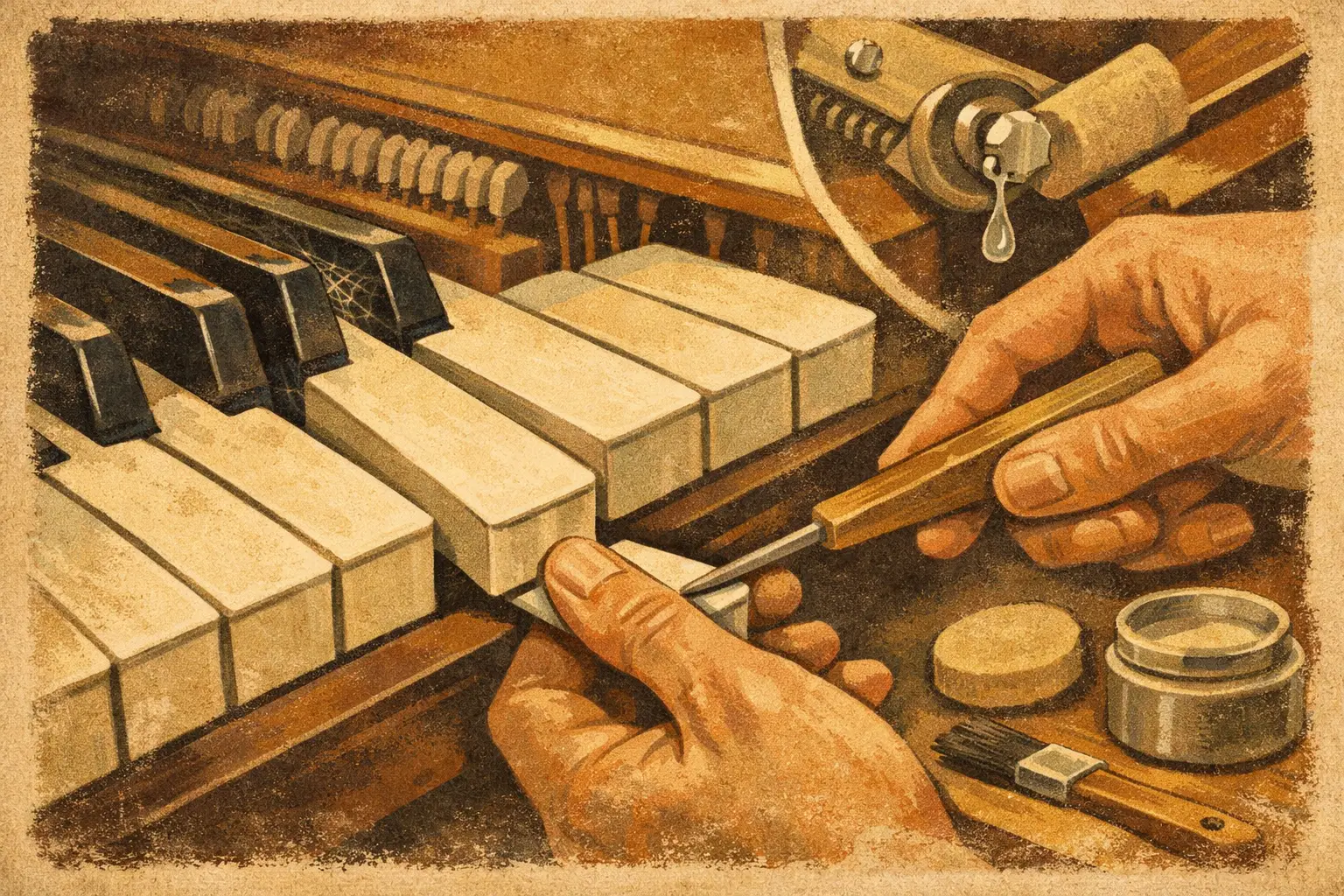
A sticking piano key changes more than one note. It interrupts practice, distracts a performer, and can make an otherwise fine instrument feel neglected. If you are asking why piano keys stick, the answer is usually found in the piano’s environment, its action parts, or a small mechanical issue that needs timely attention. The right response depends on whether the key is slow to return, stays down completely, rubs against its neighbor, or simply feels heavier than the rest.
For a premium upright, grand, vintage piano, or family instrument with sentimental value, avoid treating a sticky key as a cosmetic inconvenience. The action is a precise mechanical system. A careful diagnosis can often prevent a minor regulation issue from becoming a more involved repair.
Why Piano Keys Stick: The Most Common Causes
A piano key does not move in isolation. Beneath each key are felt bushings, wooden action components, pins, levers, and other carefully fitted parts. In a grand piano, the key activates a more complex horizontal action; in an upright, the mechanism moves vertically. Either design can develop sticking keys, but the cause is not always the same.
Humidity and seasonal swelling
Humidity is among the most common explanations. Piano actions contain many wooden parts, and wood expands when it absorbs moisture. During a humid Georgia summer, for example, tight key bushings or action centers can swell enough to create friction. A key may rise slowly, feel sluggish, or remain depressed until gently lifted.
Very dry conditions can also create problems. Wood may shrink, felt may harden, and regulated clearances can shift. The issue is not simply whether a room feels damp or dry. Rapid changes in conditions are especially difficult on an acoustic piano.
A stable environment is the best first defense. Keep the piano away from exterior doors, sunny windows, HVAC vents, fireplaces, and damp basements. Consistent indoor humidity helps preserve tuning stability as well as key and action performance.
Something lodged between or beneath the keys
A pencil, paper clip, small toy, food crumb, broken piece of plastic, or even a loose felt fragment can interfere with key travel. This is particularly common in homes with young students and in teaching studios where the piano sees daily use.
Look along the spaces between the keys under good lighting. If an object is clearly visible and can be lifted away without force, remove it carefully. Do not pry keys apart, insert tools between them, or pull a key upward. Ivory, wood, and key coverings can chip or crack, while the underlying mechanism can be damaged by an otherwise well-intended fix.
Spilled liquid or surface contamination
Water, soft drinks, coffee, cleaning sprays, and hand lotion can all lead to trouble. A spill may make a key stick immediately, but it can also create a delayed problem after moisture reaches felt, wood, or glue joints. Sugary residue is particularly troublesome because it attracts dirt and can leave parts tacky.
If a spill has occurred, blot the surface promptly with a clean, dry, lint-free cloth. Do not flood the area with more water or household cleaner. Then arrange a professional inspection, especially if the liquid entered between keys or if several keys begin to feel different. Fast action can make a meaningful difference.
Tight key bushings and friction at the balance point
Each key rides on carefully positioned pins with felt bushings that guide its movement. Over time, these bushings can become compressed, swollen, dirty, or too tight. The key may rock from side to side, rub against neighboring keys, or fail to return freely.
This is a regulation and repair issue rather than a cleaning project. A technician can identify the exact point of friction and correct it with the proper tools and materials. Attempting to sand, lubricate, or force a tight key at home can alter the fit permanently and create uneven touch across the keyboard.
Action centers that have tightened
Inside the action, moving parts pivot on tiny center pins. When the felt around these centers swells with humidity or becomes compressed with age, the movement can become sluggish. A grand piano may show this as a hammer that does not return properly. On an upright, the key may feel slow or remain down because a related action part is binding.
This type of issue can affect one note or several notes in the same section of the keyboard. It requires a technician who understands action geometry, regulation, and the correct repair method for the piano’s make, age, and condition.
Worn, broken, or misaligned action parts
Older pianos and heavily played instruments can develop worn felts, loose screws, damaged springs, cracked parts, or misaligned components. A key that suddenly stays down after years of normal use may be signaling a broken or displaced part rather than humidity alone.
Vintage instruments deserve particular care here. Their tone, cabinetry, and musical character may be exceptional, but their actions often benefit from expert maintenance. The correct repair should respect the instrument’s original design while restoring dependable performance.
How to Tell Whether the Problem Is Minor
Start by observing the key rather than trying to fix it. Does it stay down completely, or does it return slowly? Does it rub against the key beside it? Is the problem limited to one note, or are several keys affected? Did it appear after a spill, after moving the piano, or when the weather changed?
A single key that lightly rubs its neighbor may be a localized alignment or bushing issue. Multiple sluggish keys often point to humidity affecting the action. A key that remains fully depressed, especially with a hammer or damper behaving unusually, deserves professional attention sooner rather than later.
If the piano was recently moved, allow it time to acclimate to its new room. However, do not assume every issue after delivery is normal settling. A quality move protects the piano, but a change in temperature and humidity can reveal existing action sensitivity. A technician can distinguish between an environmental adjustment and a mechanical concern.
What Not to Do When a Piano Key Sticks
The temptation is understandable: press harder, wiggle the key, apply oil, or spray a lubricant into the gap. Those approaches can turn a straightforward service call into a larger repair.
Avoid household oils, silicone sprays, WD-40, furniture polish, and liquid cleaners around the keys or action. They can stain felt, attract dust, migrate onto critical parts, and interfere with future regulation. Do not remove keys unless you have the training to reinstall and regulate them correctly. Even a simple-looking piano action relies on exact spacing and alignment.
It is also wise not to keep playing forcefully on a stuck note. Repeated pressure can damage a key, hammer component, or neighboring action part. If the note is essential for a performance or lesson, use a different instrument if possible until the cause is identified.
When Professional Piano Repair Is the Right Choice
Professional service is appropriate when a key stays down, the issue follows a liquid spill, several keys are sluggish, a clicking or scraping sound is present, or the piano has not been serviced in years. It is also the right choice when the instrument is a high-value grand, a restored vintage piano, or a piano being prepared for sale, recital, recording, or a major family event.
A qualified technician does more than free the stuck key. They inspect the related action components, check for environmental effects, assess regulation, and make sure the repair does not create a different touch problem elsewhere. In many cases, the appointment is also a good opportunity to evaluate tuning and the overall condition of the instrument.
For owners who expect a refined playing experience, regular tuning and maintenance are part of protecting the piano’s value. A well-regulated action gives beginning students a more reliable foundation, supports advanced technique, and lets a premium instrument deliver the responsiveness its maker intended.
Preventing Sticky Piano Keys
Prevention starts with placement and routine care. Keep the keyboard covered when the piano is not in use, but do not use the cover to hide moisture or spills. Keep drinks, candles, plants, and cleaning products away from the instrument. Encourage players to wash and dry their hands before practice, particularly before playing an ivory-keyed vintage piano.
Maintain a reasonably stable room climate year-round. A humidity control system may be worthwhile for valuable instruments or homes with significant seasonal swings. Schedule regular professional service rather than waiting for a key to fail. Small changes in touch, noise, or response are often easier and less costly to address early.
A piano should feel composed under the hands: every key returning cleanly, every note responding predictably, and no mechanical distraction competing with the music. If a key has begun to stick, treat it as a request for attention. Prompt, experienced care can restore the feel of the instrument and help preserve the excellence you expect every time you sit down to play.


0 Comments