

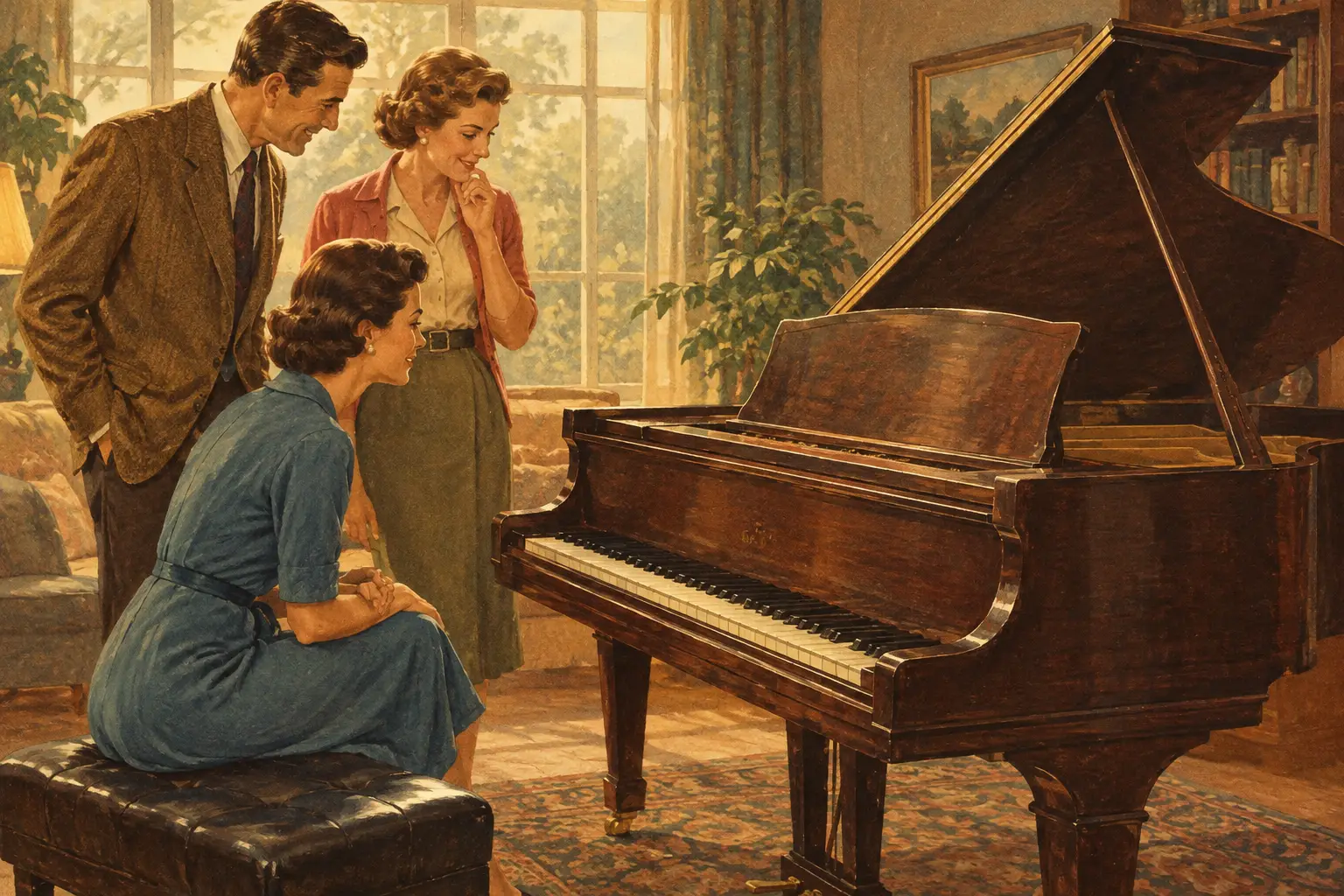
A piano built decades ago can carry a musical personality that no specification sheet fully captures. The warmth of aged spruce, the depth of a well-designed scale, the visual authority of a hand-finished cabinet – these are the qualities behind today’s vintage piano demand. Yet age alone does not create value. Serious buyers want a vintage instrument that has been carefully evaluated, properly maintained, and ready to deliver a rewarding playing experience for years ahead.
For families, artists, institutions, and collectors, the strongest vintage pianos offer more than a lower-cost alternative to a new instrument. They offer craftsmanship, heritage, and a sound that feels individual. The key is knowing which older pianos deserve attention and which require more investment than their asking price suggests.
Why vintage piano demand remains strong
Vintage piano demand is driven by a combination of musical quality, brand recognition, and practical value. Many respected manufacturers produced exceptional instruments during periods when cabinetry, action components, and hand labor received considerable attention. A well-preserved or professionally restored Steinway, Baldwin, Blüthner, Yamaha, or Kawai can remain a compelling choice for a discerning player.
There is also a simple matter of character. Some players prefer the clear, direct response of a newer piano. Others seek the rounded tone, complex color, and mature resonance that a fine older instrument can develop over time. Neither preference is universally right. The best choice depends on the player’s repertoire, touch, room, and expectations.
Premium vintage pianos also appeal to buyers who value distinction in their homes or performance spaces. A polished ebony grand is timeless, but a rare art-case instrument, a period cabinet, or an unusual finish can become a focal point without sacrificing musical purpose. For collectors, provenance and originality may be central. For a serious student, condition and action performance should take priority over cosmetic rarity.
The brands and models buyers ask for most
Brand heritage matters because it gives buyers a useful starting point. Steinway & Sons remains one of the most recognized names in the premium piano market, particularly for grand pianos with strong musical potential and a history of professional use. Demand can be especially high for examples with excellent structural condition, desirable scale designs, and high-quality restoration work.
Baldwin grand pianos are valued for their powerful American sound, substantial construction, and presence in schools, churches, and performance settings. Certain vintage Baldwin models are admired by players who want projection and a broad tonal palette. Yamaha and Kawai vintage instruments often attract practical buyers seeking dependable Japanese engineering, responsive touch, and excellent value in a used piano.
European makers such as Blüthner can appeal to musicians and collectors looking for a more distinctive tonal identity. Their appeal is often less about mass-market familiarity and more about color, craftsmanship, and rarity. This can make the right instrument highly desirable, but it also means buyers should work with a specialist who understands the model and its condition.
A prestigious name is only one part of the decision. Within the same brand, age, size, manufacturing period, restoration history, and present condition can create enormous differences in performance and value.
Condition determines whether age is an asset
A vintage piano is a complex acoustic machine under tremendous string tension. Its cabinet may look beautiful while its pinblock, soundboard, bridges, action, hammers, or strings require substantial attention. That is why a polished exterior should never be treated as proof of musical health.
The soundboard deserves close consideration. Small cracks are not automatically disqualifying, especially in older instruments, but their location, stability, and effect on tone matter. The bridges, tuning pins, and plate should also be evaluated. A piano that cannot hold a stable tuning is not ready for a serious player, regardless of its brand name.
The action tells another part of the story. Worn hammers, loose centers, tired key bushings, uneven regulation, and aging dampers can affect control and expression. Some of these needs are straightforward service items. Others point to a larger rebuilding project. A quality vintage piano may justify that investment, but the buyer should understand the scope before making a commitment.
Restored, rebuilt, and original are not interchangeable
These terms are often used loosely, but they describe different levels of work. A piano that has been restored may have received cabinet refinishing, action servicing, tuning, and selected replacement parts. A rebuilt piano generally has undergone much more extensive work, potentially including new strings, tuning pins, hammers, dampers, and action components.
Original condition has value when the piano is unusually well preserved or historically significant. For most buyers seeking a daily-use instrument, however, thoughtful restoration can be more valuable than untouched originality. The goal is not to buy the oldest piano. It is to buy the right piano with honest documentation and an appropriate level of work.
How buyers should evaluate a vintage piano
Start with the musical purpose. A beginner needs a stable, responsive instrument that encourages practice. A conservatory-bound student may need greater tonal range and a more refined action. A church or studio requires durability, projection, and dependable maintenance. A collector may place greater weight on rarity, design, and maker history.
Then assess the piano in person whenever possible. Play softly and forcefully. Listen for an even transition from bass to treble, a singing upper register, and notes that sustain cleanly. Test repetition, dynamic control, pedal response, and key consistency. A piano should feel coherent under the hands, not merely impressive for a few loud chords.
For buyers purchasing from a distance, detailed photographs, video demonstrations, service records, and a direct conversation with a knowledgeable piano professional become even more important. Ask what work has been completed, what remains to be done, and whether the instrument has been prepared for its next home. Clear answers are a mark of a serious seller.
The total ownership plan matters as much as the purchase price. Delivery, climate considerations, tuning after the move, future regulation, and eventual restoration should all be part of the conversation. A lower-priced piano that needs immediate structural work may not be the value it first appears to be. Conversely, a premium price can be justified when an instrument has been expertly prepared and supported with professional service.
The role of space, climate, and presentation
Grand pianos are especially sensitive to their environment. Extreme swings in humidity can affect tuning stability, action regulation, and wood components. A stable interior location away from direct sunlight, HVAC vents, exterior doors, and damp areas protects both the instrument and the investment.
Space also shapes demand. A concert grand creates a commanding musical experience, but it is not the right answer for every residence. Baby grands, medium grands, studio uprights, and taller upright pianos each serve different rooms and playing needs. A larger piano generally offers more string length and tonal potential, but a well-selected smaller instrument can be far more satisfying than an oversized piano crowded into the wrong setting.
Presentation has its place, particularly in luxury homes, hospitality settings, and formal venues. The piano should complement the room, but appearance should not overshadow musical integrity. The best vintage instruments achieve both: visual distinction and the ability to make music at a high level.
A specialist purchase protects the experience
The strongest vintage piano purchases begin with curation, not guesswork. A specialist retailer can identify instruments with worthwhile musical potential, explain restoration choices, arrange safe delivery, and provide the tuning and repair support that ownership requires. This is particularly valuable for buyers comparing premium brands or considering an instrument across state lines.
At A440 Pianos, buyers can explore a broad selection of premium used, vintage, and specialty instruments while receiving support for delivery, tuning, repair, restoration, and financing. That full-service approach helps turn a major purchase into a well-managed long-term relationship with the instrument.
A vintage piano should never be chosen only because it is old, famous, or visually striking. Choose the instrument that responds to your touch, fits your space, and has been prepared to serve its next chapter. When those details align, the right piano becomes more than a purchase – it becomes part of the life of a home, studio, or performance space.

0 Comments