

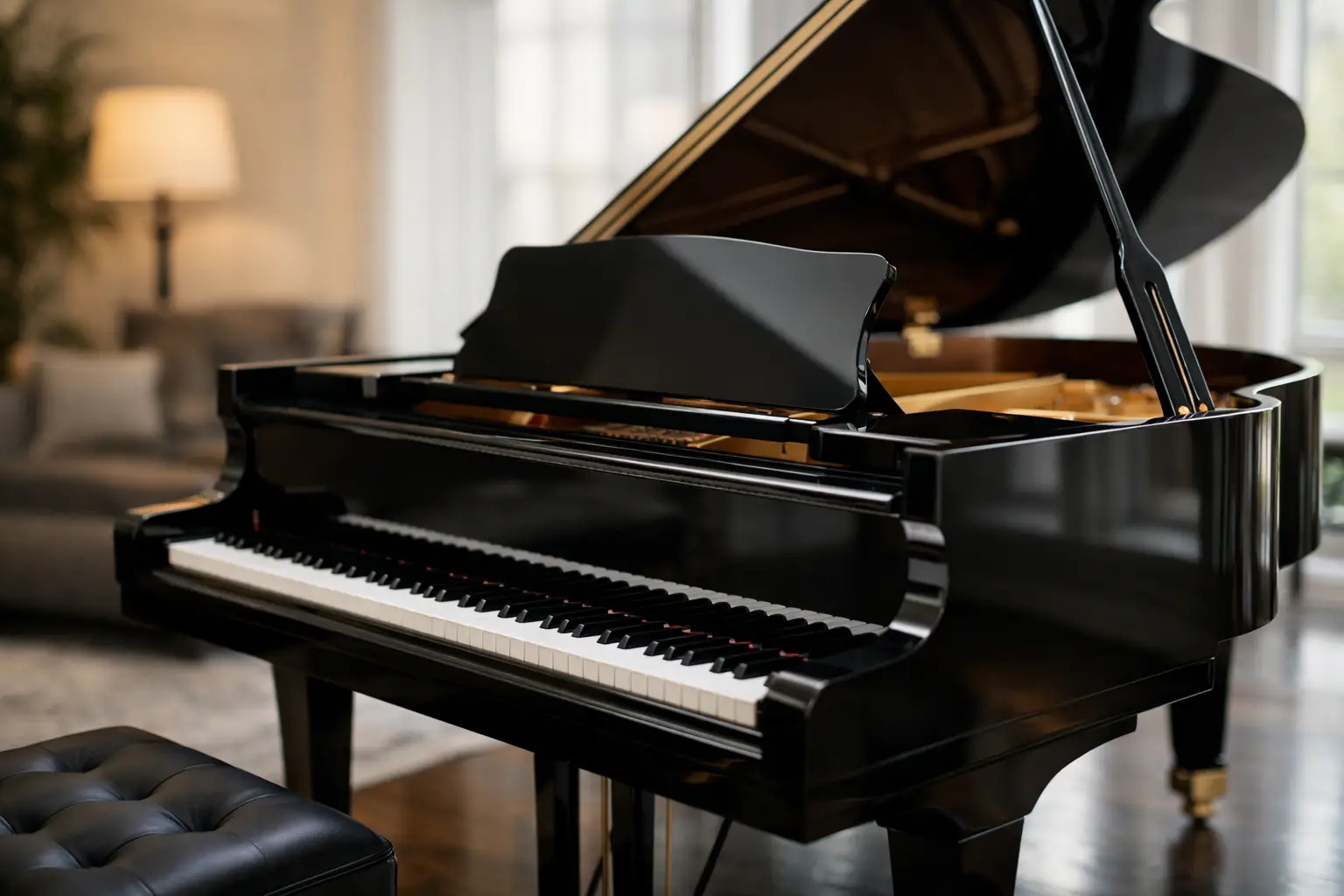
A piano bearing the Steinway name can mean very different things depending on the instrument in front of you. This Steinway Essex review is for buyers who admire the Steinway musical tradition but need a practical, well-made piano for a home, teaching studio, or growing musician without entering the price range of a Steinway & Sons grand.
Essex occupies a distinct place in the market. It is not presented as a lower-priced Steinway & Sons piano, nor should it be judged that way. It is a Steinway-designed line built to provide a more accessible path to refined tone, responsive touch, and classic cabinet styling. For many families and pianists, that balance is precisely what makes Essex worth considering.
What Is an Essex Piano?
Essex pianos are designed by Steinway & Sons and produced as part of the wider Steinway piano family. The line includes upright and grand models in a range of sizes, finishes, and price points. Production is handled by Pearl River Piano Group, with Steinway design specifications and quality standards guiding the instruments.
That background matters because Essex is not simply a generic piano with a recognizable name applied to it. The instruments are intended to reflect design ideas associated with Steinway, including scale design, tonal character, and action response, while using manufacturing methods that make the final price more attainable.
For a buyer, the most useful way to think about Essex is as an upper-entry-level to mid-tier acoustic piano. It is often a meaningful step above many mass-market beginner instruments, while remaining considerably less expensive than a Boston or Steinway & Sons piano.
Steinway Essex Review: Tone and Touch
The strongest reason to choose an acoustic piano is still the playing experience. Essex pianos generally offer a clear, warm sound with enough projection for a living room, small recital space, church, or private studio. Their tone is often described as rounded rather than overly bright, though every individual piano will have its own personality.
An Essex grand can produce an especially satisfying bass presence for its size. In models around five to six feet, buyers often hear more depth and sustain than they expected from an instrument positioned below premium grand-piano pricing. The treble is designed to be clean and singing, although it may not have the complexity, color range, or long sustain of a handcrafted Steinway & Sons grand.
The action is typically responsive enough for advancing students, adult hobbyists, teachers, and experienced players who want a reliable home instrument. Repetition and control are good when the piano has been properly prepared and regulated. A demanding concert artist may notice that the action and tonal shading do not offer the same level of refinement found in higher-tier instruments. That is a fair trade-off, not a flaw in the piano’s purpose.
As with any acoustic piano, preparation makes a real difference. A piano that has received careful tuning, regulation, voicing, and delivery setup will feel and sound substantially better than the same model straight from a warehouse floor.
Uprights Versus Grands
The Essex upright is often a smart choice where space is limited but an acoustic action and real string tone are priorities. A taller upright generally provides longer strings and greater soundboard area than a compact console, which can translate to a fuller bass and more satisfying resonance. For apartments, practice rooms, and family homes, an Essex upright may offer more musical value than a small grand that forces compromises in size or placement.
An Essex grand is a better fit for buyers who have the room for it and want the visual presence, action geometry, and tonal bloom of a grand piano. The lid position and larger soundboard also help the instrument fill a room naturally. Before choosing a grand, allow for bench clearance, doorways, traffic flow, and stable placement away from direct sun, heating vents, and exterior walls.
Build Quality and Long-Term Ownership
Essex pianos are built for regular home and institutional use. They feature traditional acoustic piano construction, including a cast-iron plate, wooden soundboard, steel strings, and a full acoustic action. The cabinetry tends to be polished and elegant, with finishes that suit both traditional and contemporary interiors.
Still, buyers should keep expectations proportionate to the price category. A Steinway & Sons piano receives a different level of handwork, material selection, finishing, and final musical refinement. It is built as a top-tier professional and artistic instrument. Essex is designed to deliver dependable quality and a satisfying musical experience at a more accessible level.
With proper care, an Essex can serve a household for many years. The key variables are climate stability, maintenance, playing frequency, and how the piano was handled before it entered your home. Plan on professional tuning at least twice a year in most cases, especially during the first year after delivery or after a move. Regulation and voicing may be appropriate over time as the action settles and the hammers develop grooves from normal use.
How Essex Compares With Boston and Used Steinways
Buyers often compare Essex with Boston, Yamaha, Kawai, and pre-owned Steinway & Sons instruments. There is no single winner because these choices solve different problems.
Boston generally sits above Essex in the Steinway family, with a higher price point and design features aimed at players seeking greater tonal depth and musical control. If your budget allows and you are an advanced pianist, a Boston may be worth playing beside an Essex. The difference is often easier to hear and feel at the keyboard than it is to explain on paper.
Yamaha and Kawai remain strong alternatives. Yamaha is known for consistency, clarity, and a more direct sound, while Kawai is often valued for a warm tone and responsive action. An Essex may appeal to buyers who prefer its Steinway-influenced design approach and traditional musical character. The right choice comes down to the individual instrument and the player sitting at it.
A used Steinway & Sons piano is another compelling option, particularly for buyers interested in heritage, investment-level craftsmanship, and a more distinctive tonal voice. But age alone does not make a used Steinway a better purchase. Its condition, restoration history, pinblock, strings, soundboard, action, and casework must be evaluated carefully. A well-prepared new Essex can be a more predictable purchase than an older premium piano needing substantial restoration.
Who Should Buy an Essex Piano?
Essex is especially well suited to families who want a serious first acoustic piano, students progressing beyond a digital keyboard, teachers furnishing a private studio, and adult players returning to music. It can also make sense for churches, schools, and hospitality settings that need an elegant, reliable acoustic piano without stretching into the premium concert-instrument category.
It may be less suitable for a conservatory-level pianist seeking the greatest possible tonal palette, a performer preparing for high-level concert work, or a collector looking specifically for the heritage and resale profile of a Steinway & Sons instrument. In those cases, Boston, Steinway & Sons, or a carefully restored vintage grand may deserve more attention.
The best way to decide is to play several instruments, preferably in the size range you are considering. Listen from the bench and have someone else play while you stand across the room. Test soft repeated notes, gradual crescendos, bass chords, and the transition between registers. A piano should invite you to sit longer, not merely impress you for a few minutes.
Buying Considerations Beyond the Showroom
Price should include more than the piano itself. Ask what preparation has been completed, whether the piano will receive a final tuning after delivery, and how the instrument will be moved into your space. Professional piano delivery protects the cabinet, action, flooring, stairways, and most of all the people involved in the move.
If you are purchasing an Essex for a child, choose a piano that supports the next several years of progress rather than only the first few lessons. A better acoustic piano can encourage practice because the player hears a wider range of expression and develops touch from the beginning. If space or budget is tight, a high-quality upright is often the wiser investment than the smallest available grand.
At A440 Pianos, we encourage buyers to compare instruments by musical fit, condition, room requirements, and ownership support – not brand name alone. The right piano should work for the player you are now while giving your musical life room to grow.
An Essex piano is at its best when viewed honestly: a thoughtfully designed, attractive, and capable acoustic instrument that brings the Steinway family experience within reach for many more players. Play one carefully, compare it with the alternatives in your budget, and choose the piano that makes you want to return to the bench tomorrow.
0 Comments