

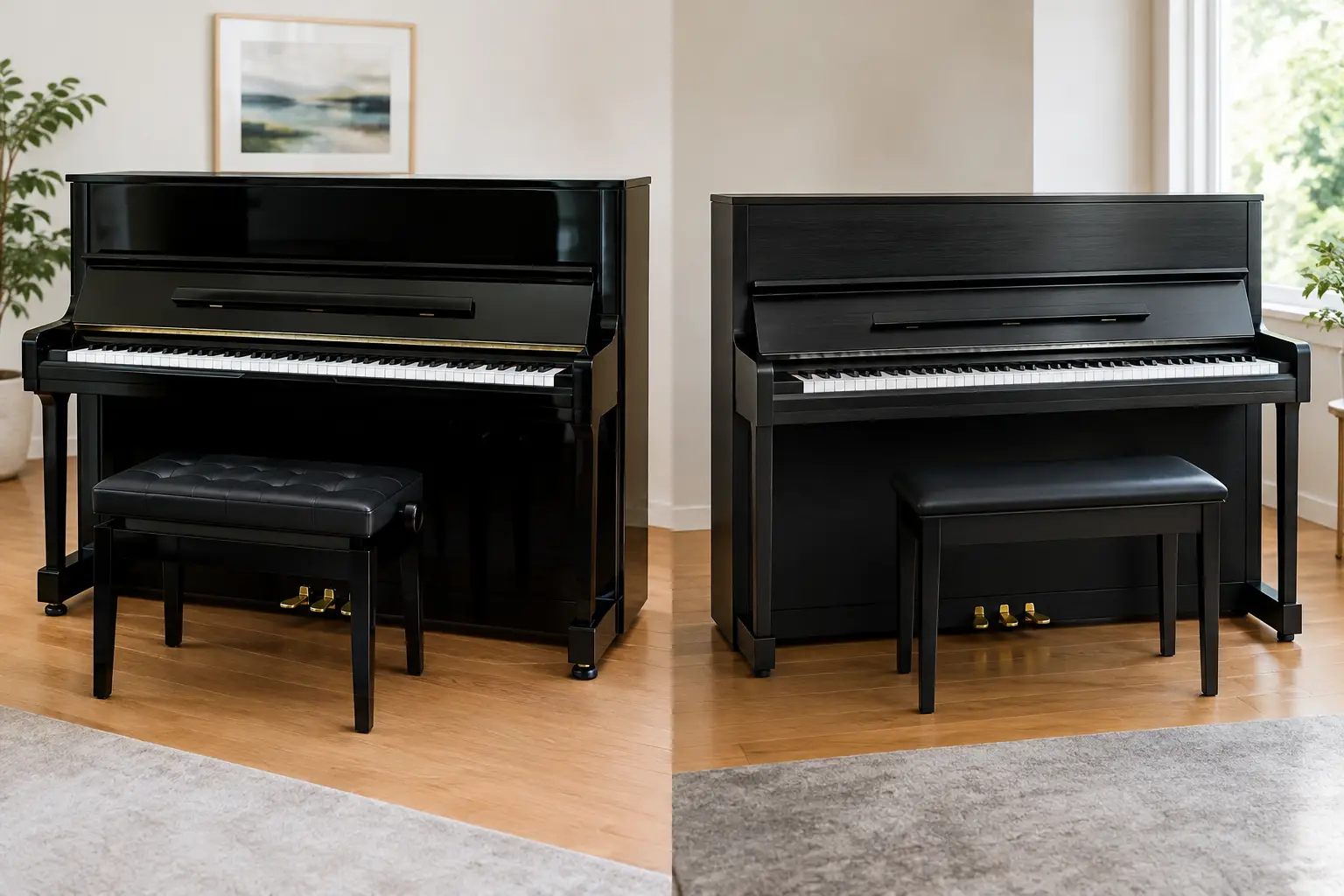
A 52-inch professional upright can be the right answer when a grand piano is not practical, but choosing between two exceptional models is rarely a matter of specifications alone. In the Yamaha U3 versus Kawai K500 decision, both instruments offer the scale, presence, and musical range serious players expect from a full-size upright. The more useful question is which one makes you want to sit down and play.
Both models are respected choices for advanced students, teachers, homes, studios, and churches. They are close in height, built to a high standard, and capable of rewarding nuanced playing for many years. Yet they approach tone and touch differently enough that a pianist may feel strongly drawn to one over the other.
Yamaha U3 versus Kawai K500 at a Glance
The Yamaha U3 stands 52 inches tall, while the Kawai K500 is approximately 51 inches. That inch of difference does not tell the whole story, but it places both pianos in the professional upright category. Their longer strings and larger soundboards give them greater bass depth, dynamic range, and tonal projection than smaller studio uprights.
Yamaha’s U3 has earned its reputation through consistency. It is one of the most widely recognized upright pianos in the world, found in teaching studios, schools, rehearsal rooms, and private homes. The current Kawai K500 is also a high-performance upright, designed for players who want a responsive action and a more expansive, often warmer tonal character.
The right comparison should always be between the actual pianos available to you. Age, preparation, tuning stability, regulation, room acoustics, and past care can affect the experience as much as the model name on the fallboard. A well-maintained used U3 may be a more compelling instrument than a neglected one, just as a carefully prepared K500 can reveal qualities that are missed in a hurried showroom test.
Tone: Clear Projection or a Broader Color Palette?
Many players recognize a Yamaha U3 by its direct, clear voice. The sound often has a focused treble, a defined attack, and enough projection to carry through lessons, ensemble rehearsals, or a busy home. For a player who values clarity in fast passagework and a sound that remains articulate at higher volumes, the U3 can be deeply satisfying.
The Kawai K500 is often described as warmer, rounder, or more layered in color. Its bass can feel broad and supportive, while its middle register may encourage a more singing, lyrical approach. This does not mean every K500 is mellow or every U3 is bright. Voicing can change a piano considerably. Still, the general tonal direction is meaningful when you are comparing instruments side by side.
A pianist playing Bach, jazz, contemporary music, or music that benefits from clean rhythmic definition may prefer the U3’s precision. A player drawn to Romantic repertoire, rich chords, and long melodic lines may find the K500’s tonal depth especially appealing. Neither preference is more advanced or more correct. It is simply personal.
Room size also matters. In a smaller, reflective room with hardwood floors and bare walls, either full-size upright can sound more powerful than expected. If the room already emphasizes brightness, the K500 may be a comfortable match. In a heavily furnished room that absorbs sound, the U3’s focused projection may be welcome. Rugs, curtains, and professional voicing can help tailor either piano to its environment.
Touch and Action Feel
The action is where this decision becomes physical. Yamaha U3 actions are known for a controlled, familiar response. Many pianists appreciate the sense of connection from finger to hammer and the predictable repetition that supports daily practice. For families with students progressing through demanding repertoire, that dependable feel has real value.
Kawai uses its Millennium III upright action, which incorporates ABS-Carbon composite components. The purpose is stability and consistent response through seasonal changes in humidity and temperature. Many players experience the K500 action as quick, light, and highly responsive, particularly in repeated notes and detailed soft playing.
Descriptions such as “heavier” and “lighter” should be treated carefully. Regulation changes the feel of an action, and a pianist’s technique changes the impression as well. Some players interpret the Yamaha’s controlled resistance as confidence-inspiring. Others prefer the Kawai’s agile response and sense of ease. The best way to decide is to play scales, repeated notes, quiet chord voicings, and passages you know well on both instruments.
If a child or beginning adult will be the primary player, do not assume one action is automatically better. A quality professional upright from either maker provides a far better foundation than a compromised instrument with uneven keys, poor tuning stability, or insufficient dynamic control. Comfort and musical encouragement should lead the decision.
Build, Stability, and Everyday Ownership
Yamaha and Kawai are both established Japanese piano makers with long histories of building instruments for demanding use. With regular tuning and a stable home environment, either model can serve a household or studio for decades.
The K500’s composite action materials are a point of interest for buyers in climates with noticeable humidity swings, including the Atlanta area. They are designed to resist the dimensional changes that can affect wooden action parts. That said, the piano itself still contains extensive natural materials, including the soundboard and other wooden components. A climate-conscious location, reasonable humidity control, and professional service remain essential.
The U3’s long-standing popularity creates another ownership advantage: familiarity. Technicians know the model well, and the market for quality used U3 pianos is broad. This can make the U3 particularly attractive for buyers who are thinking about future resale or who want an instrument with an especially established track record.
For either piano, budget for regular care rather than viewing purchase day as the end of the process. A new piano typically benefits from several tunings as it settles into its new home. Used pianos should be evaluated for tuning pin condition, action wear, hammer condition, string corrosion, cabinet condition, and previous rebuilding or repair work. A piano that looks beautiful can still need substantial technical attention.
New K500 or Used Yamaha U3?
This is often the real choice. A new Kawai K500 offers the assurance of a current instrument, factory condition, and a manufacturer’s warranty. It can be an excellent fit for a buyer seeking a long-term centerpiece for a home or studio and who appreciates the Kawai touch and sound.
A used Yamaha U3 can offer remarkable value, particularly when it has been carefully selected, serviced, and prepared by piano professionals. However, “used U3” covers a wide range. A recent, well-cared-for U3 and an older import with an uncertain history should not be treated as equivalent simply because they share a model name.
Ask about the piano’s serial number, origin, service history, preparation, and warranty. Play every key at soft and loud dynamics. Listen for buzzing, uneven sustain, harsh notes, or an inconsistent transition from one register to another. Depress the pedals, test repetition, and pay attention to whether the piano holds your attention after the first impressive chord.
Which Piano Is the Better Fit?
Choose the Yamaha U3 if you value a clear, projecting sound, familiar controlled touch, strong brand recognition, and a model with enduring appeal in homes and teaching environments. It is an especially sensible choice for players who want a versatile upright with an established resale market.
Choose the Kawai K500 if its responsive action and richer tonal character speak to you. It can be a wonderful piano for expressive players, advanced students, and buyers who want a current-generation professional upright with thoughtful action engineering.
The deciding factor should not be a general rule about Yamaha or Kawai. It should be the particular instrument, its condition, the room where it will live, and the music you want to make. At A440 Pianos, we encourage buyers to spend enough time at the keyboard to notice those details, then support the decision with professional delivery, tuning, and ongoing care. The best upright is the one that still feels like an invitation to play after the comparison is over.

0 Comments