

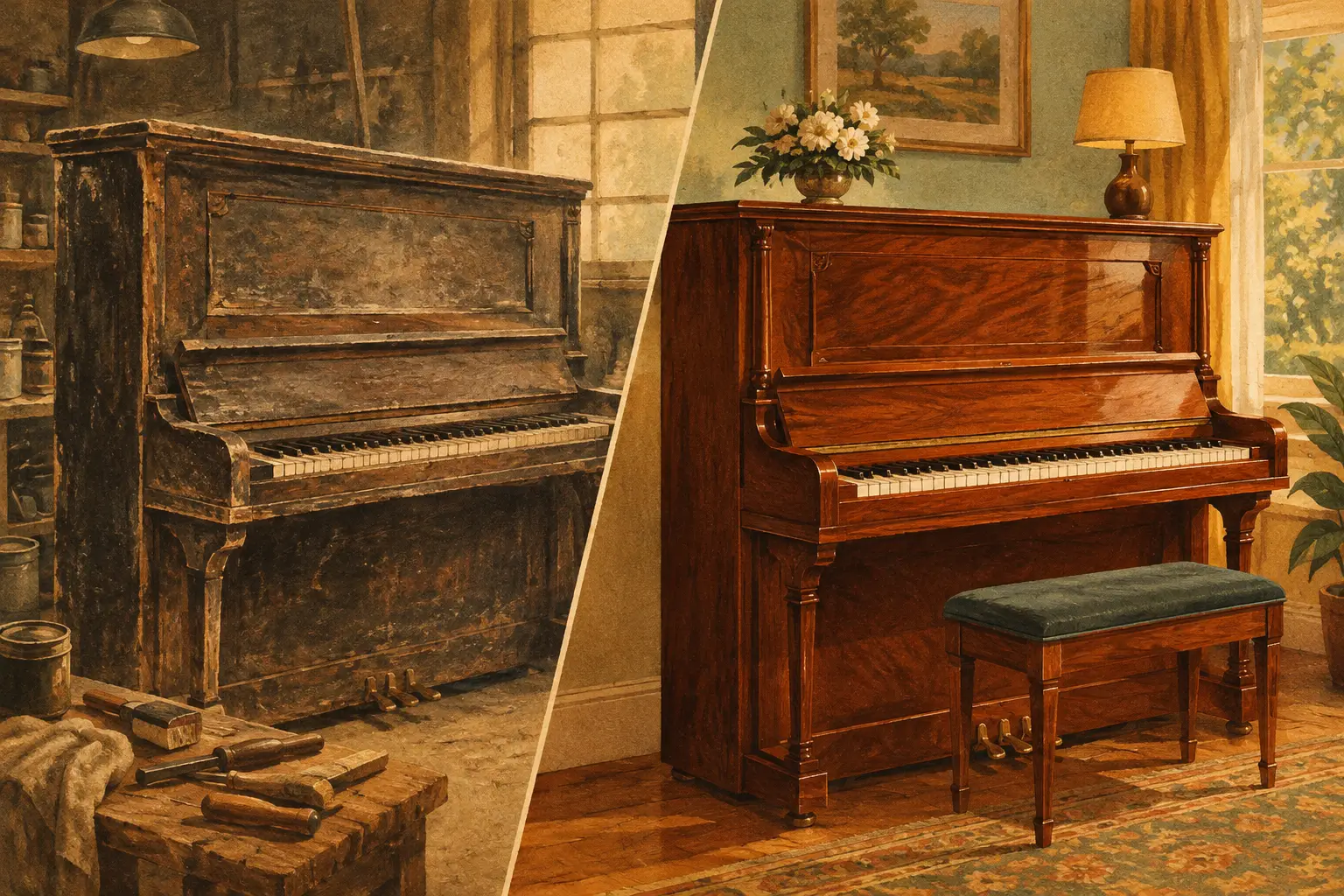
A vintage piano can look like a beautiful heirloom and still be unprepared for daily playing. The difference between a decorative antique and a serious instrument is found beneath the lid: in the soundboard, action, pinblock, strings, hammers, and the hundreds of precise adjustments that shape touch and tone. A restored vintage piano transformation brings those systems back into working relationship while honoring the character that made the instrument worth saving.
For families, musicians, churches, studios, and collectors, restoration is not simply a cosmetic upgrade. It is a decision to preserve craftsmanship, improve musical performance, and place a distinctive instrument at the center of a home or performance space.
What a Restored Vintage Piano Transformation Really Includes
A proper restoration begins with an honest assessment, not a new finish. The cabinet may be the first thing people notice, but a piano is a complex acoustic machine. A technician evaluates structural stability, tuning stability, action wear, tone quality, and the condition of components that cannot be judged from a listing photo.
The soundboard is especially significant. It amplifies the energy of every note, and its condition helps determine whether a piano can produce a clear, resonant voice. Minor cosmetic cracks do not always compromise performance, but loose ribs, serious separation, or loss of crown may call for more extensive work. The bridges, plate, and pinblock also deserve close inspection because they affect tuning stability and the integrity of the string scale.
Inside the action, hammers can become deeply grooved and hardened, felt can compress, and wooden parts can shift over decades of seasonal changes. Restoration may include rebuilding or regulating the action, reshaping or replacing hammers, installing new strings and tuning pins, repairing pedal systems, and carefully voicing the instrument. Each step affects the way the piano responds under the player’s hands.
Cabinet work comes after the musical foundation is understood. A high-quality finish restoration can remove years of wear, repair veneer damage, and revive the depth of a walnut, mahogany, ebony, or satin finish. It should never distract from the piano’s original proportions or period details. On exceptional instruments, the goal is refined preservation, not making a historic piano look artificially new.
Why Vintage Pianos Deserve a Different Standard
Many older pianos were built with materials, scale designs, and handwork that are difficult to replicate at the same price point today. A well-made Steinway, Baldwin, Mason & Hamlin, Blüthner, Yamaha, or Kawai may have a musical personality that attracts players long before they know the technical details. Some have a warm, complex bass. Others offer a brilliant, projecting treble or a responsive action suited to advanced repertoire.
Age alone, however, does not create value. A 90-year-old piano with weak structure and exhausted parts is not automatically a better investment than a newer used instrument in excellent condition. Brand heritage matters, but condition, restoration quality, model, size, and musical result matter more.
This is where professional selection protects the buyer. The right vintage piano offers more than a name on the fallboard. It should hold its tune, play evenly across the keyboard, produce a satisfying tonal range, and suit the room and player who will live with it. A small living room, a teaching studio, and a church sanctuary place very different demands on an instrument.
Restoration versus rebuilding
The terms are often used interchangeably, but they can describe different levels of work. Restoration generally means returning a piano to reliable, attractive, musically satisfying condition while retaining serviceable original components where appropriate. Rebuilding usually involves a deeper renewal of major systems, often including new strings, pins, dampers, action parts, and sometimes soundboard or pinblock work.
Neither option is automatically superior. A piano with a healthy structure may need careful regulation, voicing, tuning, and cabinet renewal rather than a full rebuild. Conversely, a prestigious concert grand with original but worn-out internal components may warrant comprehensive work to perform at its potential. The proper scope depends on the instrument, not on a one-size-fits-all package.
The Playing Experience Is the Real Test
A successful restoration is felt before it is explained. The keys should respond consistently from bass to treble, without sluggish repetition, excessive noise, or uneven resistance. Soft playing should be controllable, while stronger playing should produce color and projection rather than harshness.
Tone is personal, but it should be intentional. Some buyers want the velvet warmth associated with an older American grand. Others prefer a cleaner, more focused European voice or the clarity of a Japanese-built instrument. Skilled voicing can refine brightness, softness, and sustain, but it cannot turn every piano into a different design. Buyers should choose an instrument whose natural voice already speaks to them.
The pedal system also matters more than many first-time buyers expect. A sustain pedal should lift dampers cleanly and allow the sound to bloom without unwanted noise. On grand pianos, the una corda pedal should offer a meaningful tonal shift. These details are part of the experience that separates a properly prepared piano from one that has only been polished for sale.
How to Evaluate a Restored Vintage Piano Before Buying
Start by asking what work was completed and when. A credible seller should be able to describe the piano’s condition and the level of restoration in plain language. New strings and tuning pins, action regulation, hammer work, cabinet refinishing, and structural repairs are not equivalent services, and buyers deserve clarity about what they are receiving.
Then play the instrument, if possible. Test repeated notes, slow scales, quiet passages, and full chords across the entire keyboard. Listen for dead notes, buzzing, unstable pitch, or abrupt changes in tone. If you are buying remotely, request current videos that demonstrate the piano’s sound and action, along with detailed images of the cabinet, soundboard, plate, and keyboard.
Consider the piano’s future service needs as well. Every acoustic piano needs regular tuning, and location affects stability. A piano placed near direct sunlight, HVAC vents, exterior doors, or dramatic humidity swings will require more attention regardless of its age or quality. Safe delivery is equally essential. Moving a piano is specialized work, particularly for grands, stairways, tight turns, and delicate finishes.
A440 Pianos approaches this process as a full-service purchase, pairing curated premium inventory with restoration knowledge, professional moving, delivery support, tuning, repair, and financing options. That combination helps buyers focus on the instrument itself rather than coordinating separate providers after the sale.
Matching the Piano to the Life You Want It to Have
A restored upright can be an excellent choice for a refined home, student practice room, school, or church classroom where space is limited. The best uprights provide satisfying musical depth without the footprint of a grand. They are not merely compromises when selected for quality, scale, and condition.
Grand pianos offer a different experience. Their horizontal action provides faster repetition, and their larger soundboard area can create greater tonal presence and dynamic range. Yet bigger is not always better. A seven-foot grand can overwhelm an intimate room, while a well-restored five-foot-eight grand may be the more musical and practical fit for a residence.
Collectors may also weigh originality against presentation. An original finish with gentle age can be desirable on certain historical instruments, while a restored satin ebony cabinet may better suit a formal interior or performance setting. The right choice depends on whether the piano will be preserved as an artifact, played every day, or asked to do both.
The Value of Work Done Correctly
A restored piano should inspire confidence, not uncertainty. Careful craftsmanship extends useful life, protects the instrument’s musical identity, and provides a level of beauty that flat-pack furniture and digital substitutes cannot replicate. It also gives a family or institution a tangible reason to gather, practice, perform, and celebrate music.
The finest restored vintage piano transformation does not erase an instrument’s past. It gives that history a future – with reliable performance, honest character, and a voice ready for the next player to make it their own.
0 Comments