

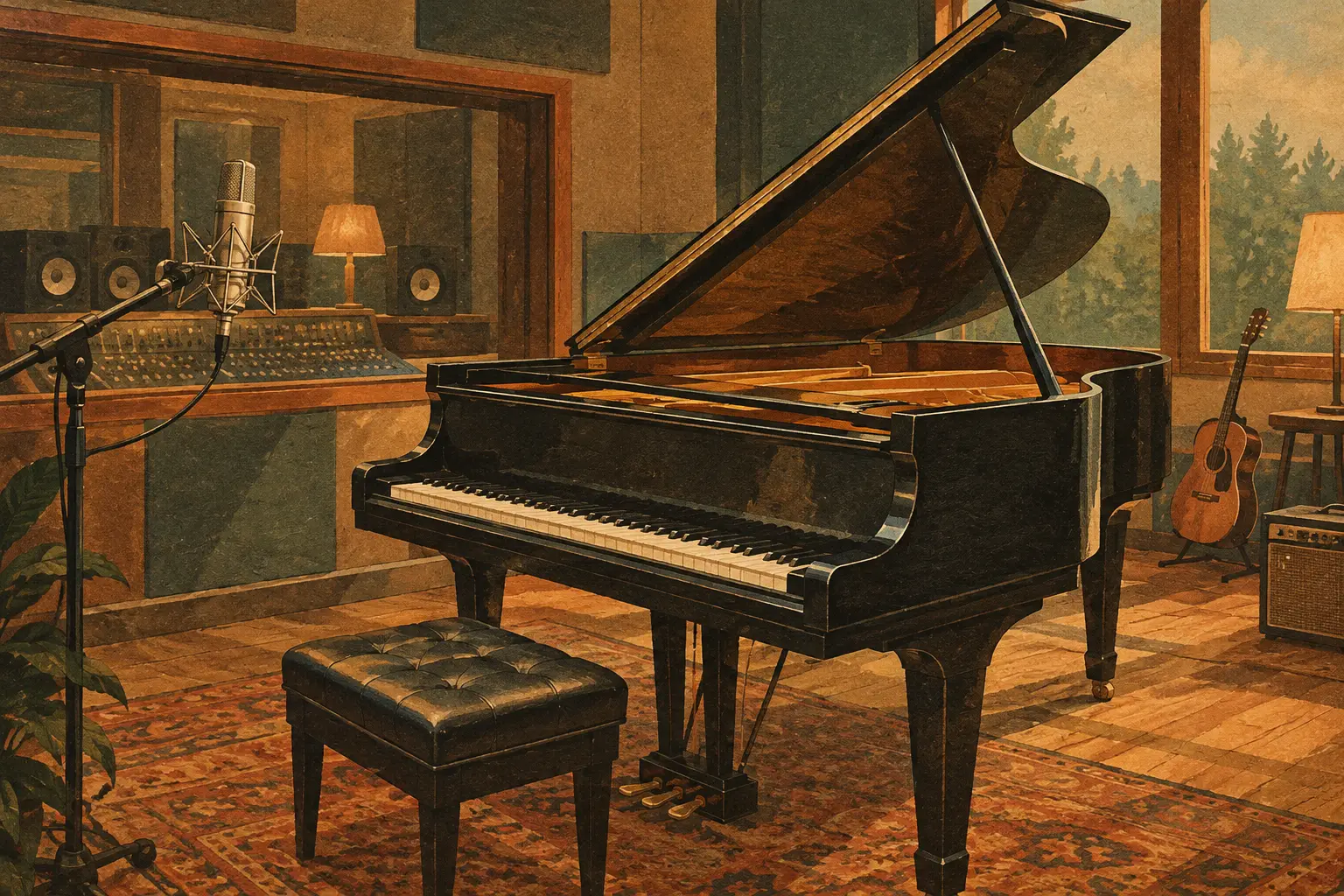
A piano can make a recording feel expensive before a vocalist sings a word. It can also expose every weakness in a room, from uneven tuning to a harsh high register that no microphone placement can fully disguise. The best pianos for recording studios are not simply the largest or most prestigious instruments available. They are the pianos whose tone, action, condition, and scale suit the music being made – and the room in which it is captured.
For a commercial facility, a private production room, a church media department, or a serious home studio, choosing a piano is a long-term equipment decision. The instrument needs to inspire musicians, record consistently, and remain dependable through changing temperatures, frequent sessions, and years of service.
What Makes a Piano Record Well?
A recording piano should offer a wide usable dynamic range. Engineers need a soft note to remain present and clear, while a forceful passage should sound powerful without becoming brittle or congested. The best instruments respond to changes in touch with enough color that the player, producer, and engineer can shape the performance rather than fight the piano.
Evenness matters just as much as beauty. A piano may have an attractive bass or a dramatic, bright treble, but a recording session will reveal uneven regulation, weak hammers, noisy pedals, and notes that decay differently from their neighbors. In a studio setting, consistency across all 88 keys is part of the sound.
The room is the other half of the instrument. A nine-foot concert grand in a small, reflective control-room-adjacent space can overwhelm the recording with low-frequency buildup. Conversely, a small upright in a large live room may lack the projection and tonal dimension needed for solo classical work. There is no single correct size, only the right balance of instrument and environment.
Grand Pianos for Serious Studio Work
A well-prepared grand piano remains the first choice for studios that record acoustic piano regularly. Its horizontal stringing, larger soundboard, and responsive action give engineers more tonal information to work with. The lid can be raised or lowered to control projection, and microphones can be positioned over the strings, near the hammers, beneath the piano, or at a distance in the room.
The 7-foot to 7-foot-6-inch grand
For many professional rooms, a grand in this range is the strongest all-around choice. It has substantially more bass authority and tonal complexity than a smaller baby grand, yet it is easier to place than a full concert grand. It can serve jazz sessions, singer-songwriter productions, pop overdubs, chamber work, teaching, and commercial recording without making every arrangement feel oversized.
A premium Steinway, Yamaha, Kawai, Baldwin, or Blüthner grand in this size category can be an excellent studio centerpiece, provided its condition matches its pedigree. Brand reputation matters, but preparation matters more. A carefully restored vintage instrument with a properly regulated action and voiced hammers may be a more compelling recording piano than a neglected instrument with a famous name on the fallboard.
The 9-foot concert grand
A concert grand delivers the scale, sustain, and authority required for demanding classical repertoire, scoring stages, high-level jazz, and artist sessions where the piano is intended to lead the production. It is a premium choice with premium demands: generous floor space, suitable ceiling height, effective acoustic treatment, stable climate control, and a realistic maintenance budget.
It is not automatically the best choice for every studio. In a compact room, its long bass strings and large soundboard can create overpowering resonance. If the studio primarily records contemporary pop, country, worship, or vocal-led tracks, a seven-foot grand may provide greater control and a more practical tonal footprint.
The baby grand
Baby grands are often selected because they fit elegantly into tighter spaces. They can be valuable for visual appeal, songwriting rooms, intimate recording, and artist lounges. However, their shorter strings and smaller soundboards generally limit bass depth and tonal separation compared with larger grands.
A high-quality baby grand can still record beautifully, especially with thoughtful mic placement and an experienced player. The trade-off is versatility. If acoustic piano will be a major revenue source for the studio, purchasing the largest excellent grand the room can genuinely support is usually the wiser investment.
When an Upright Piano Is the Better Recording Choice
An upright is not a compromise by definition. Premium uprights can offer a focused, immediate sound that sits exceptionally well in a mix, particularly for indie, folk, rock, gospel, and intimate singer-songwriter productions. They also occupy less space and can be easier to isolate acoustically than a grand.
Tall professional uprights are the most capable category. Their longer strings and larger soundboards provide more body, sustain, and control than compact console or spinet models. A quality Yamaha or Kawai professional upright, for example, can be a practical studio instrument when a grand is not feasible.
Uprights have their own recording character. Their sound is often more direct and percussive, which can be an advantage when a producer wants rhythmic definition rather than expansive concert-hall bloom. They also allow close microphone approaches that can create distinctive textures. The limitation is that they generally offer less tonal depth and expressive headroom than a comparable quality grand.
Choose Tone for the Work You Actually Record
Studios often make the mistake of buying a piano for the showroom impression rather than the sessions they expect to host. A bright, clear piano may cut through dense pop productions and support rhythmic jazz playing. A warmer, darker instrument can flatter vocals, strings, cinematic arrangements, and lyrical solo work.
Neither profile is universally superior. The key is avoiding extremes unless the studio is pursuing a specialized signature sound. A piano that is aggressively bright may become tiring under close microphones. One that is overly mellow can lose clarity in a busy mix. A balanced instrument with a singing middle register, defined bass, and controlled treble gives producers more options during tracking and mixing.
Action feel also shapes recordings. A responsive action lets performers control pianissimo passages, repeated notes, and fast articulation with confidence. If visiting artists struggle with heavy, inconsistent, or poorly regulated keys, the take will suffer even if the piano sounds impressive on playback.
Condition Is More Valuable Than a Famous Name
A studio piano should be evaluated by a qualified technician before purchase, especially when considering a used or vintage instrument. Premium used pianos can provide outstanding musical value, but their condition must be understood clearly. Soundboard condition, pinblock stability, string corrosion, bridge integrity, hammer wear, action parts, pedals, and prior restoration all influence reliability and cost of ownership.
Pay close attention to tuning stability. A piano that will not hold pitch creates a scheduling problem as well as a musical problem. Recording studios need dependable instruments that can be tuned before important sessions and remain stable during demanding work.
Voicing and regulation are not optional finishing touches. They are central to the piano’s recording performance. Voicing shapes the hardness and color of the hammers, while regulation ensures the action responds evenly. A skilled technician can transform a piano that is fundamentally sound but poorly prepared. They cannot turn structural damage into a lasting professional solution.
Plan for Placement, Climate, and Service
Once the piano arrives, its support requirements begin. Place it away from direct sunlight, exterior doors, HVAC vents, and major temperature swings. A stable climate protects tuning, action components, and wood structure. Relative humidity changes are especially hard on acoustic pianos, causing wood parts to expand and contract.
The floor must also be considered. A grand piano is a substantial instrument, and its weight should be evaluated before installation, particularly in upper-level studios. Professional piano moving is essential. Improper handling can damage the case, action, soundboard, flooring, or the people attempting the move.
Studios should budget for regular tuning and periodic regulation. Heavy session use may require more frequent attention than a residential piano. This service commitment protects the investment and reassures artists that the instrument will be ready when inspiration becomes a booked session.
For buyers seeking a premium used, vintage, or specialty piano, A440 Pianos can help match the instrument to the room, musical goals, and ownership requirements, with delivery and ongoing piano service available as part of a complete purchase experience.
The Best Studio Piano Is the One Artists Request Again
The ideal recording piano is not chosen by size alone, nor by a logo alone. It is the instrument that holds its tuning, responds under a player’s hands, records with depth, and makes musicians want to sit down for one more take. Choose for condition, tonal flexibility, and the reality of your space, then maintain it with the same care you expect from every other professional piece of studio equipment.

0 Comments