

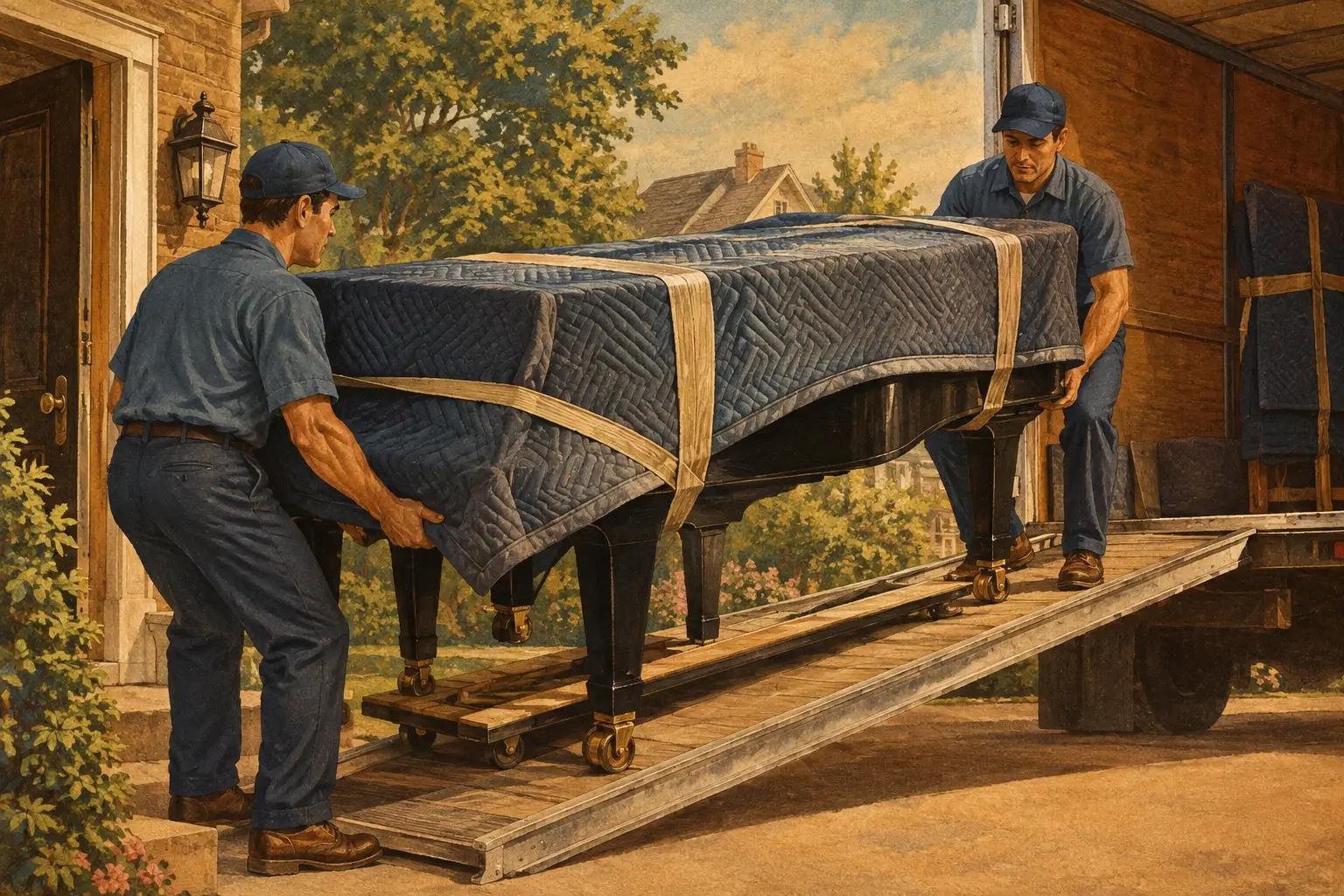
A piano delivery can look simple until the first tight turn, porch step, or narrow hallway. To protect piano during delivery, the instrument must be treated as both a precision musical mechanism and a substantial piece of furniture. A polished cabinet, a delicate action, thousands of moving parts, and an iron frame all need different forms of protection.
A careful move is not only about avoiding visible scratches. Poor handling can affect pedal function, loosen hardware, damage finish, shift internal components, or expose the piano to abrupt temperature and humidity changes. Whether you are receiving a family upright, a concert-ready grand, or a restored vintage instrument, the preparation before the truck arrives makes a measurable difference.
Protect Your Piano During Delivery Starts Before Moving Day
The safest delivery is planned before anyone lifts the piano. Measure every part of the route from the delivery truck to the final room, including gates, stairways, door openings, hallways, landings, and sharp corners. Do not assume a piano will clear a doorway simply because other furniture has.
For an upright, measure the width of the cabinet with protective padding in mind. For a grand piano, account for the instrument after its legs and lyre have been removed and the body has been placed on a piano board. A grand that fits through a doorway in theory may still require careful angling, additional clearance, or a different access point.
Let the delivery team know about steps, elevators, gravel paths, low-hanging branches, limited parking, or stairs without landings. These details determine the crew size, equipment, and route. They also help avoid a rushed decision at the curb, where damage is more likely to occur.
Prepare the Home, Not Just the Piano
Clear the travel path completely. Remove rugs that can slide, small furniture, floor lamps, wall décor near tight corners, and anything that narrows the route. Secure pets in another room and keep children away from the moving area. A clear path allows professional movers to focus on balance, communication, and safe placement.
Protect vulnerable surfaces as well. Hardwood floors may need floor runners or rigid protection, while entry thresholds and stair edges can benefit from padding. This is especially worthwhile for homes with custom millwork, light-colored walls, or newly refinished floors.
The destination room should be ready before delivery begins. Decide where the piano will live, leaving enough space for the bench, player access, and future tuning or service work. Moving a piano twice in one day adds risk without adding value.
Use the Right Protection for the Instrument
Household blankets and a furniture dolly are not a piano-moving system. Professional piano protection generally includes thick moving pads, stretch wrap to secure the pads, protective covers for vulnerable corners, skid boards or piano boards, and purpose-built dollies. The goal is to cushion the cabinet while keeping the instrument stable and supported from the correct points.
For upright and vertical pianos, the keyboard lid should be locked when possible. If there is no lock, it should be secured so it cannot open during transport. The top lid and other movable panels also need attention. Tape should never be applied directly to finished wood, veneer, or lacquer, where it can leave residue or lift delicate finish.
Grand pianos require a more technical process. The lid, music desk, lyre, pedals, and legs are typically removed, wrapped individually, and labeled. The piano body is then secured to a padded board designed to distribute its weight safely. Never attempt to move a grand by rolling it on its own legs for more than minor repositioning in a room. The legs are not designed to absorb the strain of stairs, ramps, or truck loading.
Avoid Pressure on Keys, Pedals, and Decorative Details
The most striking parts of a piano are often the easiest to damage. High-polish ebony finishes show marks quickly, ornate legs can chip, and brass hardware can scratch. Crystal, acrylic, or art-case grand pianos demand even more specialized packing and handling.
No wrapping method should place pressure directly on the keys, pedal assembly, lid hinges, or music desk. Padding should be snug enough to stay in place but not cinched so tightly that it rubs against the finish during travel. With vintage pianos, fragile veneer, aging glue joints, and decorative carving deserve an added level of caution.
Climate Protection Matters More Than Many Owners Expect
Pianos are built primarily from wood, felt, metal, and adhesive materials that respond to changes in their environment. A few minutes outside is usually manageable when conditions are mild and the instrument is properly wrapped. Extended exposure to rain, direct summer heat, freezing temperatures, or high humidity is another matter.
Keep the piano covered during loading and unloading, and minimize the time between the home and the climate-controlled truck. Rain calls for weather-resistant outer protection, but the piano should not be sealed in damp materials for extended periods. Moisture trapped against a finish can create problems of its own.
Once the piano is inside, let it acclimate before scheduling a tuning. A new room, a different humidity level, and the vibration of transport can all affect pitch. The right timing depends on the season, distance moved, and stability of the home environment, but many pianos benefit from a tuning after they have settled for several weeks.
Choose Piano Movers, Not General Furniture Movers
A piano’s weight does not tell the whole story. An upright may weigh 400 to 800 pounds, while a grand can exceed 1,000 pounds. More importantly, the weight is unevenly distributed and the instrument has structural points that must be handled correctly.
Qualified piano movers understand how to secure an instrument on a truck, protect it over ramps and stairs, and communicate through difficult transitions. They bring appropriate equipment and insurance coverage for the work. A lower quote from a general moving crew may seem attractive, but the savings disappear quickly if a cabinet is damaged, a leg is broken, or a mover is injured.
Ask direct questions before booking: Will the crew use piano boards and padded covers? Is the delivery team experienced with your piano type? How are stairs, long carries, and difficult access priced? What coverage applies if there is an accident? Clear answers are a sign of a service provider that understands the responsibility involved.
A440 Pianos approaches delivery as part of piano ownership, not an afterthought to the sale. That distinction matters when an instrument is valuable, sentimental, or selected for a serious musical purpose.
Check the Delivery Route at the Truck
Even with a professional crew, the owner should stay available during arrival. Confirm the intended entrance and final placement before the piano leaves the truck. If the team encounters an unexpected obstacle, pause and discuss the options rather than forcing the instrument through a risky path.
Watch for wet pavement, steep ramps, uneven pavers, and congested driveways. These conditions do not always prevent delivery, but they may require additional hands, alternative equipment, or a brief delay. Safe professionals will not take shortcuts simply to finish faster.
For apartment buildings, reserve the elevator when possible and verify the elevator’s dimensions and weight capacity in advance. A freight elevator is often preferable, but only if the route from the loading area is also suitable. In some homes and upper-floor installations, a crane or exterior lift may be the safest solution. It costs more, but it can prevent damage to both the piano and the property.
Inspect the Piano Before the Crew Leaves
Once the piano is in position, allow the movers to remove the wrapping carefully. Inspect the cabinet under good lighting, especially corners, legs, pedal hardware, and the area around the keyboard. Open the lid, check that keys move freely, and test the pedals gently.
This is not the moment to judge final tuning. Small pitch changes after a move are normal. Instead, look for clear transport concerns: loose parts, finish marks, unusual rubbing, or hardware that needs attention. If you see an issue, document it immediately and discuss it while the crew is present.
For a grand piano, confirm that the lyre is secure and that the piano is stable on all three legs. For an upright, verify that it sits level and does not rock. A piano placed on an uneven floor may need caster cups, shims, or a different location to sit safely and protect the flooring.
Give the Piano a Proper Landing Place
The best delivery can be undermined by poor placement. Avoid direct sunlight, HVAC vents, exterior doors, fireplaces, and damp exterior walls whenever possible. A consistent environment helps preserve the finish, maintain tuning stability, and support the long-term health of the soundboard and action.
Leave practical service access around the piano. A technician needs room to open the instrument and work comfortably, and a piano should not be trapped behind heavy furniture. If the room has challenging acoustics, such as large windows and hard flooring, rugs, curtains, and upholstered furnishings can make the sound more comfortable without compromising the instrument’s presentation.
A piano is designed to be played for decades, not merely delivered for a day. Giving it a protected route, experienced handling, and a stable final home is the first act of care in a long musical relationship.



0 Comments