

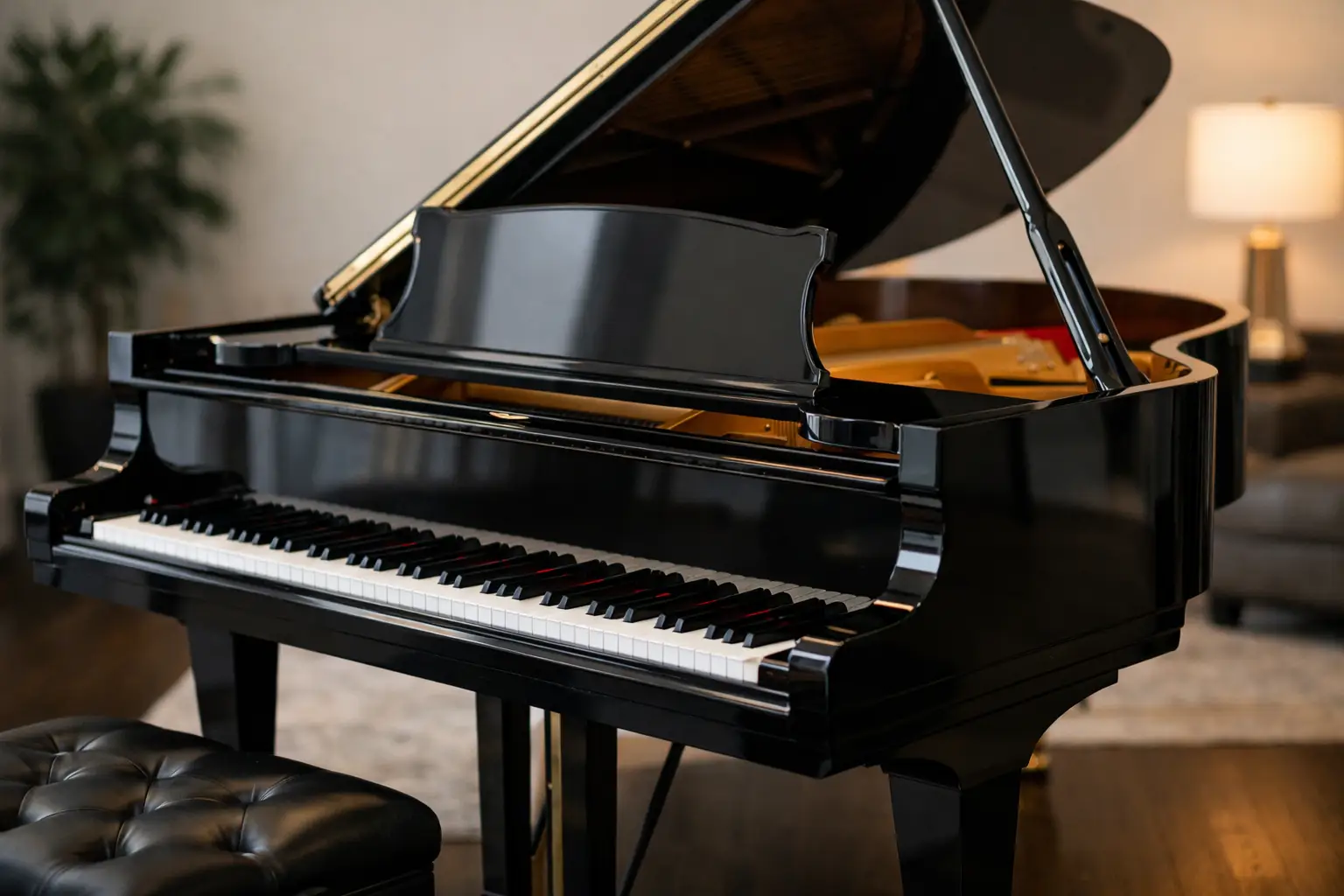
A 6’11” grand has to earn its floor space. The Steinway Model B has done exactly that for generations, becoming a familiar choice in conservatories, recording rooms, private studios, and serious homes. In this Steinway Model B review, we look at why this instrument is so admired, where it may not be the ideal fit, and how to evaluate one on its individual merits.
Steinway Model B Review: The Short Answer
The Steinway Model B is one of the most complete performance grand pianos ever built. It offers a powerful, singing tone, a highly responsive action, and enough tonal range to serve advanced students, professionals, teachers, and committed piano enthusiasts for decades.
Its strongest quality is balance. A Model B can produce concert-level projection without requiring the room size or physical footprint of a 9-foot concert grand. At 6’11”, it has more string length and soundboard area than a typical parlor grand, which gives it a noticeably fuller bass, broader dynamic range, and more complex color.
That said, the Steinway name alone does not determine whether a particular Model B is a good purchase. Age, restoration quality, maintenance history, regulation, voicing, and climate all matter. A carefully restored vintage Model B may be extraordinary. A neglected one, even with a prestigious name on the fallboard, can require a significant investment before it performs as it should.
Why Pianists Respond to the Model B
The Model B occupies a particularly appealing place in the Steinway lineup. It is large enough to deliver real authority, yet it remains practical for many dedicated music rooms and larger living spaces. For players who find a smaller grand beautiful but slightly limited at full volume, the Model B often feels like a major step forward.
Tone: Powerful Without Losing Color
A well-prepared Model B is known for a rich, layered sound. The bass has weight and depth, the tenor carries warmth, and the treble can sing clearly above dense harmonies. More than raw volume, the appeal is the piano’s ability to change character under the player’s hands.
Play softly, and a good Model B can offer an intimate, almost vocal quality. Play with more force, and it can fill a substantial room without becoming harsh. This range is valuable for classical repertoire, jazz, collaborative playing, church use, teaching studios, and recording applications where tonal variety matters.
Individual Steinways vary, especially across different eras and restoration histories. Some have a darker, more traditional American sound. Others are brighter and more immediate. This is not a flaw in the model – it is a reason to play the specific piano rather than buying by model name alone.
Touch: A Serious Instrument That Can Still Feel Inviting
Steinway actions are prized for their responsiveness and control. On a properly regulated Model B, the keys should allow a player to shape very quiet passages, repeat notes rapidly, and build sound with confidence. The action has enough substance for demanding technique, but it should not feel unnecessarily heavy.
Regulation is central to this experience. Key height, key dip, hammer travel, let-off, drop, repetition, and pedal adjustment all affect how the piano responds. An excellent Model B can feel disappointing if it has not been serviced carefully. Conversely, professional regulation and voicing can reveal a level of precision that was hidden beneath years of ordinary use.
For students moving up from an upright or small grand, the touch may initially feel more revealing. The instrument responds to nuance, including inconsistent technique. That is part of the Model B’s value: it gives serious players room to grow rather than placing a ceiling on expression.
Size, Space, and Placement Considerations
The Steinway Model B measures 6’11” long and is approximately 58 inches wide. Before falling in love with one, consider not only whether it fits through the door but whether it fits the musical life of the room.
A larger grand needs breathing room. In a compact space with hard floors, glass, and minimal soft furnishings, its sound may become overly bright or overwhelming. Rugs, curtains, upholstered furniture, acoustic treatment, and thoughtful lid position can make a meaningful difference. Opening the lid fully is not always the best choice for home use.
The piano also needs a stable environment. Avoid direct sunlight, exterior doors, heating vents, fireplaces, and areas with dramatic humidity changes. Fine instruments are built to last, but wood, felt, strings, and action components respond to their surroundings. Consistent climate control and regular service protect both musical performance and long-term value.
Professional moving is equally essential. A Model B weighs roughly 760 pounds, and safe delivery requires the right equipment, experienced crews, and a careful plan for stairs, turns, flooring, and placement. This is not an area for shortcuts.
Is a New, Used, or Restored Model B Best?
The right answer depends on your budget, tonal preferences, and expectations for ownership.
A new Model B offers current factory construction, a clean ownership history, and the appeal of developing a relationship with an instrument from its earliest years. It is a compelling option for buyers seeking a premium piano with contemporary factory specifications.
A used Model B can offer excellent value, particularly when it has been well maintained and has useful life in its strings, hammers, pinblock, soundboard, action parts, and finish. Used does not automatically mean worn out. Many private-home pianos have received comparatively light use, although condition should always be verified through inspection and playing.
A restored vintage Model B may offer the most character for a buyer who appreciates an older Steinway’s tonal personality. Proper restoration can include rebuilding the action, restringing, refinishing, replacing structural components when needed, and extensive regulation and voicing. The key word is proper. Restoration quality varies widely, so buyers should ask what work was performed, when it was completed, and which parts were replaced.
What to Inspect Before You Buy
A Model B deserves more than a quick performance of a favorite piece. Listen at every dynamic level and test the instrument across its full register. Bring a trusted technician or work with a piano specialist who can explain the condition in plain language.
Pay close attention to tuning stability, uneven tone, buzzing, pedal function, key response, and the condition of the hammers. Look for cracks in the soundboard, but understand that not every crack is structurally serious. The relevant question is whether it affects the board’s crown, vibration, or long-term reliability.
The pinblock and tuning pins also matter. If the pins do not hold tuning well, the piano may need major work. Examine the bridges, plate, strings, dampers, keytops, and cabinet, while remembering that cosmetic wear and musical wear are not the same thing. A few finish marks may be unimportant on a wonderful musical instrument; significant action or structural issues are a different conversation.
Ask about service records, prior restoration, humidity control, and the piano’s previous setting. A Model B that lived in a stable home and received regular tuning can be a more confident purchase than one with an uncertain history, even if the latter looks more polished at first glance.
Who Should Choose a Steinway Model B?
The Model B is especially well suited to advanced pianists, teachers who need an inspiring studio instrument, serious families, professional musicians, and collectors who want a grand piano they will not quickly outgrow. It is also a strong choice for a venue or institution that needs a high-level instrument without stepping up to a full concert grand.
It may be more piano than necessary for a beginning student in a modest room, particularly if budget is limited. A smaller grand or quality upright can be the wiser choice when space, acoustics, or priorities point elsewhere. The best piano is not simply the most famous model available. It is the one that matches the player’s goals, the room, and the level of care the owner is prepared to provide.
At A440 Pianos, we encourage buyers to spend time with the instrument, ask detailed questions, and consider the complete ownership experience, including delivery, tuning, repair, and future service. A piano of this caliber should feel exciting on the day it arrives and dependable for the years of music that follow.
A fine Model B does not ask to be admired from across the room. Sit down, play a soft chord, then a bold one, and listen for the sound that makes you want to stay at the bench a little longer.

0 Comments