

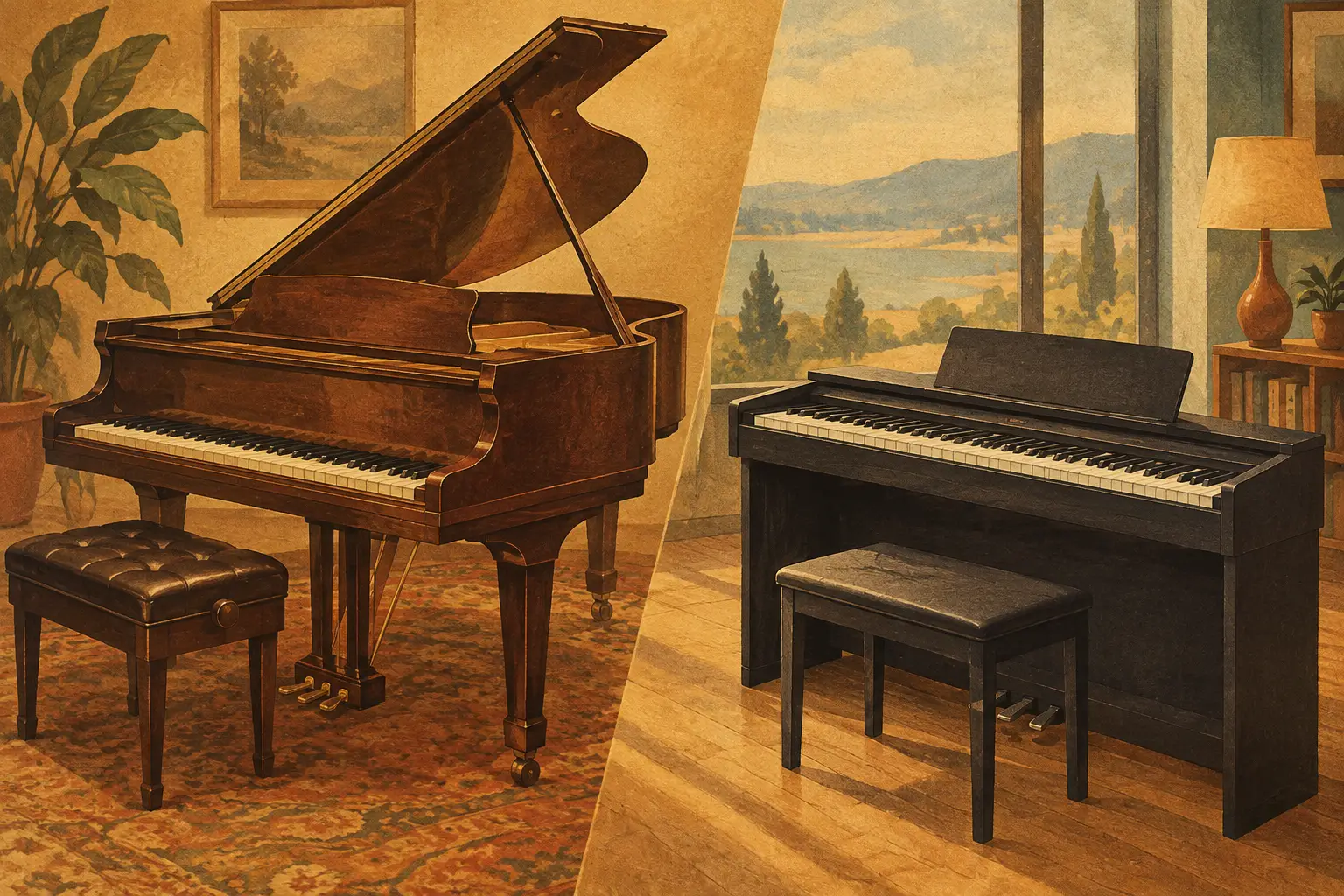
A pianist can feel the difference before playing a single piece. The key resistance, the vibration beneath the fingertips, the way sound fills a room – these details shape practice, progress, and pleasure. When comparing acoustic versus digital pianos, the right answer is not simply “traditional” or “modern.” It is the instrument that suits the player’s goals, home, expectations, and commitment to music.
For some buyers, a finely prepared acoustic piano is an heirloom-quality investment with tonal character that cannot be copied. For others, a premium digital piano offers practical flexibility, private practice, and dependable performance in a compact footprint. Both can be excellent instruments. The distinction lies in what each one is built to deliver.
Acoustic Versus Digital Pianos: The Essential Difference
An acoustic piano creates sound mechanically. When a key is pressed, a felt hammer strikes steel strings, which vibrate through a wooden soundboard. The player is directly connected to a living system of wood, felt, strings, action parts, and resonance. No two acoustic pianos sound exactly alike, even when they are the same model.
A digital piano produces sound electronically, usually through high-quality samples or modeled piano sounds played through internal speakers or headphones. Its keys may use weighted, graded, or hammer-action mechanisms to simulate the response of an acoustic piano. The best digital pianos can be remarkably satisfying to play, particularly for practice, casual performance, and modern living spaces.
The core difference is simple: an acoustic piano produces its own voice, while a digital piano reproduces or models one. That difference affects touch, sound, maintenance, value, and the overall ownership experience.
Touch and Technique: Why the Keyboard Matters
A piano should make a player want to sit down and play. For beginners, that means a keyboard with enough resistance to build healthy finger strength and control. For advanced pianists, it means an action capable of precise repetition, soft playing, fast passagework, and a broad dynamic range.
A well-regulated acoustic upright or grand piano remains the standard for nuanced touch. The player feels the action mechanism engaging, senses the point at which the hammer releases, and can shape a note from the lightest pianissimo to a powerful fortissimo. On a grand piano, the action resets quickly, supporting advanced repertoire and expressive control at a high level.
Premium digital pianos have made major progress. Models with wooden keys, graded hammer action, escapement simulation, and advanced sensors can provide a serious practice experience. Yet even an excellent digital action is an engineered approximation. It may feel convincing, but it does not fully recreate the physical response of hammers striking strings and a soundboard responding to the player.
For a young student taking regular lessons, a quality acoustic piano is often the stronger long-term foundation. For an adult beginner, apartment resident, or player returning to music after years away, a quality digital piano can be the practical choice that removes obstacles to daily practice.
Tone, Resonance, and Musical Expression
Acoustic pianos offer complexity that is heard as much as it is felt. A note does not simply begin and end. It blooms, changes color, interacts with other notes, and responds to the room. Pedal use adds another layer, allowing strings to resonate together in ways that give music depth and atmosphere.
This is especially noticeable in premium instruments from respected makers such as Steinway, Yamaha, Kawai, Baldwin, and Blüthner. Their tonal personalities vary widely. One player may prefer a warm, singing European voice, while another may favor a bright, clear sound with projection and definition. Selecting an acoustic piano is partly technical and partly personal.
Digital pianos offer consistency. Their sound remains the same regardless of humidity, tuning changes, or time since service. Many include several piano voices, adjustable brilliance, metronomes, recording functions, and accompaniment features. Those tools can make practice more efficient and enjoyable, especially for independent learners and teachers.
Still, a digital piano’s sound ultimately comes through speakers or headphones. Speaker quality matters greatly, as does cabinet design and room placement. A premium digital instrument can sound refined and full, but an acoustic piano moves air naturally through its soundboard. For players who value tonal color and physical resonance, that experience remains difficult to replace.
Space, Volume, and Everyday Practicality
The room often makes the decision before the buyer does. An acoustic upright requires meaningful floor space, proper placement away from direct sun, vents, and extreme temperature swings, plus access for professional delivery. A grand piano requires even more room, both physically and acoustically. Its presence is substantial, which is exactly why many families, churches, studios, and collectors choose one.
Digital pianos are easier to place and relocate. Many fit comfortably in apartments, condos, offices, and multipurpose rooms. They also offer volume control and headphones, which can be decisive for households with sleeping children, nearby neighbors, or conflicting schedules.
Headphones do not automatically make a digital piano the better choice. They change the practice experience. Some musicians enjoy the focused, private sound, while others miss the natural openness of an acoustic instrument in the room. Consider when the piano will be played, who will hear it, and whether silent practice is a convenience or a necessity.
Maintenance and Ownership Costs
An acoustic piano needs regular professional care. Most homes should plan for tuning at least once or twice each year, with additional service when a piano has moved, experienced climate changes, or requires regulation or repair. Over time, hammers, strings, dampers, key bushings, and action components may need attention.
That maintenance is not a flaw. It is part of owning a fine mechanical instrument, much like servicing a luxury automobile or maintaining a string instrument. A properly cared-for acoustic piano can provide decades of musical life, and a well-restored vintage piano can offer exceptional craftsmanship and character.
Digital pianos do not require tuning, and their maintenance needs are generally lower. They do, however, rely on electronics, speakers, circuit boards, and software. Like any electronic product, repairability and long-term parts availability can vary by manufacturer and model. A digital piano may be easier to own day to day, but it is not necessarily a lifetime instrument.
Professional delivery matters for either choice. Acoustic pianos require specialized moving to protect the instrument, the property, and everyone involved. A piano retailer with delivery, tuning, repair, and restoration expertise can make the purchase far more straightforward from the first showroom visit through years of ownership.
Value: Purchase Price Is Only One Part of the Decision
A digital piano often offers a lower entry price, particularly compared with a premium acoustic piano. It can deliver weighted keys, attractive cabinetry, useful technology, and a broad range of sounds without the cost of tuning or acoustic moving. That makes it a compelling option for budget-conscious buyers who need flexibility.
A quality used acoustic piano can also present outstanding value. A carefully selected, professionally prepared upright may cost less than buyers expect while offering genuine acoustic touch and sound. For serious students and families, that can be a better use of the budget than a lower-grade digital instrument likely to be replaced within a few years.
At the upper end, acoustic grands occupy a different category. They are instruments, furnishings, and, in certain cases, collectible objects. Their value depends on brand, age, condition, restoration quality, provenance, and market demand. They should be chosen for musical excellence first, with resale potential as a secondary benefit.
Who Should Choose Each Type?
An acoustic piano is usually the best fit for committed students, experienced pianists, teachers, churches, studios, and buyers who want authentic touch, expressive sound, and lasting presence in the home. It is also ideal for anyone who sees piano ownership as a long-term musical investment rather than a short-term convenience.
A digital piano is often the right choice for apartment living, late-night practice, frequent moves, limited space, or musicians who need headphone capability and built-in features. It can also serve as an excellent secondary instrument in a practice room, vacation home, classroom, or recording setup.
Some households benefit from both. An acoustic piano can be the primary instrument for lessons and performance, while a digital piano provides quiet practice when the home is busy. This is not an either-or decision for every serious musician.
Choose the Piano That Will Be Played
The best piano is not the one with the longest specification sheet or the most impressive silhouette. It is the one that invites regular practice and gives the player room to grow. Before deciding, play several instruments if possible, listen closely, test soft and loud dynamics, and consider the service support behind the purchase.
At A440 Pianos, buyers can evaluate premium acoustic and electronic options with the confidence that delivery, tuning, repair, restoration, and financing are part of a complete ownership experience. Choose with your hands and ears, not only your eyes – then bring home an instrument worthy of the music ahead.


0 Comments