


A serious student usually outgrows a basic piano before the family expects it. Lessons become more demanding, repertoire gets more expressive, and suddenly the instrument that once felt perfectly adequate starts limiting tone, control, and confidence. Finding the best piano for serious student musicians is not about buying the most expensive option in the room. It is about choosing an instrument that can support real technical growth, daily practice, and years of advancing repertoire.
What makes the best piano for serious student players?
The right piano for a committed student needs to do three things well. It needs to offer a responsive action, a dependable tone, and enough musical depth that the player can keep growing without immediately needing another upgrade.
That standard matters because serious students are no longer just learning notes. They are developing touch, voicing, pedaling, phrasing, and consistency. A piano with a shallow action or thin sound can make that work harder than it needs to be. In some cases, it can also teach the wrong habits.
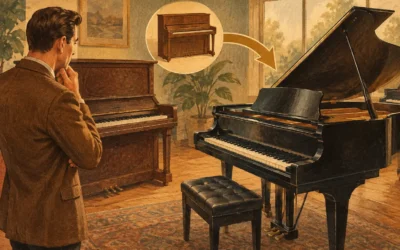
This is where many families face the first real decision: upright, grand, or digital. There is no universal answer. The best choice depends on the student’s level, the home, the budget, and how long you want this instrument to remain useful.
Start with touch before brand
Brand matters, but action matters first. If the keys feel uneven, too light, too stiff, or slow to return, the student will feel it every day. More importantly, their teacher will hear it.
A serious student needs enough resistance to develop control, but not so much that technique becomes strained. Repetition speed matters too. Fast passages, trills, and dynamic contrasts reveal weaknesses in mediocre actions very quickly.
This is one reason well-prepared acoustic pianos continue to hold their value for advancing students. A quality upright or grand offers a level of mechanical feedback that supports technique in a way entry-level instruments often cannot. That does not mean every student needs a concert grand. It means the piano should respond honestly to what the hands are doing.
Upright or grand for a serious student?
For many homes, a premium upright is the smartest answer. A well-built upright from Yamaha, Kawai, Baldwin, or Steinway can provide strong touch, excellent tonal projection, and a more practical footprint. For students working through intermediate to advanced literature, a professional-grade upright can be an outstanding long-term investment.
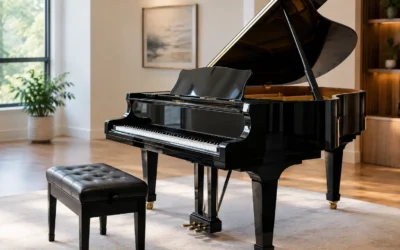
A grand piano offers additional advantages, especially for more advanced players. The action design generally allows greater repetition control and a wider palette of tonal color. If the student is preparing for competitions, auditions, or conservatory-level work, a grand can make sense earlier than many families assume.
Still, there is a trade-off. Grand pianos require more space, more budget, and more attention to placement within the room. In a smaller home, a high-quality upright may actually be the better musical choice than squeezing a grand into an acoustically poor environment.
When an upright is the better buy
An upright is often the best piano for serious student families who want lasting quality without compromising the home. The best examples are not compromise instruments. They are refined, powerful, and musically satisfying.
Look for an upright with consistent key weighting, a rich middle register, and a clear bass for its size. Taller uprights generally offer more tonal depth and projection than smaller consoles or spinets. That difference becomes meaningful as repertoire grows more demanding.
When a grand becomes worth it
If the student is playing advanced classical literature, preparing for performance exams, or practicing several hours a day, a grand starts to justify itself quickly. The greater control over articulation and color can be felt immediately by a trained player.
That said, a smaller, lower-quality grand is not automatically better than a premium upright. Families sometimes chase the shape of a grand when what the student really needs is a stronger action and better tone. Performance should lead the decision, not appearance alone.
Is a digital piano enough?
Sometimes yes, but only under specific conditions. A high-end digital piano can be a practical solution when volume control, apartment living, or limited space rules out an acoustic instrument. For a student who needs silent practice with headphones, digital can solve a real problem.
The catch is that not all digital pianos support serious study equally well. Entry-level models usually fall short in key action, pedaling realism, and tonal complexity. A committed student needs weighted keys, strong dynamic control, and a cabinet or stage model built to simulate acoustic resistance as closely as possible.
For early and lower-intermediate study, a premium digital may be perfectly serviceable. For upper-intermediate and advanced students, most teachers still prefer a good acoustic piano whenever possible. There is simply more nuance in the response.
New, used, or restored?
This is where smart buyers often gain the most value. A premium used or restored piano can outperform a newer mass-market instrument at the same price point. That is especially true for families who care about musical quality and long-term ownership.
A well-selected used Yamaha or Kawai can be ideal for a serious student. So can certain Baldwin uprights and grands. In the right hands, even older premium instruments from respected makers can offer remarkable depth and character. The condition, preparation, and service history matter more than the age alone.
That is why buying from a specialist matters. A piano is not a boxed product. It is a mechanical and musical system that needs evaluation, regulation, tuning stability, and often cosmetic or technical preparation. For families shopping seriously, the real value is not just the instrument itself. It is the confidence that it has been properly assessed and supported.
Budget honestly, not optimistically
A serious student piano should be seen as a musical asset, not just a furniture purchase. That does not mean the highest number wins. It means buying enough piano now that you do not need to replace it in two years.
Many families make the same expensive mistake: they buy too small, too light, or too cheaply, then upgrade again as soon as the student progresses. In many cases, it is more efficient to buy one level above the current need. A student entering demanding repertoire will grow into a better instrument quickly.
You should also budget for ownership, not just purchase. Delivery, tuning, possible humidity control, and ongoing service all matter. Premium support is part of the buying decision, especially with acoustic pianos.
How to test the best piano for serious student use
Play slowly first. Fast playing can hide flaws. Slow scales, soft repeated notes, and chord voicing will reveal uneven action and tonal inconsistencies much faster.
Listen for clarity in the middle register, because that is where students spend much of their time. Test the soft dynamics carefully. A piano that only sounds impressive when played loudly is not necessarily refined. The student should be able to control quiet phrasing just as well as big sonorities.
Bring the teacher into the process if possible. If not, record a few instruments and compare them later. What feels bright in a showroom may sound brittle over time. What feels warm may be the better partner for long practice sessions.
Brands worth serious consideration
Yamaha remains a leading choice for serious students because of its consistency, clean action, and broad availability in upright and grand models. Kawai is equally respected, often appreciated for a warm tone and dependable touch. Baldwin can offer excellent value, particularly in stronger American-made examples.
Steinway sits in a different category, but for some families and advanced players, it becomes a meaningful long-term investment. Not every serious student needs that level of prestige. Still, a premium instrument with strong heritage and expert preparation can be both musically and emotionally rewarding. A specialist such as A440 Pianos can help buyers compare these options with the technical guidance that serious piano shopping deserves.
The right piano should pull the student back to the bench
That is the real test. The best piano should not merely meet lesson requirements. It should make practice more satisfying, more expressive, and more productive. Students stay engaged longer when the instrument gives something back.
A serious student deserves a piano that supports ambition with real substance – not just a recognizable name, but responsive touch, tonal beauty, and the quality to keep pace as the music gets harder. Buy for the player the student is becoming, and the instrument will keep earning its place for years.

0 Comments