

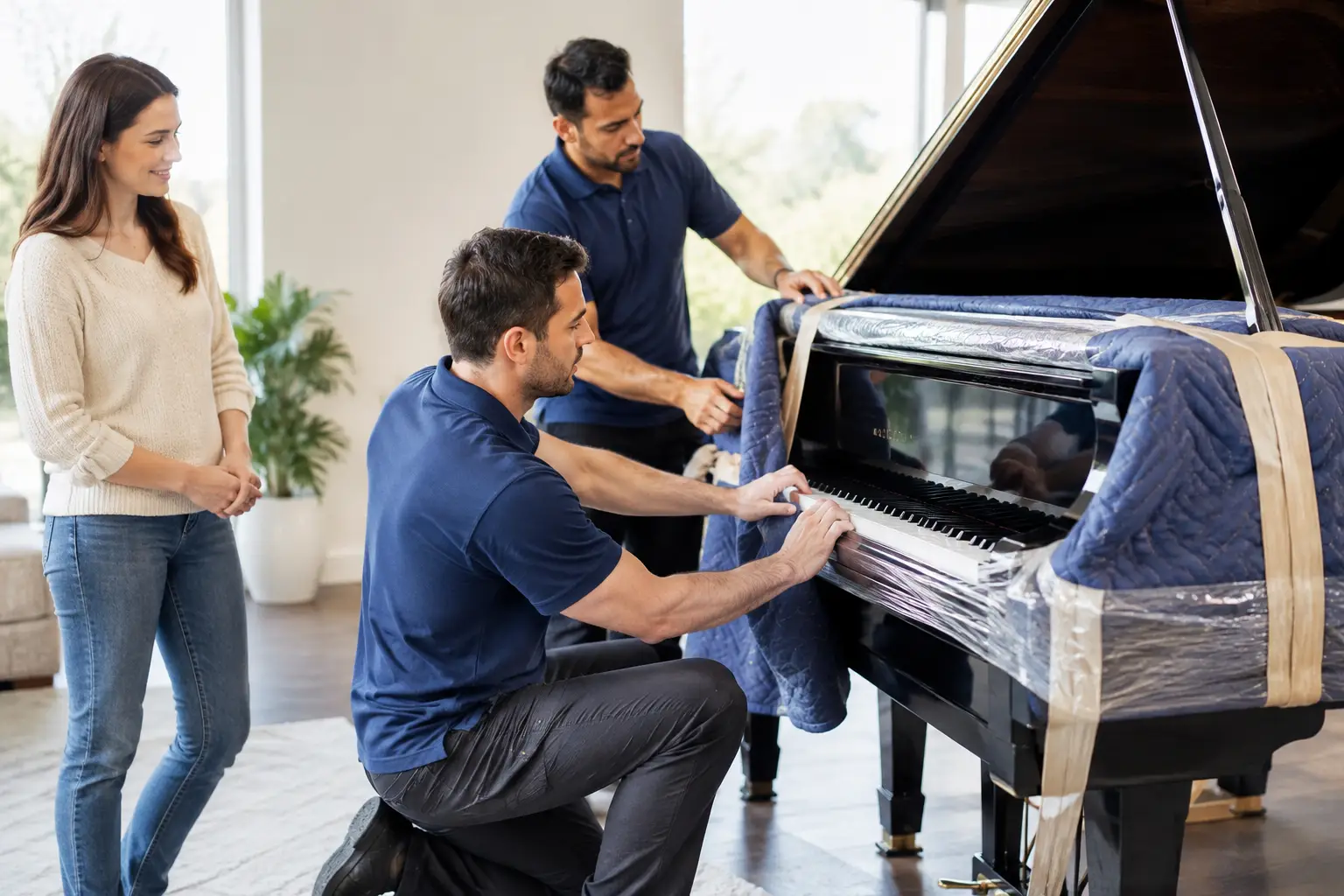
A piano can be worth a few hundred dollars or well into six figures, but every instrument shares the same vulnerability during transport: it is heavy, precisely regulated, and not designed to absorb a careless impact. This piano delivery insurance guide helps you understand what protection to request before a piano leaves the showroom, a seller’s home, or a restoration workshop.
For many buyers, delivery coverage is an afterthought until a stairway, sharp turn, weather delay, or loading incident enters the picture. Professional piano moving reduces those risks substantially, but insurance clarifies who is financially responsible if damage does occur. The right conversation before delivery can protect both your investment and your peace of mind.
Why ordinary moving coverage may not be enough
A piano is not ordinary household furniture. An upright may weigh 300 to 800 pounds, while a concert grand can exceed 1,000 pounds. Its cast-iron plate, soundboard, action, cabinet, pedals, and finish can all be affected by a drop, pressure, moisture, or improper handling.
Many moving companies provide a basic level of carrier liability, sometimes calculated by weight rather than the piano’s actual value. That can be a major gap. A 500-pound piano might receive only a modest payment under a weight-based formula, even if it is a restored Steinway, a new Yamaha, or a family instrument with significant market value.
Ask for the delivery company’s coverage terms in writing. The document should state whether the policy covers repair, replacement value, depreciated value, or only limited liability. It should also explain the deductible, the maximum payout, and the deadline for reporting damage.
A lower delivery quote can be appealing, especially on a first piano purchase. Yet the savings may disappear quickly if the mover has limited coverage, uses general household-moving equipment, or cannot clearly explain its claims process. Specialized handling and clear insurance terms are part of responsible piano delivery, not unnecessary extras.
Piano delivery insurance guide: the coverage to compare
There is no single policy that fits every piano or delivery route. A local delivery of a modest upright involves different exposure than an interstate shipment of a collectible grand. Still, buyers should understand the main forms of protection.
Carrier liability
Carrier liability is the mover’s stated financial responsibility for loss or damage while the piano is in its care. It may be included in the delivery price, but included does not always mean comprehensive. Confirm the value limit and whether the coverage applies to the piano itself, its bench, player-piano components, and any removed legs, pedal lyre, or music desk.
Also ask whether damage to your home is addressed. A careful team uses floor protection, padding, proper skids, and secure equipment, but accidents involving walls, flooring, railings, or door frames should be discussed before the move begins.
Declared-value or full-value protection
Some movers offer coverage based on the declared value of the instrument. Others offer full-value protection, which generally means the company may repair the piano, replace it with a comparable instrument, or provide a settlement up to the agreed value. The exact terms matter.
For a vintage piano, replacement is not always a satisfying remedy. Age, provenance, restoration quality, and tonal character can make one instrument difficult to duplicate. In that case, ask how repair decisions are made and whether you can use a qualified piano technician or restoration specialist for an independent assessment.
Third-party transit insurance
For higher-value pianos, longer distances, or complex shipments involving storage and multiple carriers, a separate transit policy may be appropriate. This can provide broader protection than the mover’s standard liability. It may also be useful when an instrument is shipped across state lines or transferred between a truck, warehouse, and final delivery team.
Read the exclusions closely. Some policies exclude damage caused by insufficient packing, temperature or humidity changes, mechanical or electronic failure, pre-existing defects, or damage discovered after a specified reporting window. Self-playing systems, silent-piano components, and digital controls may need specific attention.
Homeowners or renters insurance
Do not assume your existing home policy automatically covers a piano in transit. Coverage can vary based on whether the piano is owned by you, when the loss occurs, the cause of damage, and whether a professional carrier is involved. High-value instruments may also exceed your policy’s limits.
A call to your insurance agent can clarify whether a scheduled personal-property endorsement makes sense once the piano is in your home. This is especially worth considering for premium grands, restored vintage instruments, and pianos used professionally in a studio or teaching setting.
Set the piano’s value before it moves
Coverage only works when the insured value is realistic. The original purchase price is a useful starting point, but it is not always the best measure. A well-restored vintage grand may have a higher current value than its original sale price suggests, while an older piano in poor condition may not justify a premium valuation.
For a newly purchased piano, retain the sales invoice and a detailed description that includes the make, model, serial number, finish, and included accessories. For an existing instrument, consider a current appraisal or written valuation from a qualified piano professional. This becomes particularly useful if the piano has received substantial restoration work, has an unusual finish, or is a limited-production model.
Photographs are equally valuable. Before pickup, take clear, dated images of all sides of the cabinet, legs, pedals, lid, key surfaces, bench, and any existing scratches or finish checking. Photograph the serial number and document known concerns, such as a loose music desk or a delicate veneer repair.
Keep these items together before delivery:
- The sales invoice, appraisal, or valuation document
- Photos and video showing the piano’s condition before pickup
- The mover’s written estimate and insurance or liability terms
- A copy of the bill of lading or delivery receipt
- Contact details for the mover, seller, and insurer
This record does not make a claim pleasant, but it gives everyone a reliable starting point if questions arise.
Ask how the delivery itself will be handled
Insurance should never be a substitute for capable moving practices. The best protection is a trained piano-moving crew that plans the route, evaluates stairs and tight turns, and uses equipment designed for the instrument.
Before scheduling, share accurate details about both locations. Include stair counts, elevators, parking distance, narrow halls, sharp corners, gates, gravel paths, and any access limitations. Tell the mover whether the piano is going to a main-floor room, an upper level, a basement, or a studio with limited entry. Surprises on delivery day can increase risk and may also change the price.
Ask whether the team will use padded covers, a piano board or skid, stair-climbing equipment when needed, floor protection, and climate-conscious transport. For a grand piano, confirm how the lid, legs, pedal assembly, and lyre will be secured. For an upright, ask how the action and pedals will be protected during loading and unloading.
In the Atlanta area and beyond, A440 Pianos approaches delivery as part of the complete ownership experience, with professional handling that respects both the instrument and the home it is entering. That standard matters whether you are receiving a first upright or a concert-level grand.
Inspect before signing the final receipt
Be present when possible, and give yourself a few minutes to inspect the piano before the crew leaves. Look for cabinet damage, chips, scratches, loose hardware, pedal issues, or anything that differs from your pre-delivery photos. Open and close the lid carefully, check that the bench is intact, and look around the delivery path for potential property damage.
A piano may also need time to acclimate after transport. Changes in temperature and humidity can affect tuning, and a tuning appointment after the instrument settles into its new environment is normal. Tuning drift alone is usually not evidence of shipping damage. However, unusual noises, sticking keys, damaged action parts, cracks, or electronic malfunctions should be documented promptly.
If you see a concern, photograph it immediately, note it on the delivery receipt before signing, and notify the mover according to the written claim instructions. Avoid authorizing repairs until the responsible party has reviewed the claim, unless urgent action is needed to prevent further damage.
When extra coverage is worth the cost
Additional insurance is often a sensible choice for pianos with high replacement cost, collectible value, rare finishes, extensive restoration history, or complex electronics. It is also wise to consider for long-distance moves, storage between pickup and delivery, difficult stair carries, and deliveries during severe weather.
For a modest, readily replaceable upright moving a short distance with an experienced specialist, the mover’s standard protection may be sufficient if the limits are clear and acceptable to you. The point is not to buy every available add-on. It is to match the coverage to the piano, route, and financial risk you would be uncomfortable carrying yourself.
A well-planned delivery lets the first moment at the keyboard feel like it should: the beginning of music in a new space, not the start of an insurance dispute.



0 Comments