

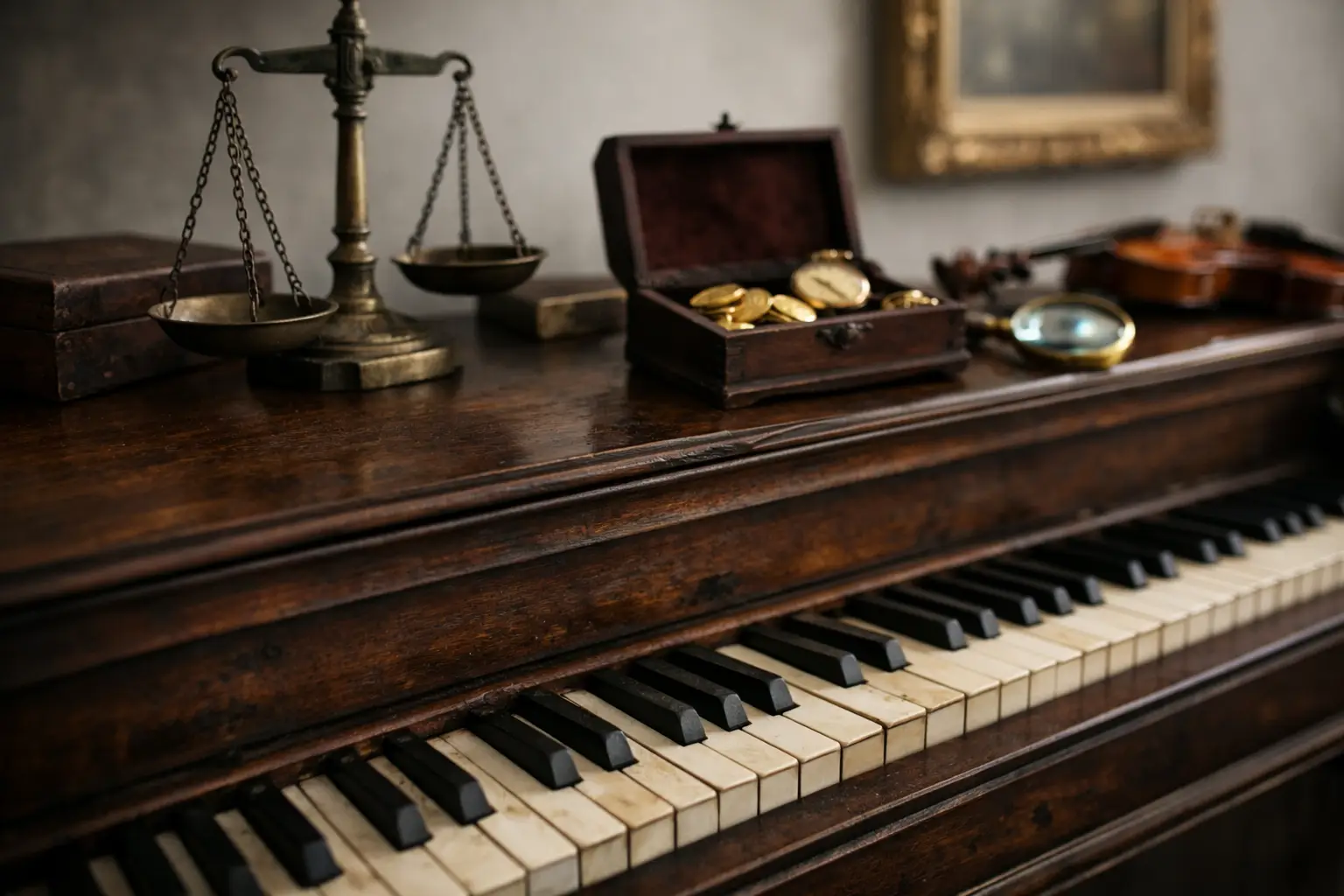
A piano can carry a century of family memories and still have little market value. Another instrument of the same age, kept in the right home and built by a respected maker, may be a remarkable musical and financial find. So, are old pianos valuable? Sometimes, but age alone is rarely the reason.
For owners, buyers, and families deciding what to do with an inherited piano, the right question is not simply, “How old is it?” It is, “What is it, what condition is it in, and what would it take to make it perform well today?” Those answers determine whether an older piano is a candidate for restoration, a dependable player after service, a collectible instrument, or a piano best passed along at little or no cost.
Are Old Pianos Valuable Because They Are Old?
Most old pianos are not automatically valuable. In fact, many upright pianos built between the late 1800s and the mid-1900s have limited resale value, even when their cabinets are attractive and their original paperwork is intact. Thousands of instruments were produced during that period, and a piano is a complex mechanical system that ages from the inside out.
The action, strings, tuning pins, bridges, soundboard, and pinblock all affect whether a piano can hold a tune and respond properly to a player. A beautiful cabinet cannot compensate for loose tuning pins, cracked bridges, deteriorated hammers, or a compromised structure. Moving and rebuilding a severely worn piano can cost more than the instrument will command on the market.
That does not mean an old piano has no purpose. Some are excellent restoration candidates. Others can serve a family well as affordable instruments after practical repairs and regulation. The distinction is important: sentimental value, playable value, and resale value are not always the same thing.
The Factors That Create Real Value
The maker and model
The name on the fallboard is a meaningful starting point. Established makers with a reputation for durable construction, refined tone, and strong demand tend to retain value better than mass-market or regional brands with limited modern recognition.
A well-maintained Steinway & Sons grand, for example, can have significant value because the brand has a deep market, a long restoration tradition, and broad appeal among pianists and collectors. Certain Yamaha uprights and grands are sought after for consistency and reliability. European makers such as Blüthner may attract buyers looking for a distinctive tonal character and traditional craftsmanship.
Still, a respected name is not a blank check. Model, size, production era, originality, and condition matter. One manufacturer may have produced both exceptional instruments and more ordinary lines over many decades. A qualified technician or piano specialist can identify the model and serial number, then place the instrument in its proper historical context.
Structural and musical condition
A piano may look polished while hiding expensive problems. The most valuable older instruments are those with a sound foundation: a stable pinblock, healthy bridges, intact plate, serviceable soundboard, and action components that can be regulated or rebuilt appropriately.
The soundboard deserves careful evaluation. Fine hairline cracks are common in older acoustic pianos and do not always prevent an instrument from making music. The larger concern is whether cracks, loose ribs, or bridge issues have affected tone, sustain, and structural stability. Likewise, a piano that is substantially below concert pitch may be recoverable, but only if its strings, plate, and tuning pin system can safely support the necessary tension.
Condition also includes the action, the mechanism that translates a keypress into a hammer striking the strings. Worn hammers, compacted felt, loose centers, broken parts, and uneven touch can make a piano unpleasant to play. A well-regulated action with even response is often more valuable to a serious player than a glossy finish.
Restoration quality and documentation
A professionally restored piano can be more desirable than an untouched original, particularly when the work respects the instrument’s design and is documented clearly. Replaced strings, new pinblock material, rebuilt action parts, refinished cabinetry, and careful regulation can extend a fine piano’s useful life for decades.
But the word “restored” can mean many things. Some sellers use it to describe a cleaning, polish, and tuning. Others mean a complete rebuilding process involving major structural and action work. Ask what was replaced, who performed the work, when it was completed, and whether receipts or service records are available.
Over-restoration can also affect collector appeal. If a piano has rare historical significance, preserving original materials and finishes may matter. For most musicians, however, musical performance, stability, and reliable service matter more than untouched originality.
Size, style, and current demand
Grand pianos generally have stronger demand than old uprights, especially when they are built by desirable makers and remain structurally sound. Their longer strings and larger soundboards can offer a more rewarding tonal range, and they often appeal to advanced players, studios, and collectors.
That said, size can limit a piano’s market. A large concert grand needs substantial floor space, suitable acoustics, and specialized moving. An upright with a warm tone and a compact footprint may be more practical for a home, teacher, or apartment-friendly studio. Ornate cabinetry can be beautiful, but it may narrow the audience if the style feels difficult to place in a contemporary home.
Location affects demand as well. In the Atlanta area and beyond, the cost of professional moving, climate exposure, stair access, and service needs all influence what a buyer is willing to pay. A piano is not an object that can simply be shipped in a box. Its value must make sense after delivery, tuning, and any necessary work.
How to Assess an Old Piano Before You Sell or Buy
Begin by locating the serial number, usually found inside the piano near the plate or tuning pins. Record the brand, model if shown, type of piano, approximate dimensions, and any known service history. Clear photographs of the exterior, keyboard, pedals, interior plate, strings, soundboard, and serial number are useful for an initial conversation with a piano professional.
Then arrange an in-person evaluation before assigning a price or committing to a purchase. A technician can test tuning stability, inspect the soundboard and bridges, assess action wear, and identify repairs that may not be visible to an untrained eye. This is particularly important with a “free” piano. The purchase price may be zero, but moving, tuning, repairs, humidity control, and restoration can quickly become the real investment.
For a buyer, compare the piano against current alternatives. A vintage upright with modest resale value may still be the right choice if it has been serviced, plays beautifully, and fits the home and budget. On the other hand, a newer used piano may provide more predictable tuning stability and lower near-term maintenance costs. The best value is the instrument that supports consistent playing rather than becoming an ongoing project.
When Restoration Makes Sense
Restoration is usually worth considering when the piano has a respected pedigree, an excellent scale design, a sound structural foundation, and a tone worth preserving. It can also make sense when a family has a meaningful instrument and understands that the return may be musical rather than financial.
It is less sensible when a piano has weak structural components, limited market demand, extensive water or pest damage, or restoration costs that far exceed the value of comparable finished instruments. A straightforward repair plan can be wise. A complete rebuild should be a deliberate decision, informed by an inspection and a realistic budget.
Do not overlook the importance of proper care after restoration or purchase. Regular tuning, climate awareness, prompt repairs, and professional moving protect both the piano and the investment. A piano that is moved poorly can suffer cabinet damage, action issues, or more serious structural harm.
Value Is More Than a Price Tag
An old piano earns its place when it invites someone to sit down and play. Its market value may be high, modest, or nonexistent, but a careful assessment prevents costly surprises and reveals the instruments that truly deserve preservation.
Whether you are considering a vintage grand, an inherited upright, or a restored family instrument, A440 Pianos can help you evaluate the practical next step with experienced guidance, professional moving, and ongoing service designed around the life of the piano.

0 Comments