

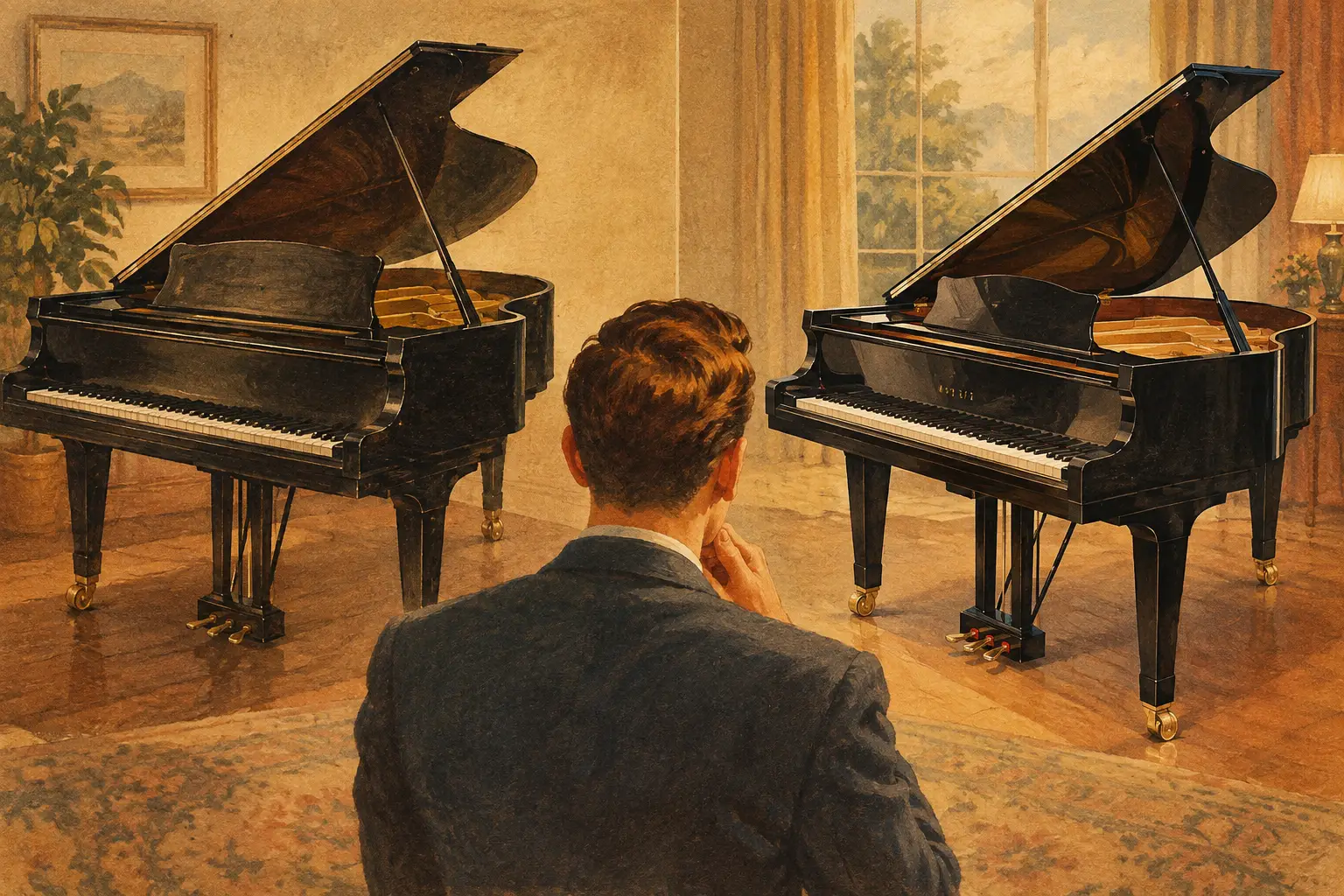
A Baldwin can make a room feel like a small concert hall. A Yamaha can make daily practice feel remarkably clear, controlled, and productive. When comparing Baldwin versus Yamaha pianos, the better choice is rarely about the logo alone. It comes down to the specific instrument, its production era, its condition, the player’s touch, and what the piano needs to do in your home, studio, school, or performance space.
Both names carry serious musical credibility. Yet they tend to appeal to different ears and playing preferences. Baldwin is often chosen for its American scale, warmth, and expressive character. Yamaha is widely respected for consistency, precision, durability, and a clean tonal profile that works across many musical settings.
Baldwin Versus Yamaha Pianos: The Core Difference
At their best, Baldwin and Yamaha represent two distinct piano personalities. A well-prepared Baldwin grand often delivers a broad, resonant sound with a generous bass and a singing middle register. Many players describe the experience as powerful, warm, and emotionally expansive. This can be especially appealing for romantic repertoire, church use, vocal accompaniment, and players who want a piano with a noticeable voice of its own.
Yamaha pianos are known for clarity, evenness, and dependable response. Their tone is often more direct and focused, with a bright-to-balanced character that projects well without becoming muddy. This makes Yamaha a familiar choice for teaching studios, institutions, recording environments, contemporary music, and serious students who need an instrument that responds predictably day after day.
Neither sound is automatically superior. A pianist seeking color and old-school American presence may be drawn to Baldwin. Someone who values control, consistency, and a clean musical canvas may prefer Yamaha.
Tone: Warm American Character or Clear Precision?
Tone is personal, but it is also affected by the room, the piano’s age, its voicing, and its maintenance history. Two pianos of the same brand can sound surprisingly different.
Baldwin’s strongest reputation rests with many of its American-built instruments, particularly the better grands from respected production periods. These pianos can offer a substantial, orchestral sound. The bass often has weight and depth, while the treble can be full rather than glassy. A Baldwin that has been properly restored and voiced can be an extraordinary instrument for a player who wants richness without losing power.
Yamaha generally aims for tonal consistency across its lines. The sound tends to be articulate, bright enough for definition, and balanced from bass through treble. On a quality Yamaha grand, individual notes speak quickly and clearly. That clarity is valuable when practicing fast passages, accompanying singers, or working with microphones in a studio.
A bright Yamaha can be softened through expert voicing, just as a Baldwin can be regulated and voiced for greater clarity. Still, the underlying character remains relevant. If you want lushness and breadth, Baldwin may have the advantage. If you want precision and tonal transparency, Yamaha is often compelling.
Touch and Action Response
The action is where a piano stops being furniture and becomes a musical tool. Both brands can provide excellent touch, but their feel is not always the same.
Yamaha actions are widely admired for their consistency. They are often responsive, quick, and relatively easy to control, especially for students developing technique. Repetition is dependable, and the action tends to feel organized from one end of the keyboard to the other. For a busy teaching studio or a family with multiple players, that predictability has real value.
A good Baldwin action can feel more substantial and deeply connected to the instrument’s sound. Some players love the sense of resistance and leverage, particularly on larger Baldwin grands. Others may find an older Baldwin needs careful regulation before it feels as refined as a newer or better-maintained Yamaha.
This is one reason a hands-on evaluation matters. A piano can look impressive, carry a prestigious name, and still need action work. Regulation, hammer shaping, key leveling, and proper lubrication can dramatically change how an instrument feels. The brand is the starting point, not the final judgment.
Build Quality Depends on Era and Condition
For used piano buyers, production history matters. Baldwin has a celebrated legacy of American piano manufacturing, and many vintage Baldwin grands and uprights remain highly desirable. However, Baldwin ownership and production changed over the years. The condition of an individual piano, along with where and when it was built, deserves more attention than a broad assumption about the nameplate.
Yamaha has earned an international reputation for disciplined manufacturing and durable design. Its better instruments are known for holding up well under regular use, which is one reason Yamaha is common in schools, conservatories, and professional settings. As with any large manufacturer, model line and country of production can vary, so buyers should evaluate the exact piano rather than relying solely on brand reputation.
With either brand, inspect the soundboard, bridges, pinblock, strings, action components, pedals, cabinet, and internal structure. A technician should also check tuning stability and look for signs of excessive wear, water exposure, poor storage, or deferred maintenance. A beautiful cabinet cannot compensate for structural issues.
Grand Pianos: Where Baldwin Often Makes Its Case
Baldwin’s most devoted fans are frequently grand-piano players. Larger Baldwin grands can provide exceptional scale and projection for their size, making them attractive for homes with generous music rooms, churches, performance spaces, and collectors looking for vintage American character.
Models such as the Baldwin R, M, and L have long been respected when found in strong condition. The nine-foot Baldwin SD is also a notable concert grand with a serious professional reputation. The right vintage Baldwin can offer a premium musical experience that compares favorably with far more expensive instruments.
That said, restoration quality matters greatly. A vintage grand with original, worn hammers, tired action cloth, unstable tuning pins, or neglected regulation may not show its true potential. A carefully rebuilt or expertly serviced Baldwin is a different proposition from an untouched piano that has spent decades in an uncontrolled environment.
Upright Pianos: Yamaha’s Practical Strength
For buyers shopping vertical pianos, Yamaha is often a highly practical choice. Yamaha uprights are commonly praised for their responsive actions, stable tuning, and clear tone in a compact footprint. They can serve beginners, advancing students, teachers, and experienced hobbyists very well.
Baldwin uprights can also be excellent, particularly older American-made examples with solid construction and a warmer tonal personality. But the wide range of ages and production histories means selection is especially important. A technician-reviewed Baldwin upright can be a rewarding value, while a poorly maintained one can become a repair project.
For a first serious piano, a well-maintained Yamaha upright is often the straightforward answer. For a buyer who values vintage craftsmanship, warmer tone, and a more distinctive cabinet or musical character, the right Baldwin upright deserves consideration.
Resale Value and Long-Term Ownership
Yamaha typically has broad resale recognition. Buyers know the name, technicians know the instruments, and demand is consistent across many parts of the United States. This can make Yamaha easier to resell, particularly popular upright and small grand models in excellent condition.
Baldwin resale value can be more variable, but that does not mean Baldwin is a weak purchase. Desirable American-built Baldwin grands, especially those with verified restoration or excellent maintenance records, can attract knowledgeable buyers who specifically want that sound and heritage. The market may be narrower than Yamaha’s, but the right instrument can hold considerable appeal.
Long-term value is also protected by ownership habits. Keep the piano in a stable indoor climate, tune it regularly, address small repairs early, and use professional piano movers for every relocation. A piano that is cared for properly remains more enjoyable to play and more credible when it is time to sell or trade.
Which Piano Is Right for Your Setting?
Choose a Baldwin if you are drawn to a warm, expansive sound, enjoy the character of vintage American pianos, or want a grand that feels expressive and substantial under the hands. A strong Baldwin can be an exceptional centerpiece for a music room, church, or performance-oriented home.
Choose a Yamaha if you want consistent touch, dependable construction, tonal clarity, and an instrument that accommodates changing skill levels and musical styles. Yamaha is often an excellent fit for serious students, educators, recording spaces, and buyers who prioritize predictable performance.
At A440 Pianos, the best comparison is made piano by piano. Playing several examples, reviewing each instrument’s service history, and discussing your room, repertoire, and budget will reveal more than a brand debate ever can. The right piano should invite you to sit down tomorrow, not merely impress you in the showroom today.
0 Comments