

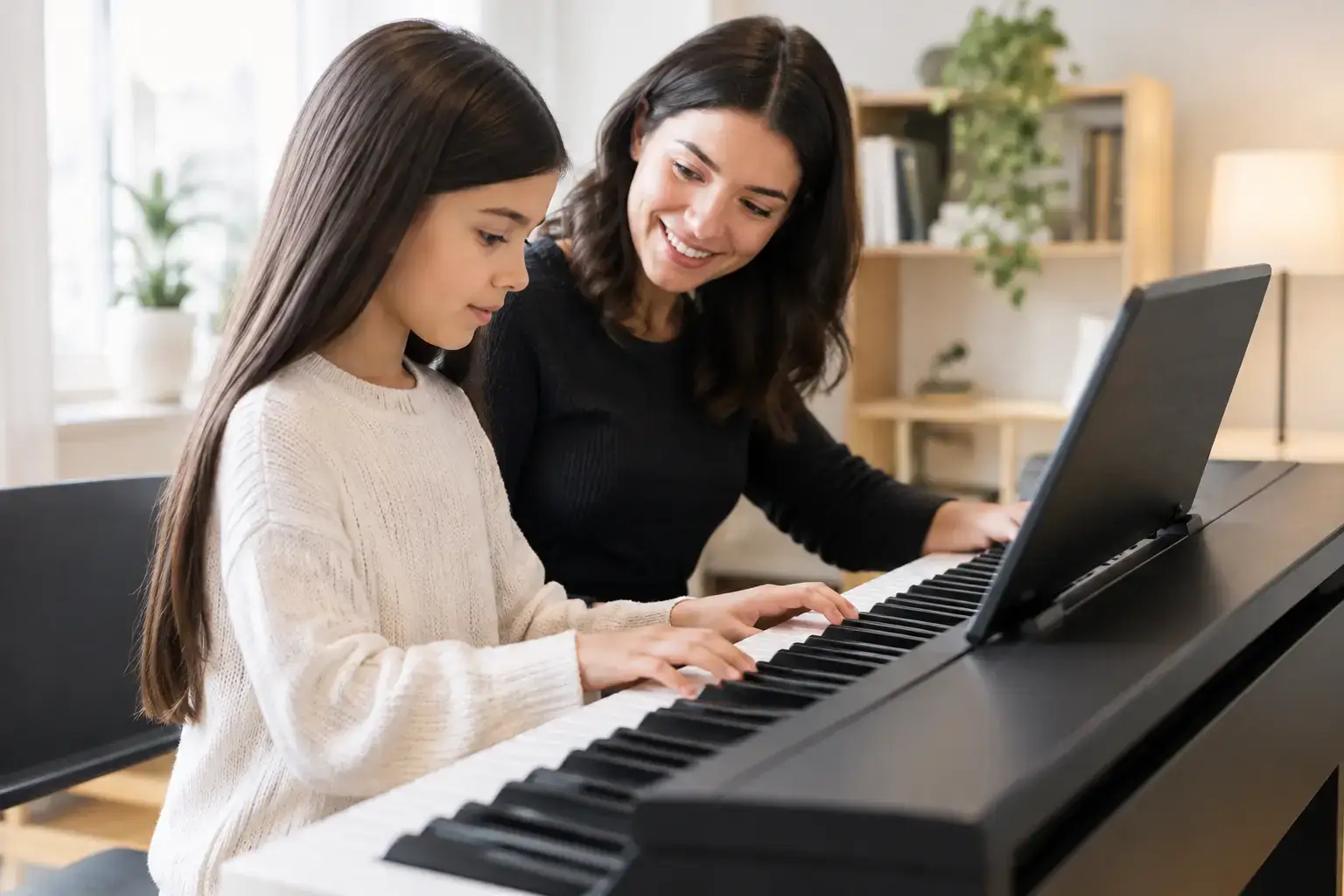
A child’s first scale should not feel like a battle with stiff plastic keys, weak sound, or a keyboard that slides across the stand. The best pianos for home lessons give students a convincing touch, a clear musical voice, and enough reliability that practice becomes part of the household routine. The right choice is not always the largest or most expensive piano. It is the instrument that suits the player, the room, the family’s schedule, and the years of learning ahead.
For most homes, the decision comes down to a quality acoustic upright or a well-built digital piano with fully weighted keys. Both can support serious instruction. The better option depends on how the piano will be used and what your home can accommodate.
What a Home Lesson Piano Needs
A beginner does not need a concert grand, but they do need an instrument that teaches good habits. That starts with a full 88-key keyboard. Students quickly outgrow smaller keyboards as method books introduce wider hand positions, bass notes, and two-handed repertoire.
Touch matters just as much. A piano student needs keys with resistance and return that resemble an acoustic action. This develops finger strength, control, dynamics, and proper technique. Avoid unweighted keyboards or basic synthesizers as a primary lesson instrument. They can be enjoyable for casual playing, but they do not respond like a piano and can make the transition to an acoustic instrument unnecessarily difficult.
Sound is also part of the lesson. Students learn to listen for balance between hands, shape a phrase, and play softly without losing tone. An acoustic piano offers natural resonance and a direct connection between key, hammer, and string. A high-quality digital piano can provide an excellent alternative, especially when it has responsive weighted action, strong speakers, and a credible sampled piano tone.
Finally, consider practical ownership. A piano should fit the room without becoming an obstacle, arrive safely, and receive appropriate care after delivery. These details often determine whether a promising purchase remains enjoyable years later.
Acoustic Uprights: The Best Long-Term Choice for Many Families
For families with space and a commitment to regular lessons, an acoustic upright is often the most satisfying choice. It gives the student the real mechanical response teachers expect, along with a sound that naturally changes with each touch. There is no substitute for feeling an acoustic action engage and hearing the cabinet resonate in the room.
A well-maintained studio or professional upright is particularly suited to home lessons. These pianos generally offer a larger soundboard, longer strings, and a more substantial action than compact entry-level uprights. That translates to better tonal depth and greater control as the student advances.
Yamaha U1 and U3-Style Uprights
Yamaha uprights are popular in homes, schools, and teaching studios for good reason. Their actions are dependable, their tone is clear, and their consistency makes them comfortable for students and teachers alike. A Yamaha U1 is a strong choice when floor space is limited but the family wants a serious acoustic instrument. A taller U3-style upright provides more power and tonal richness, making it especially appealing for intermediate and advanced players.
Newer models can be an excellent investment, but a properly inspected and serviced used Yamaha may offer exceptional value. Condition matters more than the label alone. The piano’s action, pinblock, strings, soundboard, cabinet, and service history should all be evaluated before purchase.
Vintage and Restored Uprights
A vintage upright can bring warmth, character, and furniture-quality presence to a home. It can also be a wise purchase when restoration has been completed thoughtfully. The important distinction is between a piano that is merely old and one that has been professionally assessed and prepared for dependable use.
A beautiful cabinet does not guarantee a healthy instrument. Ask whether the piano holds tune, whether the action has been regulated, and whether worn components have been addressed. A restored upright from a respected maker can become a treasured family instrument, but it should be selected for musical condition as carefully as appearance.
Digital Pianos: The Practical Answer for Apartments and Busy Homes
A digital piano is not a compromise when it meets the right standard. For apartment living, late-night practice, or families that need a more flexible setup, it can be the most practical instrument for lessons. Headphone capability allows a student to practice without filling the entire home with scales and beginner songs. Volume control is equally useful when siblings are studying or adults are working nearby.
Look for a cabinet-style digital piano or a substantial portable model with a stable furniture stand and three-pedal unit. The essential features are a full 88-key weighted action, graded hammer response, quality piano samples, and enough speaker power to sound natural at normal home volume. A dedicated piano bench and proper height are also worthwhile. Good posture should begin at the first lesson.
Digital pianos do have trade-offs. Even excellent models cannot fully duplicate the physical complexity of an acoustic action or the sympathetic resonance of real strings. They also rely on electronics, which eventually age differently than acoustic components. Still, a premium digital piano can serve a committed student very well, particularly when space, quiet practice, or portability is the deciding factor.
When a Grand Piano Makes Sense at Home
A grand piano is a wonderful home lesson instrument, but it is not automatically the right first purchase. Its horizontal action and larger soundboard offer extraordinary control, tonal color, and musical range. For advanced players, serious teachers, and families who regularly make music at home, a baby grand or larger grand can be deeply rewarding.
The question is whether the room supports it. A grand needs more than its footprint on paper. It needs space for the bench, opening the lid, walking around it, and allowing the sound to develop without overwhelming the room. Placement away from direct sunlight, exterior doors, HVAC vents, and dramatic temperature changes will help protect the instrument.
In many homes, a quality upright will provide a better musical result than a small grand placed in a cramped or acoustically harsh room. Choose the piano that fits comfortably and can be maintained properly, not simply the category that feels most impressive.
Match the Piano to the Student’s Path
For a young beginner, consistency is more valuable than excess. A responsive upright or weighted digital piano creates the right foundation without asking the family to overbuy. For an older beginner or returning adult, an acoustic upright may encourage longer practice sessions because the touch and sound are more engaging.
Intermediate students benefit from a piano with wider dynamic range and a more refined action. At this stage, a professional upright, a high-quality restored piano, or a well-chosen grand becomes easier to justify. Advanced students preparing demanding classical, jazz, or audition repertoire may need the tonal nuance and repetition capability of a finer acoustic instrument.
Teacher input can be helpful, but it should be balanced with your own home requirements. A teacher may prefer acoustic pianos, for example, while your apartment building or practice schedule makes a digital piano the realistic choice. The best solution is the one the student will actually use every day.
Budget for Delivery, Tuning, and Care
The purchase price is only one part of piano ownership. Acoustic pianos need professional tuning, typically at least once or twice a year depending on use and environmental stability. They may also need regulation, voicing, or repair over time. Keeping indoor humidity relatively stable protects the wood, action parts, and tuning stability.
Professional delivery is equally essential. Pianos are heavy, finely balanced instruments with vulnerable cabinetry, pedals, legs, and actions. Moving one safely requires the right equipment, trained handlers, and an understanding of stairs, turns, flooring, and secure placement. After delivery, allow an acoustic piano time to adjust to its new environment before its first tuning.
At A440 Pianos, selection is treated as the beginning of a complete ownership experience, with guidance on the instrument itself as well as delivery, tuning, restoration, and future care. That support can be especially reassuring for first-time buyers.
A Piano Worth Practicing On
The ideal home lesson piano invites someone to sit down without being asked twice. It should feel stable under the fingers, sound musical at both soft and strong dynamics, and fit naturally into family life. Whether that means a carefully prepared upright, a premium digital piano with headphones, or a grand that becomes the center of a music room, choose an instrument that makes daily practice feel possible and rewarding.


0 Comments