

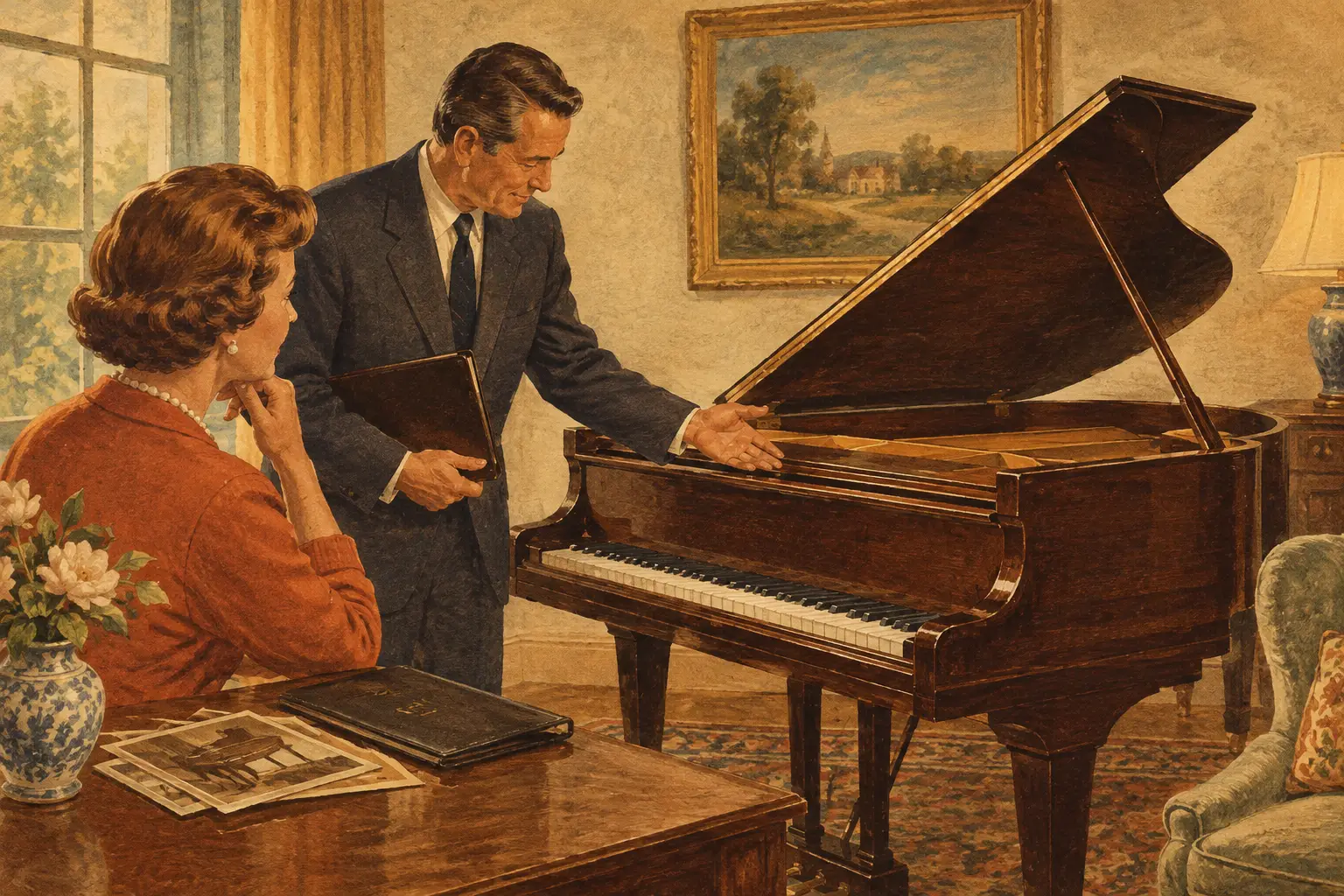
A piano can be the most visible asset in an estate and one of the hardest to price correctly. Estate piano resale is not simply a matter of identifying a famous name on the fallboard. A 1920s grand from a respected maker may hold exceptional musical and collector appeal, while a newer piano with deferred maintenance can require more investment than its resale market will support.
The right outcome begins with an honest evaluation of the instrument, its ownership history, and the practical cost of bringing it to market. For executors, families, and trustees, that process protects both the piano’s value and the people making decisions around it.
Start With the Piano’s Actual Condition
Age, brand, size, and cabinet appearance matter, but they do not tell the full story. Pianos are complex acoustic instruments built from wood, felt, steel, cast iron, and thousands of moving parts. Climate, tuning history, prior repairs, storage conditions, and relocation all affect value.
A piano that has been played regularly and professionally maintained may be a strong resale candidate even if it shows modest cosmetic wear. By contrast, an elegant cabinet does not offset a cracked soundboard, unstable pinblock, severe moth damage, or an action that needs extensive rebuilding. Cosmetic restoration and musical restoration are separate questions, and serious buyers understand the difference.
Before setting a price, arrange a professional inspection. The assessment should address structural condition, tuning stability, action wear, strings, hammers, pedals, finish, and whether the piano needs routine service, targeted repair, or full restoration. It should also confirm the serial number and exact model. That information is far more useful than a general description such as “antique baby grand.”
Brand Heritage Helps, but Demand Sets the Price
Prestigious makers often command greater interest because buyers recognize their craftsmanship, tonal character, and long-term serviceability. Steinway, Yamaha, Kawai, Baldwin, Blüthner, and other respected names can perform well in the resale market when the individual instrument is in desirable condition.
Still, estate sellers should not assume every piano from a premium brand carries a premium resale value. A model’s original market position, age, condition, scale design, regional demand, and restoration history all matter. A well-maintained professional upright may appeal strongly to a teacher, studio, or family with limited space. A full concert grand has a more specialized buyer pool and higher moving requirements, even when it is a remarkable instrument.
It also depends on whether the buyer is seeking a performance instrument, a furniture-quality statement piece, or a restoration project. These are different markets with different price expectations. A clear appraisal separates replacement value, insurance value, fair market value, and likely dealer resale value. They should not be treated as interchangeable figures.
Provenance Can Add Meaning and Marketability
Documentation can make an estate piano easier to evaluate and more compelling to a buyer. Original purchase records, service invoices, restoration receipts, photographs, artist or family history, and known ownership can establish credibility. Provenance is especially meaningful for rare finishes, limited-production instruments, historically notable models, and pianos connected to a documented performer or venue.
Sentimental history deserves respect, but it does not automatically increase market value. The strongest provenance is specific, verifiable, and relevant to the instrument. A documented restoration by a recognized technician may carry more commercial weight than an unverified family story, though both can be preserved in the piano’s presentation.
Prepare the Instrument Before Offering It for Sale
A piano should be clean, accessible, and accurately represented before it is shown. This does not always mean completing a major restoration. Large investments should be weighed against the expected market return. In some cases, a buyer will prefer to select restoration details personally, particularly on a vintage grand or collector instrument.
Routine preparation is usually worthwhile. A technician can identify loose hardware, sticking keys, pedal concerns, and other correctable issues. A careful exterior cleaning and professional photos can materially improve presentation. Avoid household polishes, excess moisture, or improvised repairs that may damage the finish or create questions for a prospective buyer.
If the instrument has not been tuned for years, ask the technician whether tuning is appropriate before scheduling it. A neglected piano may need a pitch raise and multiple tuning visits, and a technician may advise against placing tension on compromised strings or structural components. Accurate disclosure is more valuable than a cosmetic impression of perfection.
For an organized sale file, keep these materials together:
- The make, model, serial number, dimensions, and finish
- Technician inspection notes and recent tuning or repair invoices
- Original sales paperwork, restoration records, and ownership documentation
- Clear photographs of the cabinet, keyboard, pedals, plate, serial number, and any visible flaws
This information lets qualified buyers make faster, better-informed decisions. It also reduces the risk of price changes after an in-person inspection.
Choose the Right Estate Piano Resale Path
Private sale can produce the highest gross price when the piano is desirable, properly presented, and the seller has time to manage questions, appointments, negotiations, and logistics. It can also bring uncertainty. Buyers may not understand the cost of moving a piano, may request extensive concessions after inspection, or may not be prepared to complete the transaction.
Consignment through a specialty piano retailer can be a strong choice for a high-quality instrument that deserves exposure to serious buyers. The retailer may handle evaluation, presentation, demonstrations, buyer communication, and delivery coordination. The trade-off is a commission and a longer sales timeline, but the process often provides a more controlled premium-market experience.
A direct purchase from a specialty dealer offers speed and simplicity. This route is particularly practical when an estate must be settled on a defined schedule, the home is being sold, or family members live out of state. The seller generally receives less than a final retail price because the dealer assumes the cost and risk of preparation, storage, marketing, warranty support, and eventual resale.
Donation or disposal may be appropriate for pianos with limited resale viability, but neither should be assumed without an evaluation. Many schools, churches, and charities cannot accept instruments that need substantial work or cannot fit their facilities. A piano’s condition, rather than its age alone, determines whether it is a useful gift.
Budget for Safe Moving and Delivery
Moving is part of the transaction, not an afterthought. An upright can weigh several hundred pounds; a grand piano can exceed 1,000 pounds. Staircases, narrow turns, elevators, driveway access, flooring, climate exposure, and destination conditions affect both cost and feasibility.
Use insured piano movers with the equipment and experience to protect the instrument, the property, and everyone involved. General household movers are not always equipped to remove legs, secure a grand on a piano board, protect delicate finishes, or manage the weight distribution safely. An improperly handled move can create damage that erases much of the piano’s resale value.
Be transparent about every step, landing, and access challenge when requesting an estimate. If the buyer is responsible for transport, establish that in writing and clarify when ownership and liability transfer. A professional delivery plan is one reason specialty buyers often prefer working with an established piano company.
Price for the Market You Have, Not the Memory You Hold
Estate sales can carry understandable emotional weight. A piano may represent decades of lessons, holidays, performances, or a loved one’s daily ritual. Those memories are real, but they should not force an unrealistic asking price or prevent a good instrument from finding its next musical home.
A fair strategy considers comparable instruments that have actually sold, not only optimistic online listings. It accounts for local and national demand, required service, moving complexity, and the distinction between an asking price and a completed sale. If the piano is exceptional, careful marketing and patience may be justified. If the estate has a short deadline, certainty may be more valuable than holding out for a higher figure.
For owners who want a premium, service-centered option, A440 Pianos can evaluate suitable instruments and help connect quality pianos with serious buyers who understand their value. The best estate sale is not merely quick or profitable. It places a well-represented instrument in the hands of someone prepared to preserve, play, and care for it.

0 Comments