


The wrong first piano can make practice feel like work. The right one makes a student sit down more often, stay longer, and hear progress sooner. That is why a first piano buying guide should not start with price alone. It should start with how the instrument will be used, who will play it, and whether you want a piano that simply fills a room or one that genuinely supports musical growth.
For many buyers, this is both a practical purchase and a personal one. A piano becomes part of the home, part of the routine, and often part of family life for years. If you are buying for a beginner, a serious student, a church, or your own return to music, the goal is the same: choose an instrument with real musical value, stable performance, and service support you can trust.
First piano buying guide: start with the player
Before comparing brands or cabinet styles, think about the player’s level and goals. A six-year-old beginner does not need the same instrument as a teenager preparing for advanced repertoire, and a casual adult player may not need what a teacher would choose for a studio. Still, there is one rule that holds up well: buy the best piano you can reasonably afford, provided it suits the room and will actually be used.
A piano with an uneven touch, weak tone, or maintenance issues can hold back a developing ear and discourage consistent practice. On the other hand, overspending on a large instrument that overwhelms the room or exceeds the player’s needs is not always wise either. The smartest purchase usually sits in the middle – high enough in quality to reward progress, practical enough to own with confidence.
Acoustic or digital?
This is the first major decision, and it depends on your priorities.
An acoustic piano offers the touch, resonance, and tonal complexity that many players ultimately prefer. Upright and grand pianos create sound mechanically, and that physical response matters. Students working on control, phrasing, and dynamics often develop more naturally on a well-prepared acoustic instrument.
A digital piano offers convenience. It usually costs less, requires no tuning, and allows for headphone practice. For apartments, late-night playing, or uncertain commitment levels, that can be the right answer. Some high-quality digital models also provide strong action and sound for beginners.
The trade-off is straightforward. Digital pianos are practical, but even excellent ones do not fully replace the depth and responsiveness of a well-built acoustic piano. If the budget, space, and long-term commitment are there, an acoustic piano is often the better investment in musicianship. If flexibility matters most, a premium digital can be a sensible first step.
Why many first-time buyers choose an upright
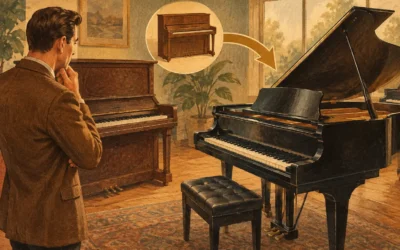
For most homes, a quality upright is the strongest answer. It offers true acoustic performance, takes up less space than a grand, and often delivers excellent value compared with entry-level baby grands that may be chosen more for appearance than musical strength.
A better upright will usually outperform a weak grand. That surprises many first-time buyers, but it is true. Cabinet size alone does not determine quality. Build standard, action condition, soundboard health, tuning stability, and preparation matter far more.
If space is limited, a studio or full upright can be ideal. Taller uprights generally produce a fuller tone and better bass response than shorter consoles or spinets. If you are considering older small uprights, be careful. Some are charming pieces of furniture, but not all are serious musical instruments by modern standards.
When a grand piano makes sense
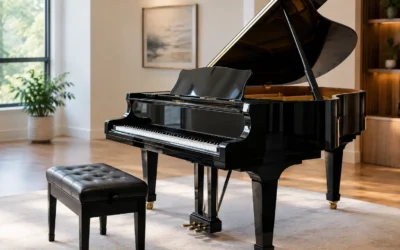
A grand piano can be an exceptional first purchase if the player is advanced, the room supports it, and the budget allows for quality rather than compromise. The action on a grand is different from that of an upright, and serious pianists often appreciate the added control and tonal projection.
Still, buying a grand too early or too cheaply can backfire. A low-quality or poorly maintained baby grand may look impressive but perform below a strong upright. If prestige, visual presence, and musical refinement are all priorities, a carefully selected used or restored grand from a respected brand can be an excellent choice. The key is to evaluate condition, preparation, and long-term service needs, not just size.
New vs. used in a first piano buying guide
Used pianos deserve serious attention, especially when purchased from a specialist. A premium used piano can deliver far more value than a new mass-market instrument at the same price point. Better materials, stronger craftsmanship, and established brand reputation often make a well-selected used piano the smarter buy.
But used does not mean equal. Condition varies widely. Age alone is not the deciding factor. A properly maintained vintage piano can outperform a newer neglected one. What matters is whether the instrument has been inspected, serviced, regulated, tuned, and represented honestly.
Private marketplace listings may look attractive on price, but they often leave buyers exposed. Hidden soundboard issues, worn action parts, unstable tuning pins, and moving risks can turn a bargain into a liability. Buying from a piano company that handles inspection, service, delivery, and after-sale care offers a different level of confidence.
Brands matter, but condition matters more
Buyers naturally gravitate toward names they recognize – Yamaha, Kawai, Steinway, Baldwin, and other established makers. That instinct is reasonable. Strong brands tend to reflect better design, consistency, and long-term support.
Even so, a great brand in poor condition is not a great purchase. A carefully prepared Yamaha upright may be a better first piano than a neglected luxury name with expensive issues. Likewise, a restored vintage piano from a premier maker may offer exceptional character and value, provided the restoration work was done properly.
Think of brand as a starting filter, not the final answer. Reputation gets the piano onto your shortlist. Condition and preparation determine whether it belongs in your home.
Budget beyond the sticker price
Most first-time buyers focus on purchase price and stop there. A better approach is to look at total ownership.
Acoustic pianos need tuning. They may also need regulation, voicing, climate consideration, and professional moving. Delivery is not an afterthought with a piano. It is part of the purchase. The safest instrument can be damaged by poor handling, and the most beautiful finish can suffer during an unqualified move.
It also helps to think in terms of value over time. If a beginner stays with lessons for years, a higher-quality instrument often proves less expensive than buying twice. Financing can make that easier, especially when it allows you to step into a better piano now rather than settling for one that needs replacement too soon.
How to evaluate a piano in person
If you can play, test the same notes softly and firmly across the keyboard. Listen for consistency. The tone should not change unpredictably from one section to another, and the touch should not feel heavy on some keys and shallow on others.
If you do not play, bring a teacher or ask for a thorough demonstration. Pay attention to sustain, clarity, and how the instrument responds at different volumes. Look at the cabinet, but do not stop there. Ask about age, service history, repairs, tuning stability, and whether the piano has been regulated or restored.
For used instruments, transparency matters. A premium buying experience should include clear answers, not vague reassurance.
The room matters more than many buyers expect
A piano has to suit the space acoustically and physically. In a smaller room, a bright or overly powerful instrument can become tiring. In a large open-plan room, a small underpowered piano may feel thin.
Humidity and temperature also matter. Acoustic pianos are sensitive instruments. Stable indoor conditions support tuning stability and overall health. If the piano will sit near direct sunlight, HVAC vents, or exterior doors, placement should be reconsidered.
This is where working with a full-service piano specialist can make a meaningful difference. Advice on fit, delivery, setup, and maintenance is part of choosing well, not an added extra.
What serious buyers should ask before purchasing
A dependable seller should be ready to explain how the piano was sourced, inspected, and prepared. They should also be able to discuss delivery, tuning, service support, and realistic expectations for the instrument over time.
If the seller cannot tell you much about the action condition, pinblock stability, or maintenance needs, that is a warning sign. A first piano should come with confidence, not guesswork. At A440 Pianos, this service-centered approach is part of what gives buyers a more secure path from selection to ownership.
A first piano does not need to be the most expensive instrument in the room. It does need to be musically satisfying, structurally sound, and worthy of the player who sits down to it each day. Buy with your ears, your hands, and a clear view of long-term value, and the right piano will keep giving back long after the first lesson.

0 Comments