


A piano can look perfect in a photo and feel completely wrong the moment it arrives. That usually happens when buyers focus on finish, brand, or price before they answer the practical question of how to choose piano size. Size affects tone, touch, placement, delivery, and even whether the instrument becomes a daily pleasure or a constant compromise.
For most buyers, the right size is not simply the biggest piano that fits through the door. It is the piano that suits the room, the player, and the level of performance expected from the instrument. A family buying a first acoustic piano has different needs than a teacher outfitting a studio, and both have different priorities than a collector shopping for a statement grand. The smartest purchase balances musical ambition with real-world conditions.
How to Choose Piano Size by Use Case
Start with the piano’s job. If the instrument is meant for early lessons, daily practice, and family use, a quality upright often makes more sense than a small grand chosen mainly for appearance. A good upright saves floor space, offers strong musical value, and can deliver a satisfying touch for developing players.
If the piano is intended for advanced repertoire, teaching, recording, or performance, size becomes more critical. Longer strings and a larger soundboard generally produce greater tonal depth, stronger bass, and more color. In grand pianos especially, added length is not cosmetic. It changes the scale of the sound and the player’s control over it.
That is why two buyers can stand in the same showroom and make very different correct decisions. One needs an elegant studio upright that fits a refined living space. Another needs a six-foot-plus grand that can carry a larger room and support demanding music. Both are choosing well if the instrument matches the purpose.
Room Size Matters, but So Does Room Character
Many shoppers assume there is a fixed chart that tells them exactly what size piano belongs in a certain square footage. In practice, room character matters as much as room dimensions. Ceiling height, flooring, rugs, curtains, wall materials, and furniture all affect how a piano sounds.
A bright room with hardwood floors and glass can make a smaller piano sound more aggressive than expected. A heavily furnished room with thick carpet may absorb enough sound that a larger instrument feels more balanced. This is one reason premium piano buying benefits from specialist guidance rather than guesswork.
As a general rule, upright pianos are often the best fit for condos, smaller living rooms, bedrooms, practice rooms, and many teaching spaces. Grand pianos usually perform best in rooms that allow the tone to open up naturally. If a grand is squeezed into a tight area with no clearance, the visual impact may be impressive, but the room may not support the instrument acoustically or practically.
You also need breathing room around the piano. Doors, walkways, heating vents, and direct sunlight all matter. A piano should not dominate traffic flow or sit in an unstable environment just because the footprint technically fits.
Upright Piano Sizes and What They Offer
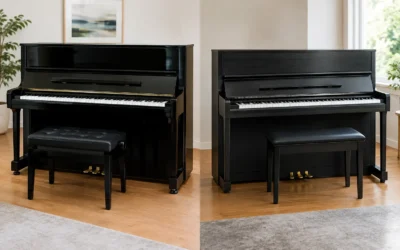
Uprights are often grouped by height, and those few inches make a meaningful difference. Spinet and console pianos are compact, but many serious buyers today prefer studio and full upright models because they offer better action design and stronger musical performance.
A studio upright, usually around 44 to 48 inches tall, works well for many homes, schools, and churches. It gives you a respectable tone without demanding the footprint of a grand. For beginners through intermediate players, this can be an excellent long-term choice.
A full upright, often 48 inches and taller, offers more string length and soundboard area. That usually means a fuller bass, more projection, and a more substantial playing experience. If your space allows for an upright but you want the strongest acoustic result available in that form, this category deserves close attention.
The trade-off is simple. Taller uprights generally sound better, but they also create more visual presence and may overpower a very small room. In many homes, though, a well-scaled premium upright is the smartest blend of performance and efficiency.
Grand Piano Sizes and What Changes With Length
When buyers ask how to choose piano size, they are often really asking how much grand piano they need. Grand pianos are commonly described by length, and each category serves a different purpose.
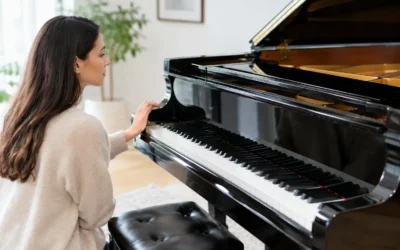
Baby grands, usually around 5 feet to 5 feet 6 inches, are popular because they deliver the profile and action of a grand in a more manageable footprint. In the right room, a well-made baby grand can be a beautiful home instrument. In the wrong room, it can be chosen more for looks than for musical advantage.
Mid-size grands, roughly 5 feet 7 inches to 6 feet 3 inches, often represent the sweet spot for serious home players, teachers, and smaller performance spaces. This range tends to offer a more developed bass and greater tonal complexity while still fitting many upscale living rooms and studios.
Larger grands, from about 6 feet 4 inches upward, are where the sound becomes more commanding. These instruments are ideal for larger homes, recital settings, houses of worship, and buyers who place performance at the center of the purchase. They also require more budget, more floor space, and more thought around delivery and placement.
The key point is that every extra inch in a grand is not equal in value across all situations. A larger piano in a room that cannot support it is not automatically the better piano for that buyer.
Match the Piano to the Player
The player matters as much as the room. A young beginner may thrive on a responsive upright with a clean tone and dependable action. A conservatory-bound student will usually benefit from a larger, more expressive instrument that reveals nuance and supports stronger technique.
Touch also plays a role. Grand actions behave differently from upright actions, and advanced pianists often prefer the repetition and control of a grand. That does not mean every serious student must own one immediately. It means the piano should support the level of playing expected over the next several years, not just the next six months.
For families, there is another practical question: is this a stepping-stone piano or a long-term investment? If you expect rapid advancement, buying slightly above the current level can be wise. If the goal is dependable musical enjoyment without overcommitting space or budget, a premium upright may be the better decision.
Budget, Delivery, and Ownership Should Influence Size
A larger piano costs more to buy, but that is only part of the equation. Delivery complexity, stair access, room preparation, future moving needs, and long-term maintenance all become more significant as piano size increases.
This is especially relevant with grand pianos. The difference between a manageable in-home placement and a difficult installation can come down to hallway turns, entry width, flooring, and stairs. Buyers shopping at the premium end of the market should consider size as part of a full ownership plan, not just a showroom preference.
There is also the question of value. In many cases, a higher-quality used upright or smaller grand from a respected maker will outperform a larger but inferior instrument. Brand heritage, scale design, condition, restoration quality, and technician evaluation matter at every size. This is where a specialist such as A440 Pianos brings real value, because the quality of the instrument itself should lead the decision, not dimensions alone.
How to Choose Piano Size Without Regret
The best way to avoid regret is to test your priorities honestly. If sound quality comes first, do not choose a piano purely to fit a decorating vision. If space is limited, do not force a grand into a room that really calls for a refined upright. If the piano is meant to anchor a serious musical life, leave room in the plan for growth.
When possible, sit at multiple sizes in the same brand family. Listen from the bench and from across the room. Notice whether the tone blooms or feels constrained, whether the bass satisfies you, and whether the piano looks proportionate in the space you have in mind. A confident purchase is rarely based on dimensions alone. It comes from hearing, seeing, and feeling the difference.
A well-chosen piano should feel intentional the day it arrives and even more right a year later. If the size supports the room, the player, and the level of excellence you expect, the instrument will not just fit your home. It will belong there.

0 Comments