

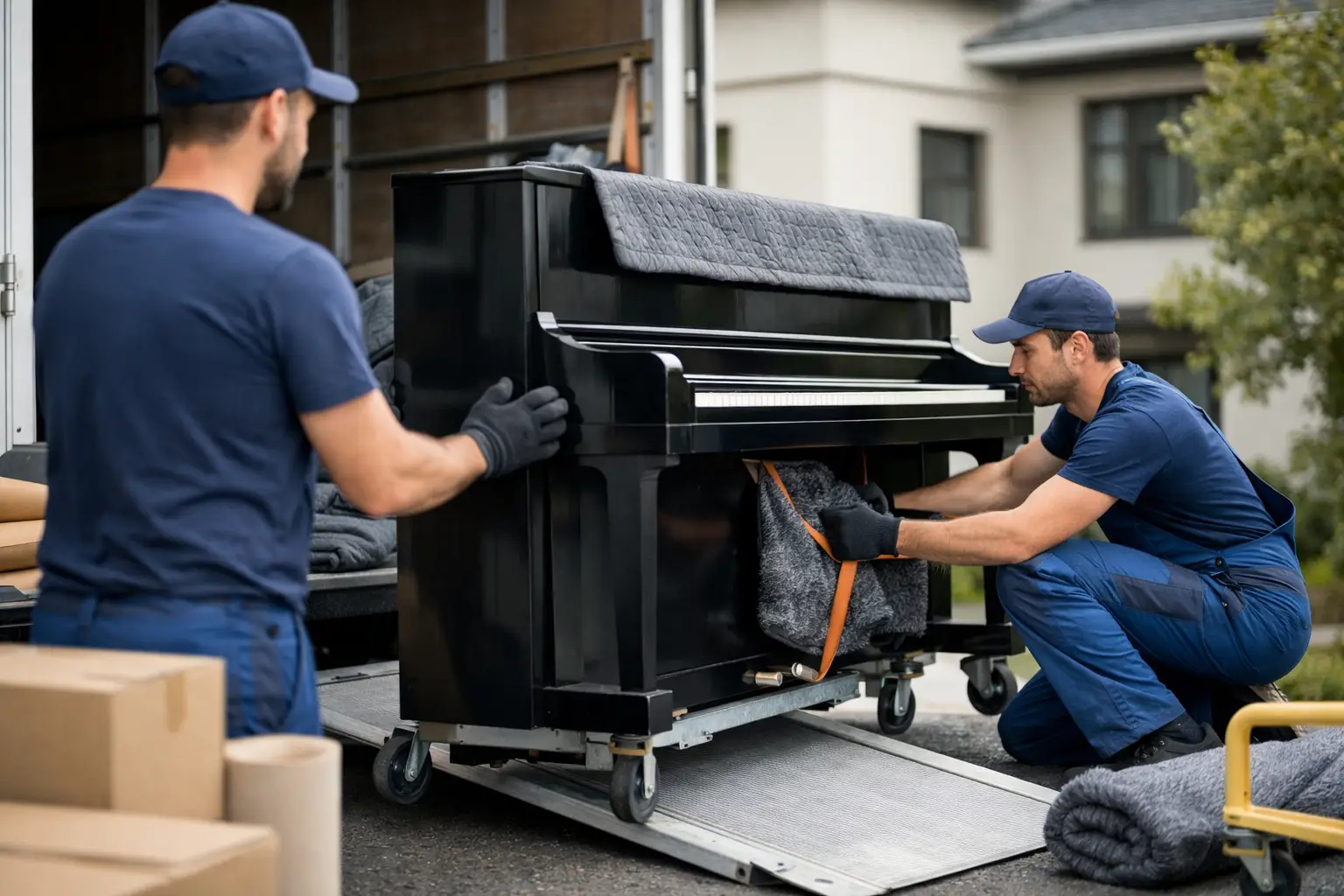
A piano is not simply heavy furniture. Its weight is concentrated in specific structural areas, its finish can be damaged by a single poorly placed strap, and its internal action contains thousands of moving parts that deserve careful handling. Knowing how to prepare a piano move gives professional movers the access they need and helps protect an instrument that may have been part of your family, studio, or musical life for years.
Whether you are moving an upright across Atlanta or relocating a grand piano to another state, preparation starts well before moving day. The goal is not to make the piano easier to lift yourself. It is to create a clear, safe route and give experienced piano movers accurate information before they arrive.
How to Prepare a Piano Move Before Moving Day
Begin by confirming the piano’s type, approximate size, and current location. An upright, studio piano, baby grand, and concert grand each require a different moving plan. A tall upright may be more challenging than expected in a narrow hallway, while a grand requires specialized disassembly, protection, and secure transport on a piano board.
If you know the make and model, share it with the moving team. Photos are equally useful, especially photos of the piano from several angles and of the route from its current room to the truck. Include doorways, staircases, landings, gates, elevators, and any tight turns. This lets the mover identify potential issues before moving day rather than making assumptions at the door.
Measure the piano, but do not stop there. Measure the narrowest points of the route, including door openings, hallway widths, ceiling height at stair turns, and the clearance around furniture. A doorway can appear wide enough until the piano must turn into it at an angle. For apartment buildings and condos, confirm elevator dimensions and reserve the service elevator if required.
It also helps to tell the mover about the destination. A straightforward exit from one home does not guarantee a straightforward delivery at the other. Share the new address, room location, number of exterior steps, parking limitations, and any building access rules as early as possible.
Clear the Route, Inside and Out
Professional piano movers bring the equipment and trained team needed to handle the instrument. Your role is to make the travel path safe and accessible. Clear the route at both locations a day or two before the scheduled move, so there is time to solve a problem without pressure.
Remove rugs that could shift underfoot, low tables, floor lamps, plants, decorative items, and other obstacles. Open interior doors fully where possible. If a door can be safely removed by a qualified person to create needed clearance, arrange that in advance rather than waiting for the crew. Keep children and pets away from the moving path throughout loading and delivery.
Outside, make sure walkways are clear of hoses, toys, loose gravel, wet leaves, ice, and parked vehicles. Reserve enough space for the moving truck to park close to the entrance. The farther a piano must travel over uneven ground, the more planning and labor the move may require.
For a building with an HOA, concierge, or property manager, check the rules early. Some communities require a certificate of insurance, a designated loading area, protective elevator pads, or specific delivery hours. These details can affect scheduling, particularly in busy urban buildings.
Prepare the Piano Without Taking It Apart
A piano should generally be left assembled until the moving professionals arrive. Do not remove grand piano legs, pedals, lids, or internal components on your own. Grand piano disassembly is a precise process, and the instrument must be supported correctly before any leg is removed. Improper handling can damage the case, plate, action, or soundboard, and can create a serious safety hazard.
You can make a few simple preparations. Remove music, books, metronomes, framed photos, and anything stored on or inside the piano. Take out loose accessories from the bench, including sheet music, headphones, and power adapters for digital or player-piano systems. Secure the bench separately if it has a storage compartment.
Close and lock the keyboard lid if the piano has a functioning lock. If it does not, tell the movers rather than taping the lid shut. Adhesive can harm finishes, especially on older, restored, or high-gloss instruments. Avoid wrapping the piano yourself with household blankets, plastic wrap, or moving pads. A professional crew uses clean padded covers, proper strapping methods, and equipment designed for piano weight and balance.
If the piano is a self-playing, hybrid, or electric model, take note of its power connection and any accompanying control equipment. Unplug the instrument before the movers arrive, protect remote controls and cables in a labeled box, and mention the model’s electronic features during scheduling. These instruments require the same physical care as acoustic pianos, with additional attention to their technology.
Protect Floors, Walls, and the Piano’s Finish
Piano moving is as much about controlling the environment as it is about moving weight. Let the moving team know about freshly refinished hardwood, delicate tile, light-colored carpet, narrow painted walls, or antique flooring. In many cases, professional floor protection and wall protection can be used where needed.
Do not rely on the piano’s small caster wheels for relocation. On many acoustic pianos, casters are decorative or intended only for minor positioning within a room. Rolling a piano across a floor can damage the floor, strain the piano structure, or cause the instrument to tip. An upright may weigh 300 to 800 pounds, while a grand can weigh substantially more.
Temperature and humidity are also worth considering. Avoid leaving a piano in an unconditioned garage, porch, or truck longer than necessary. A brief move through normal weather is usually manageable when handled properly, but prolonged exposure to severe heat, cold, rain, or humidity can affect wood components, felt, glue joints, and tuning stability.
Plan for Stairs, Tight Turns, and Long-Distance Delivery
Stairs do not automatically prevent a piano move, but they require honest, detailed planning. Count the steps, photograph landings, and mention whether stairs are straight, curved, open-sided, or carpeted. A single sharp turn at the top of a staircase can determine whether a route is workable.
Be especially clear about any difficult access condition, including:
- More than one flight of stairs
- A steep driveway or uneven path
- Narrow gates or a winding exterior walkway
- A tight turn immediately inside an entryway
- Limited truck parking or a long carry distance
- Elevator reservations, loading docks, or restricted building hours
These details are not minor logistics. They influence crew size, equipment, timing, and pricing. A reputable piano mover would rather receive more information than discover a hidden obstacle when the instrument is already in motion.
For interstate moves, ask how the piano will be secured, whether delivery timing is direct or routed, and how the instrument will be protected during transport. The lowest quote is not always the best value if it does not account for appropriate packing, trained handling, insurance, and communication. A piano is a precision instrument, not a standard household shipment.
Choose the New Location Before Delivery
Decide where the piano will live before it comes through the door. Moving it repeatedly around a room adds avoidable risk, especially after the crew has completed a careful delivery. Make sure the chosen spot allows enough room for the bench, the pianist, and normal access around the instrument.
Whenever possible, keep an acoustic piano away from direct sunlight, exterior doors, heating vents, fireplaces, radiators, and air-conditioning blasts. Constant swings in temperature and humidity can cause the wood components to expand and contract, affecting tuning and long-term stability. An interior wall is often a better choice than a wall with strong sun exposure or significant outdoor temperature change.
The room does not need to be silent or museum-like. Families can enjoy a piano in an active living space. The key is providing a reasonably stable environment and avoiding extremes. If you are placing a grand piano in a room with hardwood or tile floors, consider how rugs, curtains, and furnishings may influence the sound once the instrument is settled.
Expect Tuning After the Move
Even a carefully moved piano will usually need tuning after it acclimates to its new environment. Movement, vibration, and changes in humidity can all affect pitch. This is normal and does not mean the move was mishandled.
Give the piano time to settle before scheduling service. In many homes, waiting a few weeks is sensible, though the best timing depends on the season, distance traveled, and how different the new environment is from the old one. A technician can also identify regulation or voicing needs that may become more noticeable after the piano is in its new room.
A440 Pianos approaches moving as part of complete piano care, not as a separate delivery task. The right preparation, skilled handling, and post-move tuning plan help your instrument arrive ready for its next chapter of music. Before moving day, take one more walk from the piano to the truck route with fresh eyes. That small step often reveals the detail that makes the entire move calmer and safer.



0 Comments