

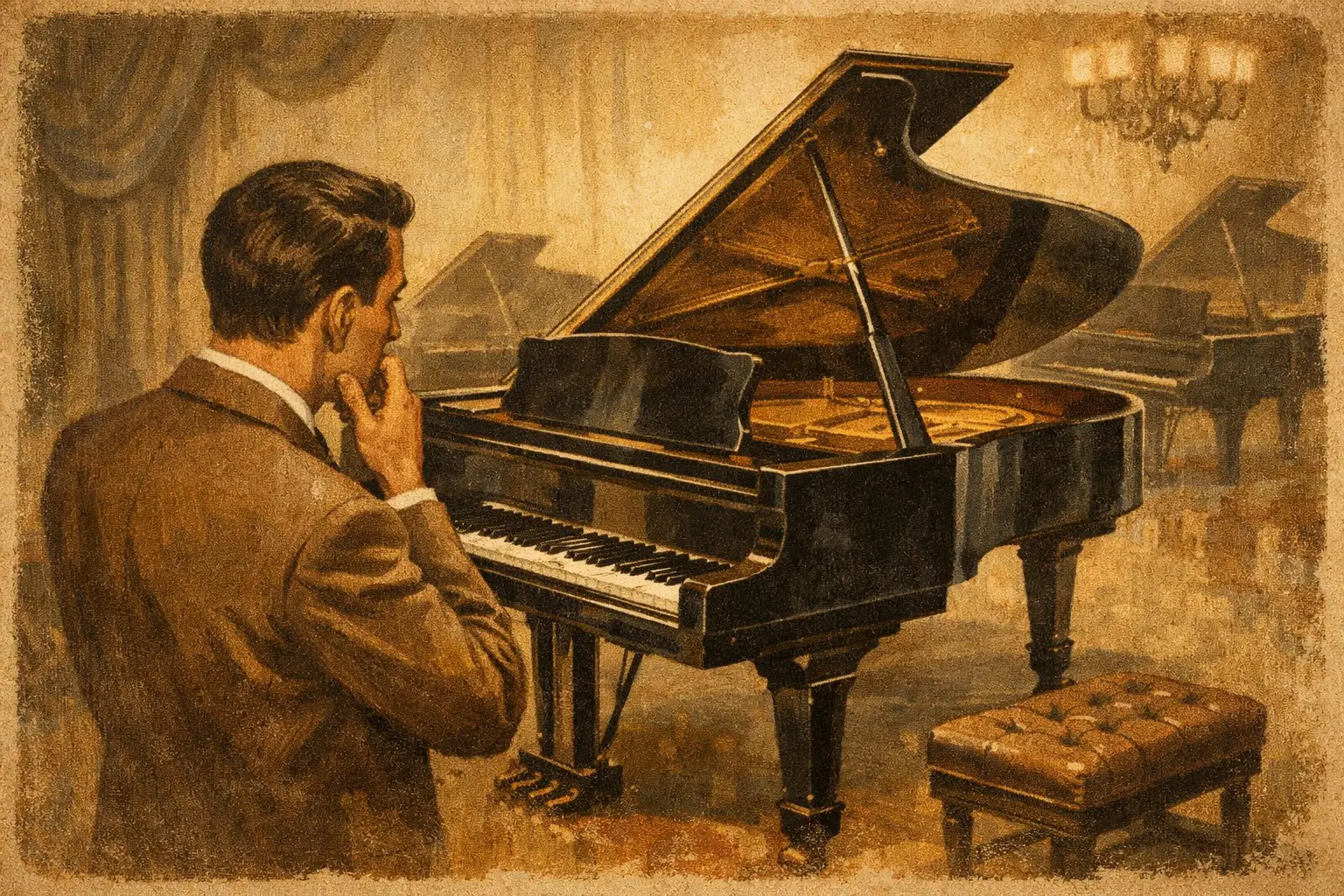
A concert grand is not simply a larger grand piano. It is an instrument built to fill a hall, support a demanding artist, and retain clarity when played at full volume. Knowing how to select a concert grand piano means listening beyond the first impressive chord and evaluating the details that determine whether the instrument will perform beautifully for decades.
For a private estate, concert venue, church, university, recording studio, or serious artist, the right piano should feel exceptional under the hands and make practical sense for the room, the budget, and the level of ongoing care it will receive. Prestige matters, but performance and condition matter more.
Start With the Room and Musical Purpose
A true concert grand is generally about 9 feet in length, though dimensions vary by manufacturer. That scale creates a longer bass string length, a larger soundboard, and more tonal reserve than a 7-foot or 8-foot grand. It can produce remarkable power, color, and sustain, but that power needs an appropriate acoustic setting.
In a concert hall or large sanctuary, a concert grand can project with authority without becoming harsh. In a large home, it may be equally rewarding, provided the room has enough volume and thoughtful acoustic treatment. Hardwood, glass, stone, and high ceilings can make a powerful piano sound overly bright or overwhelming. Rugs, upholstered furnishings, curtains, and strategically placed acoustic materials can create a more balanced result.
Consider who will play the piano. A concert grand chosen for a professional pianist, competition preparation, or public performance should offer a broad dynamic range and highly consistent action. A collector may place additional value on historic provenance, cabinetry, original details, or a distinctive tonal personality. A recording studio may prefer a piano with controlled sustain and a clear, flexible sound that records well across genres.
How to Select a Concert Grand by Sound
The tonal character of a concert grand should invite you to keep listening. Play softly first. A premium instrument should speak clearly at pianissimo, with a singing treble and a bass that remains focused rather than muddy. Then build gradually toward fortissimo. The sound should expand without turning brittle, congested, or metallic.
Listen for evenness across the keyboard. Every piano has some variation between registers, and individual character is part of what makes a fine instrument compelling. Still, the transition from bass to tenor, tenor to middle, and middle to treble should feel connected. A sudden thinness in the upper register or an overly dominant bass can indicate scaling, voicing, regulation, or restoration issues that deserve closer review.
Sustain is another defining quality. Hold a chord in the middle register, release the keys, and listen as the sound decays. A fine concert grand sustains with layers of color rather than dropping away abruptly. Test single notes as well, particularly in the bass and high treble, where worn strings, bridge issues, or aging components can reveal themselves.
Brand reputation is useful, but it should not replace your ears. Steinway, Yamaha, Bösendorfer, Blüthner, Fazioli, Kawai, Baldwin, and other respected makers each have recognizable design traditions. Within any brand, however, individual instruments can vary substantially according to age, maintenance history, rebuilding quality, and environment. The best piano is the one whose voice serves your musical goals.
Evaluate Touch, Action, and Pedals
A concert grand should respond immediately to subtle changes in weight and speed. Test repeated notes, trills, scales, rapid passagework, and soft chord repetitions. The action should feel even from one end of the keyboard to the other, without sluggish keys, excessive noise, uneven resistance, or keys that fail to repeat reliably.
Do not mistake a heavy action for a professional action. A well-regulated concert grand can feel substantial yet controlled, allowing the player to shape a phrase without fighting the keyboard. Likewise, an action that feels too light can make dynamic control difficult. The ideal balance depends somewhat on the pianist, but consistency is non-negotiable.
Use all three pedals. The sustain pedal should operate smoothly and lift dampers evenly. The una corda pedal should produce a genuine change in color and touch, not merely a reduction in volume. The sostenuto pedal should hold selected notes accurately. Pedal noise or inconsistent damping may be correctable, but it should be factored into the instrument’s condition and price.
Inspect Condition Beyond the Polish
A glossy cabinet can conceal a piano that needs significant work. Whether considering a newer instrument, a vintage original, or a fully restored concert grand, ask for a thorough assessment of the soundboard, pinblock, strings, bridges, action components, hammers, dampers, and structural integrity.
The soundboard deserves careful attention. Hairline cracks are not automatically disqualifying, especially in older pianos, but their location, stability, and effect on tone matter. A soundboard with strong crown and healthy response is far more significant than a flawless-looking finish. Inspect bridges for cracks around bridge pins, and check whether strings are seated properly.
Tuning stability is equally important. Loose tuning pins can signal a compromised pinblock, and a piano that cannot hold pitch will never be satisfying in performance. Ask how often the instrument has been tuned, where it has been stored, and whether it has spent years in extreme humidity or dryness. Climate history can be as revealing as a serial number.
For a restored piano, clarify the scope of the work. “Restored” can mean anything from cosmetic cleaning and basic regulation to a comprehensive rebuilding process with new strings, pins, hammers, action parts, and refinished cabinetry. Quality restoration can create an extraordinary instrument, but the workmanship must match the caliber of the original piano. A detailed service record is worth more than a vague description.
Compare Size, Scale, and Brand Character
The term concert grand carries prestige, but larger is not automatically better. A 9-foot instrument has more potential for projection and tonal complexity, while a 7-foot or 8-foot semi-concert grand may be the more intelligent choice for a smaller performance space or home. The goal is adequate tonal reserve without sacrificing clarity, comfort, or room balance.
Scale design also affects the piano’s personality. Some instruments are known for a bright, transparent voice that favors articulation. Others offer a darker, more orchestral palette with substantial bass. Neither approach is universally superior. A solo classical pianist may seek long sustain and a wide spectrum of color, while a jazz player may prioritize immediacy, rhythmic definition, and a clear midrange.
Play several instruments side by side whenever possible. This is one of the few purchases where comparison changes perception quickly. What first sounds magnificent in isolation may feel less balanced after you hear another piano with greater warmth, control, or responsiveness.
Factor in Ownership, Delivery, and Service
A concert grand is a long-term responsibility. Its purchase price is only one part of ownership. Professional delivery, placement, humidity control, regular tuning, periodic regulation, voicing, and eventual rebuilding all protect the investment and preserve the playing experience.
Before buying, confirm that the piano can be delivered safely into the intended space. Staircases, turns, elevators, flooring, room access, and final placement should be evaluated by experienced piano movers. A concert grand is not a standard freight item, and improper handling can damage both the instrument and the property.
Plan for tuning shortly after delivery and at least twice annually thereafter, with more frequent service for institutional or heavily used pianos. A specialist retailer with in-house knowledge of moving, tuning, repair, and restoration can offer valuable continuity. At A440 Pianos, buyers can evaluate premium instruments with the practical support required to move, maintain, and enjoy them confidently.
Make the Final Decision With a Pianist and Technician
If you are not the primary player, bring the pianist who will use the instrument. Their response to touch, repetition, tonal color, and pedal control should carry real weight. If the purchase is substantial, an independent piano technician can provide an additional condition evaluation and identify maintenance needs that are not obvious during a showroom visit.
Give yourself time with the instrument. Play familiar music at different dynamics, listen from across the room, and ask another person to play while you sit in the audience position. A great concert grand should satisfy both the hands and the ears.
The right piano will not merely look impressive in its new home or venue. It will make players want to sit down, listen closely, and return to it often – which is the clearest sign that the investment has found its proper place.

0 Comments