

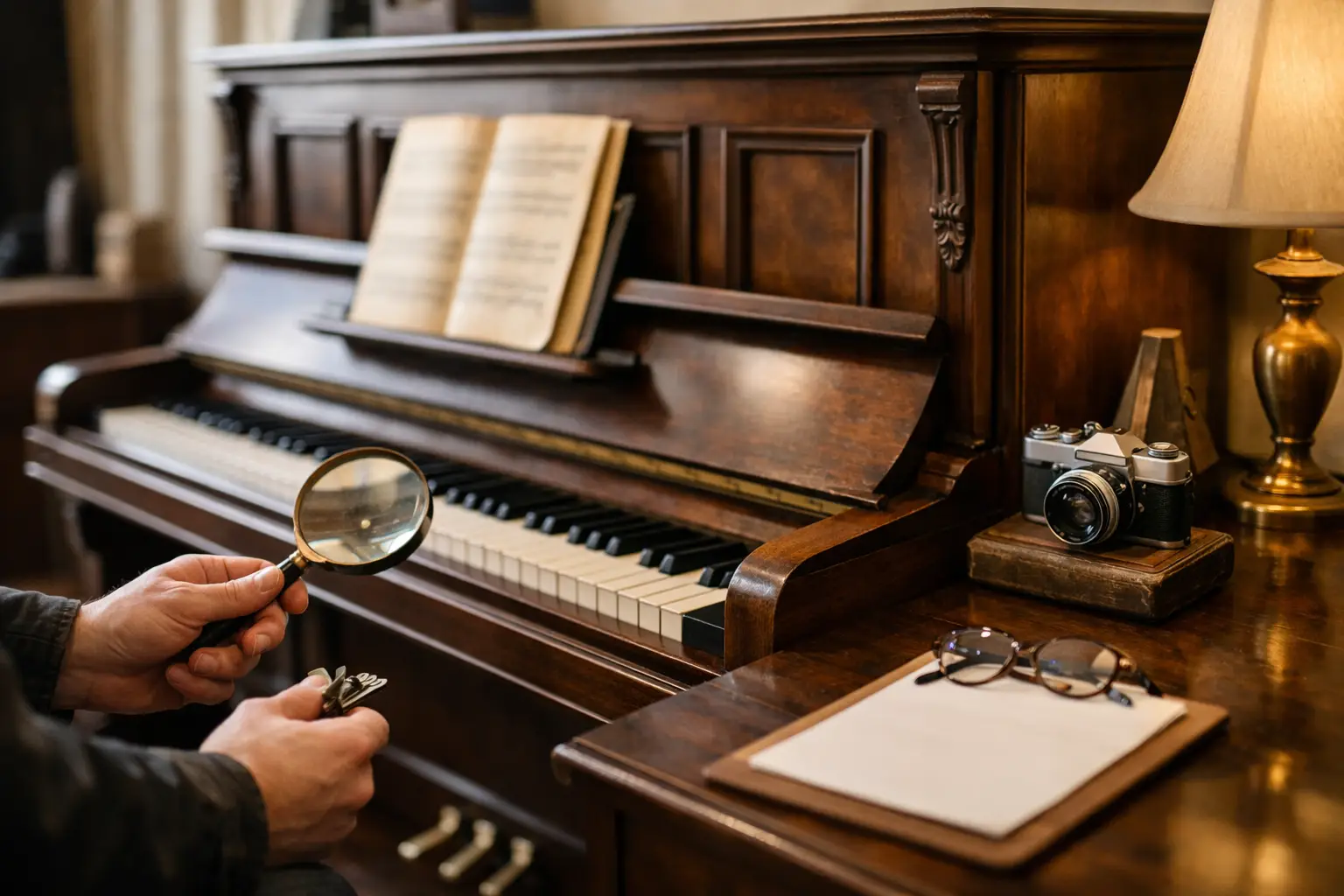
A vintage piano can bring character to a home, studio, or teaching space that a new instrument simply cannot imitate. The right one offers mature tone, handcrafted detail, and a musical history you can feel at the keyboard. But age alone does not create value. This vintage piano purchase guide will help you distinguish a well-cared-for instrument from a beautiful-looking piano that may require far more work than expected.
Start With the Piano’s Musical Purpose
Before falling in love with a carved music desk or an elegant mahogany finish, decide how the piano will be used. A beginner needs consistency, a comfortable action, and stable tuning. A serious player may prioritize color, dynamic range, and responsiveness. A collector may be willing to accept more maintenance in exchange for a rare scale design, original cabinetry, or a respected maker’s history.
Size matters as well. Vintage uprights can be excellent choices for homes, apartments, schools, and smaller studios, particularly when floor space and budget are priorities. A taller professional upright often has longer strings and a larger soundboard than a compact console, which can produce a fuller voice. Vintage grand pianos offer greater tonal depth and control, but they require more room, more careful placement, and professional moving.
There is no universal rule that a grand is better than an upright. A well-restored 52-inch upright from a respected manufacturer may be more rewarding than a neglected baby grand. Match the instrument to your space, playing goals, and willingness to invest in care.
Why Age Is Not the Same as Condition
A piano contains thousands of moving parts made from wood, felt, leather, steel, and other materials that change over time. A 70-year-old piano that has been regularly tuned, kept in a climate-controlled home, and professionally serviced may have years of enjoyable playing ahead. A much younger piano stored in a humid basement or exposed to extreme temperature swings can have serious structural and mechanical problems.
The piano’s serial number can establish its year of manufacture, but it does not tell the full story. Ask where the instrument has lived, how often it was tuned, whether it has been rebuilt or restored, and who performed the work. A careful restoration can preserve an exceptional instrument. Poor or incomplete work can leave an attractive cabinet masking uneven performance.
Original parts are not always preferable. Hammers, strings, dampers, key bushings, and action components naturally wear. Replacing them when needed is responsible maintenance, not a loss of authenticity. For a player piano, the quality of the work and the resulting musical performance usually matter more than whether every consumable component is original.
What to Inspect Before You Buy
A thorough evaluation should include the structure, action, sound, and cosmetics. Cosmetics influence value, especially on collectible instruments, but they should never take priority over the piano’s foundation.
The soundboard, bridges, and pinblock
Open the lid or top panel and look closely at the soundboard, the large wooden surface beneath the strings. Small finish cracks are common in older pianos and are not automatically a reason to walk away. More concerning signs include loose ribs, buzzing, pronounced separation, or evidence that the board no longer supports an even, resonant tone.
Inspect the bridges where the strings rest. Cracks around bridge pins, loose pins, or splitting wood can affect tuning stability and require significant repair. The pinblock, which holds the tuning pins, is equally important. If tuning pins are loose, the piano may not hold its pitch. A piano that cannot maintain a stable tuning is not a dependable musical instrument, regardless of its nameplate.
The action and keyboard
Play every key softly and firmly. Keys should return promptly and feel generally even from one end of the keyboard to the other. Listen for clicking, sticking, double-striking, or notes that fail to sound. Test the pedals and make sure the dampers stop strings cleanly when keys are released.
Some unevenness is expected in an older piano and can often be corrected through regulation. Significant wear, moth damage to felt, broken action parts, or widespread sluggishness may indicate a larger restoration project. If you are buying from a private seller, do not rely only on a quick performance of a few familiar pieces. Take the time to test the full keyboard.
Tone and tuning stability
Listen for more than volume. A good vintage piano should offer a voice that is clear enough to project and rich enough to invite expression. Play low, middle, and high registers. You are listening for abrupt tonal changes, metallic sounds, weak notes, and unwanted buzzes.
No used or vintage piano should be expected to arrive at perfect concert pitch after moving. A tuning is normally part of responsible ownership after delivery. However, a piano that is dramatically below pitch or has many unisons that will not stay together deserves further investigation. It may need more than routine tuning.
Understand Restoration Levels and Their Cost
The word “restored” is used broadly in piano sales, so ask for specifics. A cabinet polish and a tuning are very different from a full rebuilding project. Reconditioning may include cleaning, adjusting the action, replacing selected felt parts, and correcting minor mechanical issues. Restoration can include refinishing, restringing, replacing hammers and dampers, rebuilding the action, repairing the soundboard, and addressing structural concerns.
Neither approach is automatically right or wrong. A modestly priced vintage upright may only need reconditioning to become a satisfying family piano. A valuable Steinway, Blüthner, or other high-level instrument may justify comprehensive restoration when its original musical potential is still present.
The key is pricing the piano honestly for its condition. A lower purchase price can be sensible if you have room in the budget for future work. It becomes less sensible when the piano needs extensive structural repair yet is priced as though it were professionally rebuilt. Request a clear account of completed work, remaining needs, and the expected timeframe for future service.
Brand Reputation Helps, but It Is Not a Guarantee
Recognizable names can be a useful starting point because established manufacturers often produced durable instruments with strong designs and repair support. A vintage Yamaha upright, a classic Steinway grand, or a European instrument from a maker such as Blüthner may be especially appealing for their sound and heritage.
Still, condition is more important than the logo on the fallboard. Brands have made instruments across different eras, sizes, and price levels. A well-maintained piano from a lesser-known but respected builder can outperform a famous instrument that has been neglected. Let your ears, hands, and a qualified technician guide the decision.
Plan for Delivery, Placement, and Ongoing Care
A piano purchase does not end when you choose the instrument. Professional moving protects the piano, your home, and everyone involved. Vintage pianos can have fragile veneers, delicate legs, or aging structural components that demand trained handling. Avoid treating piano delivery like ordinary furniture moving.
Choose a location away from direct sun, exterior doors, heating vents, fireplaces, and major humidity changes. Even a carefully restored piano will struggle if its environment fluctuates constantly. Plan on tuning after delivery and then maintaining a regular tuning schedule, generally at least once or twice a year depending on use and conditions.
At A440 Pianos, the goal is not simply to place a piano in a room. It is to help buyers select an instrument that can be safely delivered, properly maintained, and enjoyed for years. That complete support is especially valuable when buying a vintage piano, where experience can reveal details a listing or a polished cabinet cannot.
When an Independent Inspection Is Worth It
If you are considering a private-sale piano, an independent pre-purchase inspection is one of the best investments you can make. A piano technician can assess tuning pin torque, soundboard condition, bridge integrity, action wear, and the realistic scope of needed repairs. This is particularly wise for older grands, instruments advertised as antiques, and any piano priced well below comparable examples.
Buying from a qualified piano specialist can simplify this process because the instrument has typically been evaluated, prepared, and priced with its condition in mind. Even then, ask questions. A trustworthy seller should be comfortable discussing the piano’s age, work history, current condition, and care needs.
A vintage piano should feel like an invitation to play, not a repair project you did not intend to buy. Give yourself time to listen, inspect, and compare. When the instrument’s tone, touch, condition, and future care all align, you are not just purchasing a piece of history – you are bringing a living musical companion into your home.

0 Comments