

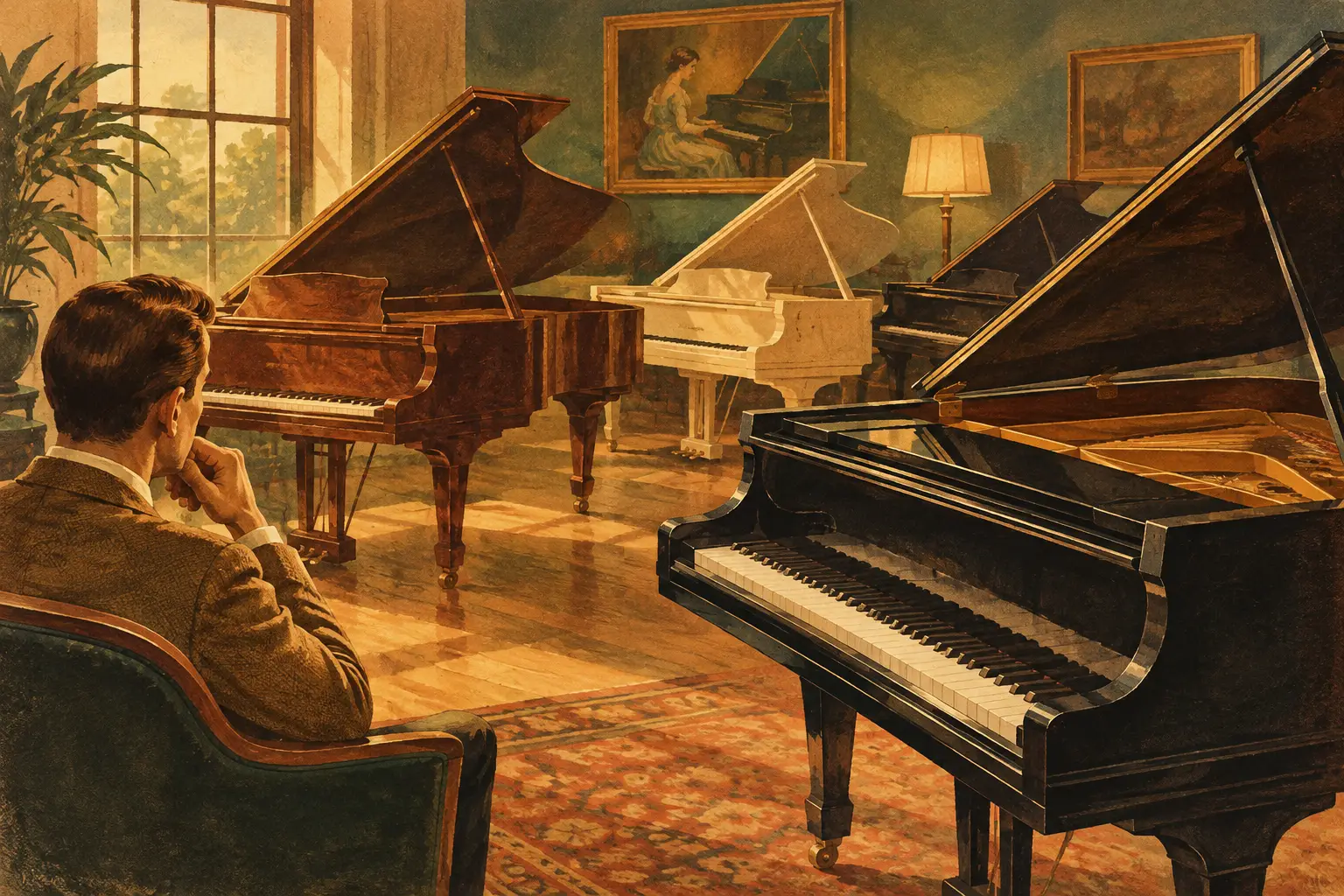
A collectible piano is not simply an older piano with a famous name on its fallboard. The top piano brands for collectors earn their place through exceptional musical design, documented craftsmanship, limited production, historical relevance, and enduring demand. For a serious buyer, the right instrument can be a centerpiece for a home, a rewarding performance piano, and a meaningful long-term acquisition – provided its condition and provenance support the name.
What Makes a Piano Collectible?
Collectors often begin with brand recognition, but the most desirable instruments have more to offer than prestige. A piano’s model, size, year of manufacture, original materials, cabinet design, restoration history, and musical integrity all affect its appeal. A carefully maintained 1920s grand from a respected maker may command far more interest than a newer instrument from the same brand that has been neglected or altered beyond recognition.
Originality can matter, especially for historically significant pianos. At the same time, a thoughtful restoration is often essential for an instrument intended to be played. The best decision depends on the buyer’s priorities. A collector focused on museum-level originality may value preserved finishes and period-correct parts. A pianist or family seeking a luxury vintage piano will usually benefit from a professional restoration that delivers reliable touch, stable tuning, and a full musical voice.
Steinway & Sons: The Benchmark for Collectors
Steinway & Sons remains one of the most recognized names in the piano world, and for good reason. Its grand pianos have defined the sound and feel expected in concert halls, conservatories, and distinguished private homes for generations. Vintage Steinway grands, particularly well-preserved or expertly restored examples, remain a central category for collectors.
The Model B is especially desirable because its 6-foot-10-inch scale suits both refined residences and serious performance spaces. The larger Model D has unmatched concert pedigree, though it requires an appropriately sized room and a buyer prepared for a more substantial investment. Smaller models, including the Model A and Model O, can be excellent collector choices when their scale design, tone, and cabinet condition are strong.
With Steinway, the name alone should never end the evaluation. A piano may have an original soundboard yet need extensive rebuilding, or it may have been restored with components that do not suit a collector’s goals. Serial number research, structural inspection, action condition, and the quality of prior restoration work deserve close attention.
Bösendorfer: Rare Character and Austrian Craftsmanship
Bösendorfer occupies a distinct place among premium European pianos. Known for its warm, orchestral tonal palette and extraordinary hand craftsmanship, the brand appeals to collectors who want an alternative to the more familiar American concert-piano sound. Its instruments often have an expressive depth that rewards nuanced playing and careful listening.
Vintage Bösendorfer grands can be particularly compelling because production has historically been more limited than many mainstream brands. Specialty models and larger instruments draw significant attention, especially when they retain their original artistic character. The brand’s extended-key models are conversation pieces as well as serious musical instruments, offering additional bass notes that create a remarkable sense of tonal foundation.
A Bösendorfer should be assessed by a technician familiar with European construction methods. Parts availability, prior climate exposure, and restoration standards can affect both future service needs and collectibility. For the right buyer, however, a fine Bösendorfer offers rarity, visual distinction, and a sound that is unmistakably its own.
Blüthner: A Refined Choice for the Discerning Collector
Blüthner pianos are prized for a lyrical, singing tone that many players describe as elegant rather than forceful. The German maker has a deep history of craftsmanship, and its instruments appeal to collectors who value individual voice over broad brand familiarity. A well-maintained Blüthner can be an exceptional choice for an intimate performance room, private music salon, or luxury residence.
The brand is closely associated with its Aliquot stringing system on many grand pianos. This design contributes sympathetic resonance and a distinctive color in the upper register. It is one reason a Blüthner should be heard in person whenever possible. Its appeal is emotional and musical, not merely technical.
Collectors should look for structural health before focusing on cosmetic beauty. The soundboard, pinblock, bridges, plate, and action must support the piano’s potential. A polished cabinet is attractive, but it cannot compensate for a piano that will not hold tuning or respond evenly under the fingers.
Mason & Hamlin and Bechstein: Heritage With Individual Appeal
Mason & Hamlin is a compelling American brand for collectors who appreciate powerful construction and a rich, substantial tonal character. The company’s historic grands are often admired for their durability and distinctive scale designs. Certain pre-war instruments have developed a devoted following, particularly when they have been rebuilt to a high standard without sacrificing their original musical personality.
A Mason & Hamlin can be an intelligent alternative to a Steinway for buyers who want a prestigious American grand with less predictable competition in the market. Its value depends greatly on condition and workmanship. An expertly restored instrument can provide decades of high-level performance, while a poorly rebuilt piano may become an expensive project.
C. Bechstein represents another important European collecting category. Bechstein grands are known for transparency, refinement, and a responsive touch that suits chamber music, classical repertoire, and sophisticated home settings. Earlier instruments with elegant cabinetry can be visually striking, but buyers should be realistic about restoration requirements. Their potential is substantial when the piano is selected carefully and serviced properly.
Yamaha and Baldwin: Modern Prestige and American Legacy
Yamaha may not always be the first name associated with antique collecting, but premium Yamaha grands have a strong following among players and practical collectors. Their consistency, engineering, and serviceability make them attractive for buyers who want a recognized instrument that can be enjoyed daily. Higher-end models and limited or artist-designed editions may carry additional interest, particularly when they are in exceptional condition.
Baldwin has an enduring place in American piano history. Vintage Baldwin grands from respected production eras can offer a bold, resonant sound and impressive value. The concert-size Model SD and the popular Model R are frequently sought by serious pianists, institutions, and collectors. As with every vintage brand, the quality of the individual piano matters more than the logo alone.
For collectors who intend to play regularly, Yamaha and Baldwin can be particularly appealing because they balance heritage with usability. They may not offer the rarity of a specialty European instrument, but a fine example can deliver substantial musical satisfaction and a confident ownership experience.
How to Evaluate a Collectible Piano Before Purchase
Before committing to a premium vintage or specialty piano, begin with a complete technical assessment. The piano should be inspected for structural stability, including the soundboard, bridges, pinblock, plate, and rim. The action should be checked for wear, regulation, responsiveness, and the condition of the hammers, shanks, and dampers. A piano that looks impressive in a showroom can still require significant investment if these areas have been overlooked.
Documentation is equally valuable. Ask about the serial number, manufacturing year, prior ownership, rebuilding records, refinishing history, and any major repairs. A documented restoration performed by experienced piano specialists can add confidence. Vague claims of restoration without a clear scope of work should be treated carefully.
Finally, listen beyond the first dramatic chord. Play quietly, loudly, and across the full compass of the keyboard. Notice whether the tone changes abruptly between registers, whether notes sustain evenly, and whether the action allows control at soft dynamics. A collectible piano should invite you back to the bench.
Collection Value Begins With Proper Care
The finest piano brands reward thoughtful ownership. Stable humidity, regular tuning, careful placement away from direct sun and HVAC vents, and timely service protect both musical performance and long-term value. Safe, professional moving is also essential. A grand piano’s case, plate, action, and finish can all be compromised by improper transport.
At A440 Pianos, collectors and players can explore premium used, vintage, and specialty instruments with the support of experienced technicians and professional delivery services. The best collection is not built around labels alone. It is built one exceptional, well-cared-for piano at a time – an instrument chosen for its voice, history, and ability to make music for generations.
0 Comments