


A piano can look beautiful across a living room and still carry costly mechanical needs beneath the lid. This used piano value guide helps buyers and sellers look past polish, family history, and brand recognition to understand what truly supports a piano’s market value.
A used piano is not valued like furniture. Its worth depends on how it plays, how it has been maintained, whether its structural components remain sound, and how desirable the instrument is in the current market. A well-cared-for 30-year-old Yamaha upright may be a stronger purchase than an older grand from a prestigious maker that needs extensive rebuilding.
What Determines Used Piano Value?
The four largest value drivers are brand, condition, age, and size. They work together, but condition usually has the final word. A recognized brand with a stable design, available parts, and a strong service history tends to hold value better than an unfamiliar instrument of similar age.
Premium names such as Steinway & Sons, Yamaha, Kawai, Bösendorfer, Blüthner, Mason & Hamlin, and select European makers often attract stronger demand. That does not mean every piano carrying a respected name commands a premium price. A piano that has been neglected, stored in damaging humidity, or left untuned for years can require work that changes the equation quickly.
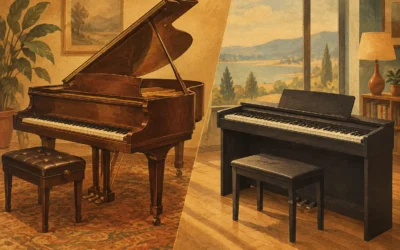
Size also matters. Larger grand pianos generally offer longer strings, greater tonal depth, and more expressive control, but their value is tied to their condition and scale of manufacture. A compact baby grand can be a wonderful home instrument, yet it may not command the same demand as a well-maintained 6-foot professional grand. Upright pianos vary just as widely, from entry-level spinet models to respected studio and professional uprights such as the Yamaha U1 or U3.
Age Is a Clue, Not a Verdict
Many sellers assume an older piano is valuable because it is antique. Many buyers assume an old piano has no value at all. Both assumptions can lead to costly mistakes.
A piano has thousands of moving parts, along with strings under considerable tension, a soundboard, pinblock, bridges, and action components that respond to use and climate. Over time, felt compresses, leather dries, glue joints can weaken, and tuning pins may lose their grip. These concerns exist whether a piano has been played daily or sat untouched for decades.
Some vintage pianos were built with exceptional materials and craftsmanship. When restored properly, they can offer remarkable character and lasting musical value. But restoration is not the same as cleaning or tuning. A genuine rebuild may involve restringing, pinblock work, soundboard repair, action regulation, hammer replacement, cabinet refinishing, and more. The quality and documentation of that work matter greatly to resale value.
For many mass-produced pianos from the mid-20th century and earlier, moving and repair costs can exceed the instrument’s resale value. That does not make the piano meaningless. It may still have personal value or be suitable for a beginner after service. It does mean a realistic valuation should account for the total investment required to make it reliable.
Condition Is the Center of Any Used Piano Value Guide
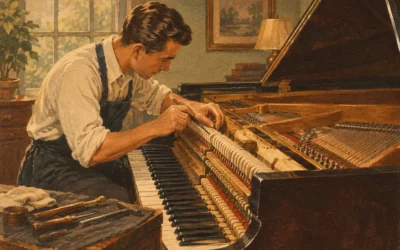
A thorough evaluation begins with the piano’s structure, then moves to its musical and mechanical condition. Cosmetic wear is usually easier to address than a cracked soundboard, loose tuning pins, water damage, or a compromised action.
The soundboard should be examined for cracks, separations, and signs that it has lost its crown, or natural curve. Small soundboard cracks are not always a deal-breaker, particularly in older instruments, but their location and effect on tone matter. The bridges, strings, plate, and pinblock also deserve close inspection. Rusted strings, corrosion, or pins that cannot hold a stable tuning may point to expensive future work.
Next comes the action. Every key should move consistently, return properly, and produce an even response from the lowest bass notes to the highest treble. Sticky keys, sluggish repetition, clicking sounds, broken hammer shanks, and uneven touch can often be repaired, but the scope of work should be known before agreeing on a price.
Finally, listen. Does the piano have a clear, singing tone? Is the tuning reasonably stable? Are there dead notes, buzzing, or dramatic changes in volume between neighboring keys? A piano does not need to be concert-ready to be worthwhile, but it should be judged honestly according to its intended use.
Brand, Model, and Serial Number Matter
A piano’s serial number is one of the most useful starting points. It can identify the year of manufacture and, in many cases, help confirm the model. Sellers should have this information ready, along with the piano’s dimensions, service records, and a straightforward description of its condition.
Model matters because builders often produced different tiers of instruments. For example, a professional upright is assessed differently from a compact console piano, even when both are made by the same company. A respected grand model with a known musical reputation may attract serious pianists and collectors, while a lower-tier model may appeal primarily to first-time buyers seeking a dependable home piano.
Be cautious with terms like “Steinway-style,” “player piano,” or “antique grand.” These descriptions do not establish value on their own. A self-playing system can add convenience and appeal when it is current and functioning properly, but an outdated or nonworking system may add little value and may require specialist service.
Market Value Is Different From Replacement Cost
A family may remember what a piano cost new, or what it would cost to purchase a comparable new model today. Those numbers can provide context, but neither is necessarily the current market value.
Market value is the amount a knowledgeable buyer may reasonably pay for the piano in its present condition. It reflects local demand, transport costs, available inventory, and the risk a buyer assumes. Private-sale prices are often lower than retail prices because a reputable piano retailer may include inspection, preparation, tuning, delivery coordination, warranty support, and ongoing service guidance.
This distinction helps both sides of a transaction. A seller can set expectations based on what the instrument is likely to bring, rather than what it once cost. A buyer can compare more than the sticker price and consider whether the piano has been professionally prepared for a new home.
How Buyers Can Price a Used Piano Wisely
Before purchasing, ask when the piano was last tuned and serviced, where it has been kept, whether it has moved recently, and what repairs or restoration have been completed. Request records when available. A piano maintained regularly in a climate-controlled home is generally a better prospect than one stored in a garage, basement, or unconditioned space.
An independent piano technician inspection is a smart investment for a private sale, especially for a grand piano or a premium vintage instrument. The technician can identify structural concerns, estimate needed work, and help you understand whether the asking price matches the piano’s actual condition.
Also budget for ownership beyond the purchase. Professional moving, a post-move tuning, possible regulation, and ongoing humidity management are part of responsible piano ownership. These costs are not reasons to avoid a good used piano. They are part of protecting an instrument built to make music for decades.
How Sellers Can Present a Piano Accurately
A clear, honest listing makes a better impression than ambitious claims. Include the make, model, serial number, approximate age, dimensions, finish, location, and recent service history. Good photographs should show the full piano, keyboard, pedals, interior, serial number, and any visible wear.
Avoid promising that a piano is “perfect” unless it has recently been evaluated by a qualified technician. If it needs tuning, say so. If a key sticks occasionally, disclose it. Buyers who understand the piano’s condition are more likely to follow through, and accurate information reduces surprises during pickup or delivery.
For higher-value instruments, a professional appraisal or dealership evaluation can be particularly helpful. At A440 Pianos, experienced guidance can help owners understand whether a piano is best suited for private sale, trade-in consideration, restoration, or continued enjoyment in the home.
A used piano can be one of the most rewarding purchases a musician or family makes when its value is measured with clear eyes. Let the instrument’s musical condition, history, and future service needs guide the decision, then choose the piano that invites you to sit down and play.

0 Comments