


A Yamaha self player piano appeals to a very specific buyer – someone who wants the presence and touch of a real acoustic piano, but also wants the convenience of automatic performance, recording, and modern playback features. That combination is exactly why these instruments remain so desirable. They are not novelty pieces. At their best, they are serious pianos with advanced technology built around a respected name in piano craftsmanship.
For families, studios, churches, and collectors, the attraction is easy to understand. A self-playing system lets the instrument perform on command, which is impressive in a living room or teaching space, but it also adds practical value. You can study performances, entertain guests, enjoy music at home more often, and in some cases even integrate the piano into a broader audio system. The right Yamaha can do all of that without giving up the musical integrity buyers expect from an acoustic instrument.
What a Yamaha self player piano really is
In most cases, when buyers refer to a Yamaha self player piano, they are talking about a Yamaha Disklavier. This is Yamaha’s best-known player technology, installed on select grand and upright pianos over many generations. Unlike older player systems that focused mainly on simple playback, Disklavier instruments can reproduce key movement and pedal activity with impressive precision.
That matters because not all player pianos feel the same. Some are primarily entertainment products. A Yamaha system, especially on a well-built grand piano, tends to attract buyers who still care deeply about tone, action, and long-term ownership. The piano itself still matters first. The technology is a major feature, but it should sit on top of a quality instrument, not distract from one.
There is also a range within the category. Some older Yamaha player pianos offer dependable playback with simpler controls and narrower digital features. Newer or more advanced Disklavier models may include recording, streaming options, app-based control, and more detailed reproduction. For one buyer, that added capability is worth the premium. For another, a well-maintained earlier model provides the same core experience at a more attractive price point.
Yamaha self player piano models and generations
This is where many buyers get tripped up. They assume every Yamaha self-playing piano offers the same experience. It does not. Different generations vary in playback accuracy, media format, connectivity, user interface, and serviceability.
Older units may rely on legacy hardware, proprietary controls, or earlier storage formats. That does not automatically make them a poor choice. In fact, some represent excellent value if the piano itself is in strong condition and the system has been tested properly. But it does mean the purchase should be evaluated with more care. Replacement parts, software compatibility, and long-term support can be more limited depending on the series.
Newer Disklavier systems are generally more convenient for modern households. They tend to be easier to control, easier to connect with current devices, and more attractive to buyers who want everyday use rather than occasional novelty. If convenience is high on your list, generation matters almost as much as the piano model.
Grand vs upright
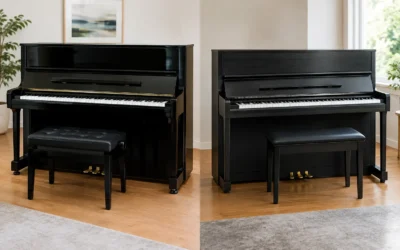
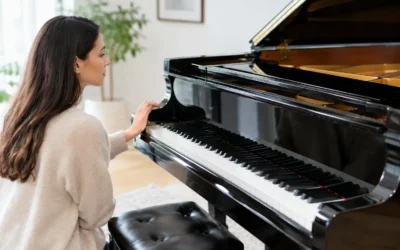
A Yamaha self player piano can be either a grand or an upright, and that choice affects more than cabinet style. A grand offers greater musical depth, stronger projection, and in many cases a more refined action. For serious pianists, performance venues, and luxury homes, a grand usually delivers the stronger ownership experience.
An upright, however, can be a very smart choice where space matters. In a teaching studio, family room, or smaller residence, a self-playing upright provides much of the same convenience in a more compact footprint. It may also create a better value equation for buyers who want the technology and Yamaha reliability without stepping into grand piano pricing.
What affects value most
When evaluating any Yamaha self player piano, buyers should look at value through two lenses at once: the quality of the piano and the condition of the player system. A beautiful cabinet and recognizable Yamaha name are not enough.
Start with the acoustic instrument. How does the soundboard look? Has the piano been maintained regularly? Is the action responsive and even? Has it been stored in a stable environment? A self-playing system does not compensate for a neglected piano. If the instrument itself is tired, the ownership experience will eventually reflect that.
Then look closely at the technology. Does the system power on correctly? Does playback function consistently across the keyboard? Are the pedals operating as intended? Has the unit been serviced, updated, or repaired? A player system can be a tremendous feature, but if it has unresolved issues, repairs may be specialized and not always inexpensive.
Age alone should not decide the matter. A carefully maintained older Yamaha can outperform a newer piano that has been poorly stored or lightly neglected. What matters more is overall condition, technical inspection, and whether the instrument has been represented honestly.
Who should buy one
A Yamaha self player piano makes the most sense for buyers who want both prestige and practical use. In a luxury home, it creates an experience that a standard acoustic piano simply cannot replicate on demand. In a music family, it can support listening, motivation, and practice in a very natural way. In a church or event setting, it offers flexibility when live performance is not always available.
It is also a strong option for educators and studios. Being able to record and play back performances can be useful for instruction. Students hear phrasing, timing, and pedaling more clearly when the instrument demonstrates it physically. That is different from hearing audio alone. The piano itself shows what the music is doing.
For collectors, the appeal is a little different. They often want a piano that stands out, not only for craftsmanship and brand value, but for feature set. A well-chosen Yamaha Disklavier can fit that goal beautifully, especially when paired with a desirable cabinet finish or a premium grand model.
When a Yamaha self player piano may not be the best fit
There are trade-offs, and serious buyers should acknowledge them. If your only goal is pure acoustic performance with no interest in digital features, a traditional grand or upright may be the cleaner investment. More technology means more complexity. Some buyers prefer the simplicity of a conventional piano with fewer systems to maintain over time.
Budget matters too. A self-playing Yamaha often commands a premium over a comparable non-player model. If that premium forces a compromise on piano quality, size, or condition, it may be wiser to prioritize the better acoustic instrument. In many cases, a superior standard Yamaha grand will be more satisfying long term than a lesser self-playing piano chosen mainly for the novelty factor.
There is also the question of usage. If the player function will be used weekly, or even daily, the value is easy to justify. If it will be used twice a year for guests, the equation changes.
How to shop with confidence
The best purchase decisions start with a clear hierarchy. First, make sure you love the piano as a piano. Then confirm that the self-play system works properly. After that, evaluate whether the model generation matches your expectations for convenience and support.
This is one reason many buyers prefer working with a specialist rather than a general marketplace seller. A premium instrument with integrated technology deserves proper inspection, accurate representation, and support beyond the sale. Delivery, setup, tuning, and technical evaluation all matter. A self-playing piano is not a casual purchase.
At A440 Pianos, that standard matters because buyers are not just shopping for a feature list. They are investing in a serious instrument, often for a home, studio, or collection where quality and presentation count. The right Yamaha should feel complete – musically, mechanically, and cosmetically.
Final thoughts on choosing the right Yamaha
A Yamaha self player piano earns its place when it delivers on both sides of the promise: a genuine acoustic piano experience and dependable automated performance. When those two elements are in balance, the result is sophisticated, useful, and genuinely enjoyable to own. The smart move is not chasing the newest label or the lowest price. It is choosing the instrument that has been cared for properly, matches the way you will actually use it, and still feels impressive every time you walk into the room.

0 Comments