

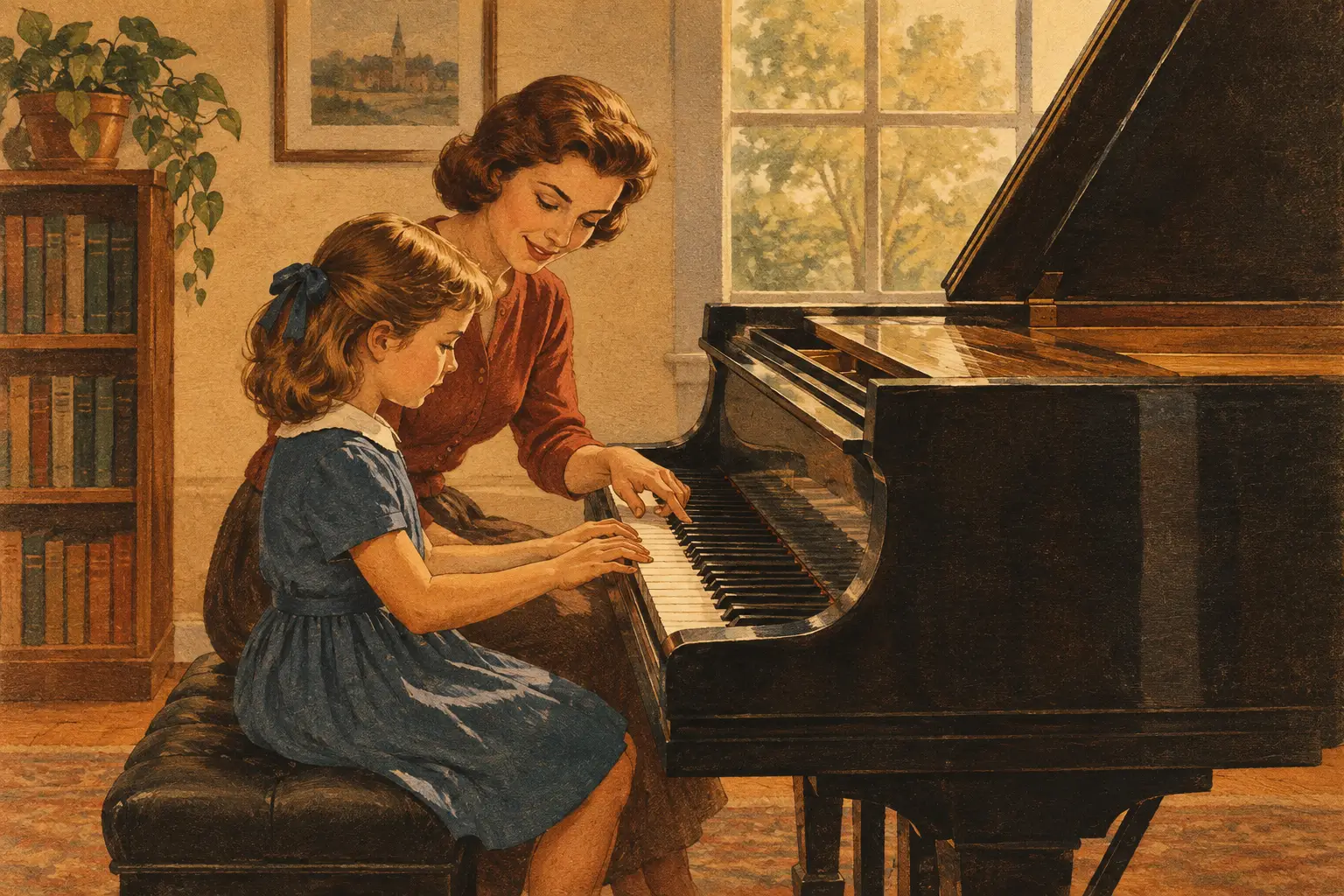
A teaching studio hears more of a piano in one week than many homes hear in a month. Beginners strike the same keys repeatedly, advancing students test fast repetition and wide dynamics, and instructors need an instrument that makes musical problems easy to hear. The best pianos for teaching studios are not simply the largest or most expensive models available. They are dependable instruments with an even action, a clear and satisfying tone, stable tuning, and enough musical range to serve students as they progress.
For a serious private studio, the right piano also sends a message. It tells families that lessons are valued, standards are high, and students are learning on an instrument worthy of their effort. That does not automatically mean buying a concert grand. A well-selected professional upright may be the smarter investment for a compact studio, while a quality grand can transform a larger teaching environment.
What a Teaching Studio Piano Must Do
A home piano may be played for an hour after school. A studio piano can be played for several hours a day by hands of every size, level, and touch. That difference should guide every buying decision.
The action comes first. Students need keys that respond consistently from one end of the keyboard to the other. If the action is too heavy, young beginners may struggle to develop relaxed technique. If it is too light or uneven, students can learn to force sound rather than control it. A properly regulated acoustic action gives an instructor reliable feedback on rhythm, articulation, voicing, and dynamics.
Tone matters just as much. A studio piano should offer clarity without becoming thin or harsh. Teachers must be able to distinguish a detached staccato from a supported legato, hear whether a student is balancing melody over accompaniment, and demonstrate a full range of color. A piano with a pleasant but muddy tone can hide problems that should be addressed in a lesson.
Durability is the third requirement. The best choice is often a quality used piano that has been inspected, serviced, and prepared by experienced technicians. A premium piano with sound structure, healthy strings and pinblock, responsive hammers, and a well-maintained action can offer exceptional value over a lightly built new instrument. Condition is more important than age alone, particularly with respected brands built for long service lives.
Best Pianos for Teaching Studios by Studio Type
The professional upright for most private studios
For many independent teachers, a 48- to 52-inch upright is the ideal place to start. Professional uprights deliver far more tonal depth and control than smaller console or spinet pianos, yet they fit comfortably along a studio wall. Their longer strings and larger soundboards create a more resonant bass and a more balanced middle register, both of which matter when teaching repertoire beyond the elementary level.
Yamaha and Kawai professional uprights are frequent choices because they are known for dependable actions, consistency, and durability under regular use. A well-maintained Yamaha U-series or Kawai K-series upright can be an excellent studio workhorse. Teachers often appreciate their clear response and predictability, especially when many students share the same instrument.
A high-quality Baldwin upright can also be a compelling option, particularly for studios seeking a fuller, warmer American sound. Each piano should be evaluated individually. Two instruments of the same model can feel and sound different depending on their care, environment, and service history.
The trade-off is simple: even an exceptional upright cannot fully replicate the action geometry or tonal bloom of a grand piano. Still, for a studio with limited square footage, a professional upright is a serious musical instrument, not a compromise in standards.
The baby grand for polished teaching spaces
A baby grand, generally around 5 feet to 5 feet 8 inches, suits teachers who want the visual presence and responsive action of a grand while working within a residential studio or smaller academy room. The horizontal action offers a different level of repetition and control, which can be especially valuable for intermediate and advanced students studying scales, arpeggios, Romantic repertoire, and demanding contemporary works.
Size matters within this category. A very small grand may be beautiful and space-efficient, but its bass response and tonal complexity may be limited. When the room permits it, choosing a grand closer to 5 feet 6 inches or longer often produces a more satisfying result. The improvement is not merely about volume. It is about the ability to shape phrases, layer dynamics, and demonstrate pedaling with greater refinement.
For a teacher building a premium studio experience, a carefully restored vintage Steinway or Blüthner can offer distinctive tonal personality and impressive visual presence. These instruments are best selected with close attention to restoration quality. A prestigious name is valuable, but the condition of the soundboard, bridges, action, hammers, and tuning stability determines whether the piano will perform reliably for students.
The larger grand for academies and advanced instruction
A 6-foot to 7-foot grand is often the strongest choice for a dedicated academy, conservatory-prep program, church music school, or teacher with a substantial advanced roster. The longer scale provides more tonal authority, especially in the bass, while the larger soundboard gives instructors greater dynamic range for demonstrations.
This category makes particular sense when the piano will also be used for student recitals, chamber coaching, faculty performances, or auditions. It gives advanced students an experience closer to what they will encounter in colleges, competitions, and performance venues.
The consideration is not just purchase price. Larger grands require appropriate space, humidity awareness, regular tuning, and safe professional delivery. A grand packed into a small, reflective room can sound overly aggressive, while the same instrument in a well-proportioned studio may sound refined and commanding.
Why Digital Pianos Have a Place, but Not Always the Lead Role
A quality digital piano can be useful in a teaching studio, particularly for headphone practice, group instruction, theory labs, or late-evening lessons. It can also give a beginning studio flexibility while enrollment grows. Modern digital instruments offer convincing sounds and weighted keys, but their actions and tone production remain fundamentally different from an acoustic piano.
For students learning expressive touch, pedaling, tone control, and the subtle relationship between key speed and sound, an acoustic piano remains the stronger primary teaching instrument. Digital pianos do not require tuning, but they do not eliminate the need for a true acoustic reference. If a studio uses both, let the acoustic piano be the central instrument and the digital piano serve the practical needs around it.
How to Evaluate a Piano Before You Buy
Play more than a favorite piece. Test slow scales at soft dynamics, repeated notes, wide chords, and rapid passages. Listen for notes that sound noticeably brighter, duller, or shorter than their neighbors. Check whether keys return quickly and evenly, and use all three pedals where applicable.
Ask direct questions about service history, restoration work, regulation, voicing, and tuning stability. With a used or vintage piano, these details are part of the instrument’s value. A piano may have an attractive cabinet and a famous name yet require significant work before it is ready for daily teaching.
Room planning deserves equal attention. Measure the space, including doorways, stairways, and turns required for delivery. Consider where students will sit, where parents may wait, and whether the piano will be exposed to direct sunlight, HVAC vents, or exterior walls with temperature swings. A stable environment protects tuning and helps preserve the investment.
A specialist piano company can be especially valuable here. Beyond finding the right instrument, a full-service partner can coordinate professional moving, delivery, tuning, repair, and future maintenance. A440 Pianos works with teachers and discerning buyers who want that level of support alongside a curated selection of premium used, vintage, upright, grand, and specialty instruments.
Set a Budget for the Piano’s Full Working Life
The purchase price is only the opening number. A studio piano needs regular tuning, typically at least twice a year and sometimes more often during the first year after a move or in a high-use environment. Periodic regulation and voicing keep the action consistent and the tone musical as students put in thousands of keystrokes.
It is usually wiser to buy a better instrument in excellent condition and reserve funds for professional care than to stretch for a larger piano with uncertain mechanical needs. Financing may make a higher-quality studio piano practical, but the monthly payment should leave room for the service that protects performance and resale value.
The piano your students touch every week becomes part of their musical education. Choose one that invites careful listening, rewards good technique, and holds its standard through years of lessons. That is the kind of instrument that supports a studio’s reputation long after the first recital.

0 Comments