

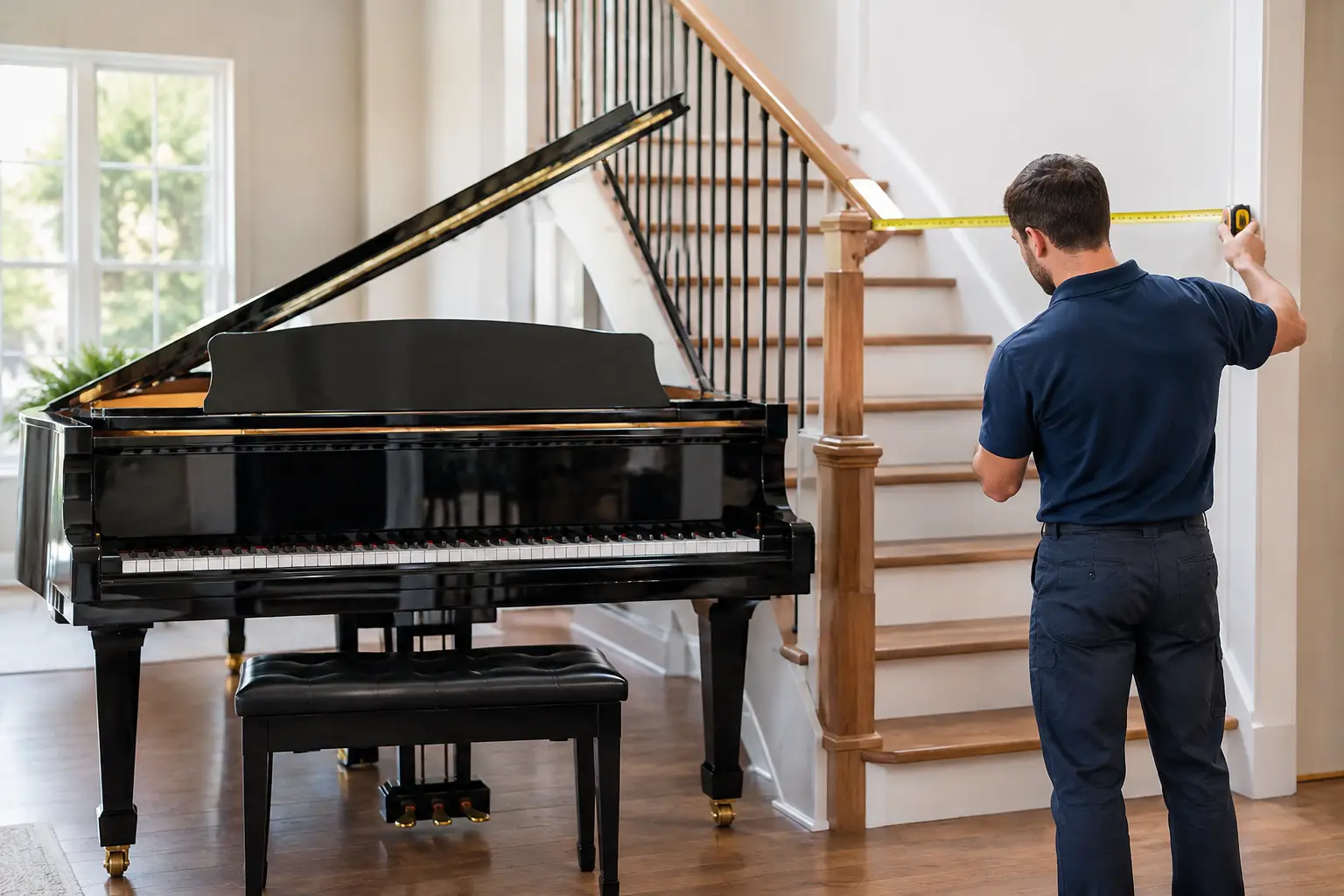
A piano can clear the front door and still be stopped by the first landing. That is why the question is not simply, “can pianos fit upstairs?” It is whether a specific instrument can make the complete route safely: through the entry, around each turn, up every stair, and into the room without putting the piano, the home, or anyone handling it at risk.
For many homes, the answer is yes. Upright pianos are regularly delivered to second-floor rooms, and some grand pianos can be placed upstairs as well. But successful delivery depends on measurements, stair construction, access points, and the experience of the moving team. A piano is not ordinary furniture. Its weight is concentrated, its finish is vulnerable, and its internal structure demands careful handling from start to finish.
Can Pianos Fit Upstairs? It Depends on the Piano and Route
The size and weight of the piano matter, but the route matters just as much. A compact console or studio upright may be a practical choice for an upstairs music room, while a full upright or grand piano requires more detailed planning. A professional team evaluates the instrument and the property as one complete move rather than making a decision based on the staircase width alone.
A typical upright piano can weigh roughly 300 to 800 pounds, depending on its height, construction, and age. Taller professional uprights, including many vintage instruments, carry substantial weight in a compact footprint. Their height and depth can make narrow stairwells and low ceilings challenging, especially where the stairs turn at a landing.
Grand pianos range even more widely. A baby grand may weigh about 500 pounds, while a concert grand can exceed 1,000 pounds. Grand pianos are moved on their sides with specialized equipment after trained movers remove and protect components such as the legs and pedal lyre. The issue upstairs is often not the stair width but the turns, headroom, structural access, and final room layout.
Electric pianos and digital pianos are usually much easier to bring upstairs, although furniture-style digital models still need careful transport. They can be an excellent solution for apartments, upper-floor practice rooms, and spaces where an acoustic piano cannot be safely positioned.
What Professional Piano Movers Measure
Before scheduling an upstairs delivery, accurate measurements prevent expensive surprises. A mover should assess more than a doorway opening. The entire route from the truck to the final location needs to be considered.
Start with the width of exterior doors, interior doors, hallways, and staircases. Measure the narrowest usable opening, not the widest point nearby. Account for handrails, trim, lighting fixtures, radiators, and anything that projects into the path. A staircase that appears generous can become restrictive once a piano must be angled and protected with padding.
The landing is especially important. Straight staircases are generally easier to assess. Stairs that turn 90 or 180 degrees require enough room to rotate the piano without forcing it against walls or railings. Ceiling height above the stairs also matters, particularly when an upright must be carried at an angle.
Movers will also look at the stair construction and access around the home. Are the stairs enclosed or open-sided? Is there a balcony, large upstairs window, exterior deck, or other potential access point? Is the driveway suitable for a delivery truck? These details can change the plan entirely.
Photos and video can be helpful during an initial conversation, but a site assessment is the best way to confirm a difficult route. It gives the moving team a chance to identify obstacles, choose the right equipment, and determine whether additional crew members or specialized lifting methods are needed.
The Upstairs Room Needs Planning Too
Getting the piano upstairs is only half the job. The instrument needs a stable, suitable home once it arrives.
Most modern homes can support an upright piano on an upper floor when it is placed thoughtfully, particularly near a load-bearing wall or over a supporting beam. Larger grands and exceptionally heavy vintage pianos deserve closer consideration. If there is any concern about floor capacity, a qualified structural professional can provide guidance before delivery. Piano movers can evaluate access and handling, but they should not be expected to certify a building’s structure.
Avoid placing an acoustic piano directly against an exterior wall, near an air vent, or beside a window that receives strong afternoon sun. Rapid temperature and humidity changes affect tuning stability and can eventually impact the piano’s action, soundboard, and finish. An upstairs room that is comfortable for people year-round is usually a better environment for the instrument.
Also consider the playing experience. A piano in an upstairs bedroom may be ideal for daily practice, but sound can travel through the floor and walls more than expected. Area rugs, curtains, and thoughtful placement can soften reflections in the room. For families with evening practice schedules, a quality digital piano with headphones may complement an acoustic piano elsewhere in the home.
When a Grand Piano Requires a Different Plan
A grand piano may fit upstairs, but it should never be treated as a standard furniture move. Its case, plate, action, and delicate finish require specialized protection. The piano must be secured to a purpose-built board, moved with professional dollies and straps, and handled by a crew that understands balance points and stair navigation.
In some properties, interior stairs are not the right route for a grand. A professional piano moving company may recommend an exterior lift, crane service, or alternate entrance. This can sound dramatic, but it is often the safest choice when a stairwell has tight turns or insufficient clearance. The goal is not to force the instrument through a difficult route. The goal is to preserve the piano and the property while placing it correctly.
This is also why buyers should discuss upstairs placement before selecting an instrument. A 5-foot baby grand and a 6-foot 7-inch grand offer very different musical and physical profiles. The larger piano may produce more tonal depth and projection, yet a smaller grand or premium upright could be the better fit for the home, budget, and intended room.
Common Mistakes to Avoid
The most expensive mistake is assuming that strong helpers are a substitute for trained piano movers. Pianos are awkward, top-heavy, and much heavier than they look. Improper lifting can injure people, damage stairs, crack a cabinet, bend a pedal assembly, or compromise the instrument’s regulation.
Another frequent mistake is measuring only the staircase. The front walk, porch steps, entry hall, door swing, landing, upstairs hallway, and room doorway all count. Removing a door from its hinges can create useful clearance in some cases, but it does not solve a tight turn or low ceiling.
Buyers should also avoid choosing a piano solely because it appears small enough to fit. A well-restored upright, a Yamaha U3, or a carefully selected baby grand may serve a musician far better than an instrument chosen only for convenience. The right decision balances musical goals with the physical realities of the space.
Finally, do not plan to move a piano upstairs and tune it immediately. Moving can affect tuning, especially after changes in temperature and humidity. Let the piano acclimate to its new room before scheduling tuning, often after a few weeks depending on the season and the home environment.
Make the Delivery Part of the Piano Purchase
An upstairs room should not prevent you from owning an acoustic piano. It simply makes professional planning essential. At A440 Pianos, piano selection and delivery are considered part of the same ownership experience, whether a family is bringing home its first upright or a serious player is preparing a dedicated second-floor studio.
Share the piano model you are considering, the home’s address, and clear measurements or photos of the route as early as possible. A knowledgeable delivery assessment can confirm what is realistic, identify alternatives when needed, and help you choose an instrument that will arrive safely and sound beautiful in its new space.
The best upstairs piano is not merely the one that can be carried up the stairs. It is the one that fits the room, supports the player’s musical goals, and can be delivered with the care a fine instrument deserves.



0 Comments