

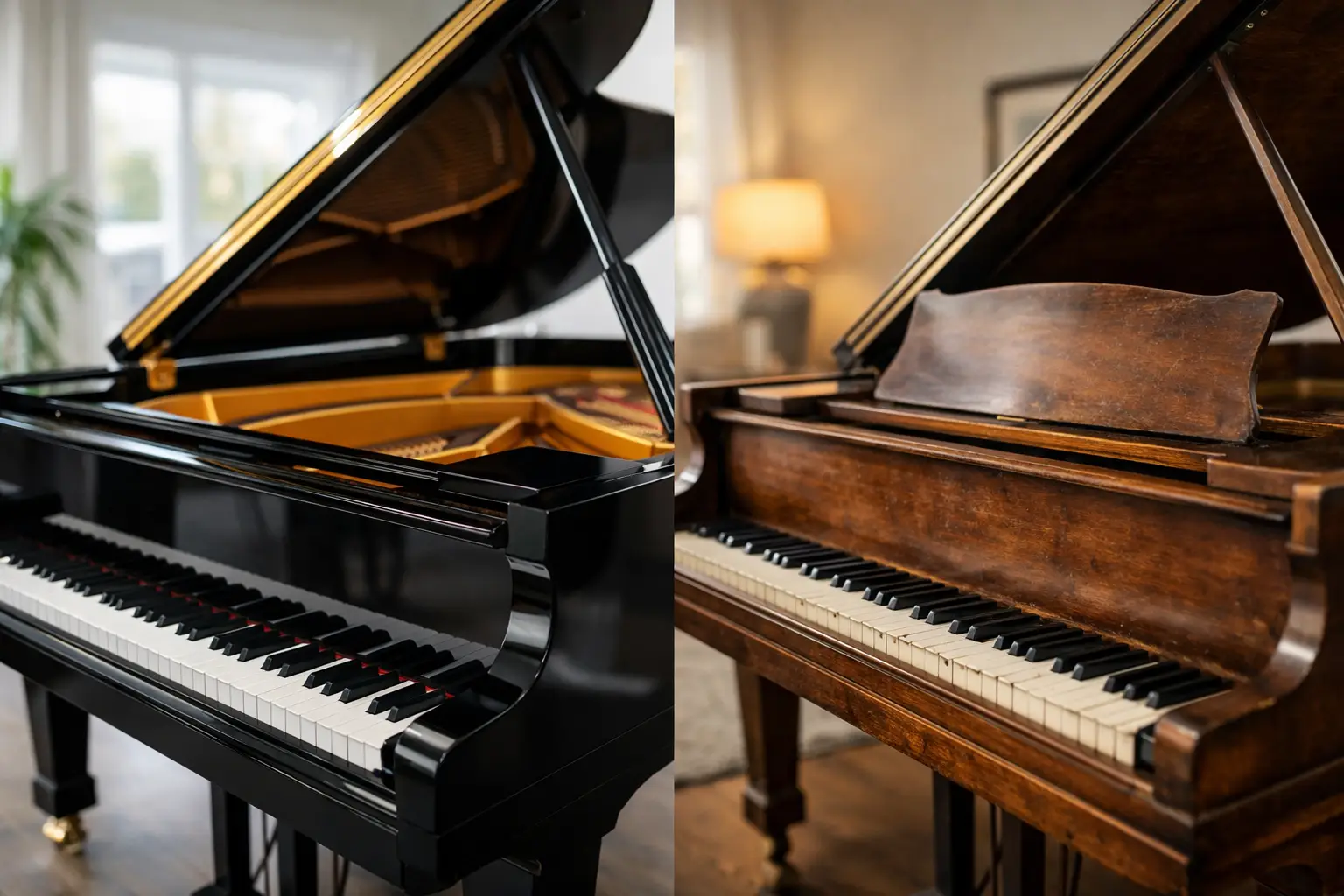
A piano purchase is rarely just about black polish, cabinet style, or the first price you see. It is about the sound that will fill your home, the hands that will play it, and how confidently the instrument will serve you over time. When comparing new versus preowned pianos, the better choice depends on your musical goals, budget, space, and willingness to consider an instrument with a story already behind it.
For a beginning student, a dependable upright may be the right starting point. For an advancing pianist, a well-maintained used Yamaha U3 or restored vintage grand may offer more musical depth for the investment. For a collector or serious player, the character of a particular Steinway or Blüthner can matter more than its model year. The key is to look beyond the label of “new” or “used” and assess the instrument itself.
New Versus Preowned Pianos: The Real Difference
A new piano offers a known starting point. Its action, strings, soundboard, finish, and internal components have not been subject to another home’s humidity, heating conditions, moving history, or playing habits. Buyers also receive current manufacturer specifications and, in many cases, a warranty. That predictability is valuable, particularly for families making their first major piano purchase or institutions that need a consistent, dependable instrument.
A preowned piano can offer a different kind of value. A quality instrument that has been properly maintained, carefully restored, and regulated by a technician may deliver a level of touch and tonal character that would cost much more in a comparable new piano. This is especially true with respected brands whose construction is designed for decades of musical life.
The distinction is not simply new equals good and used equals risky. A neglected new piano can suffer from poor environmental conditions, just as a preowned piano can be excellent after knowledgeable care. Condition, provenance, and preparation matter more than age alone.
When a New Piano Makes the Most Sense
A new piano is often the clearest choice when you want a specific model, finish, size, or feature set. Perhaps you need a slim upright for a particular wall, a polished ebony grand for a formal room, or a self-playing piano with contemporary technology. New inventory gives you more control over these details.
New instruments also appeal to buyers who prefer an uncomplicated ownership beginning. You know the piano’s history from day one. There are no questions about whether it was moved incorrectly years ago, exposed to extreme humidity, or played heavily in a school practice room. For many first-time buyers, that peace of mind is worth the higher initial investment.
There is also value in the modern consistency offered by established manufacturers. New Yamaha pianos, for example, are known for reliable action and evenness across the keyboard. A new piano can be a practical choice for teaching studios, churches, and homes where the instrument will receive frequent use and needs to settle into a long-term maintenance routine.
Still, new does not mean maintenance-free. Every acoustic piano needs proper delivery, a stable environment, regular tuning, and occasional regulation. The first tuning after delivery is particularly important because changes in temperature and humidity can affect pitch after a piano enters its new home.
Why a Preowned Piano Can Be the Better Value
The strongest argument for a preowned piano is not simply a lower price. It is the opportunity to purchase more piano for your budget. Rather than choosing a smaller entry-level new instrument, a buyer may be able to select a taller professional upright or a larger grand with greater tonal range, bass response, and dynamic control.
A piano that has been played and cared for over several years may also have a more settled voice. The soundboard, strings, hammers, and action have had time to develop. Some players are drawn to that maturity, particularly in vintage European and American instruments. A preowned grand can have warmth, color, and personality that cannot be reduced to a specification sheet.
However, preowned value depends on technical evaluation. The cabinet may look beautiful while the piano needs substantial internal work. Worn hammers, loose tuning pins, deteriorated action parts, cracked bridges, or soundboard issues can affect both performance and future costs. This is why a piano should be evaluated by professionals who understand its structure as well as its sound.
At A440 Pianos, curated preowned and vintage instruments are selected with the full ownership experience in mind. That means considering how the piano plays now, what work it has received, what maintenance it may need next, and whether it is a good match for the buyer’s expectations.
Restoration Is Not a Single Standard
Buyers should ask what “restored” means when considering a preowned piano. The word can describe anything from cabinet polishing and basic tuning to a comprehensive rebuilding process involving strings, pinblock, hammers, action parts, soundboard work, and refinishing.
A lighter restoration may be entirely appropriate for a piano with sound structure and moderate wear. A full restoration may be worthwhile for an exceptional instrument with significant musical or historical value. Neither approach is automatically better. What matters is whether the work fits the piano’s condition, intended use, and price.
A clear seller should be able to explain what has been done, what remains original, and what ongoing care the piano may require. That information allows you to compare instruments honestly instead of relying on vague descriptions.
How to Compare Condition, Tone, and Touch
When choosing between new and preowned pianos, play more than one instrument if possible. Start with the action. Does the keyboard respond evenly from bass to treble? Can you play softly without notes failing to speak? Do repeated notes feel controlled? A piano’s touch should support your current level while leaving room for musical growth.
Then listen for tonal consistency. Every piano has a voice, but the tone should not change abruptly from one section of the keyboard to another. Play slow scales, chords, and a piece you know well. Listen for clarity in the bass, warmth in the middle register, and singing sustain in the treble.
On a preowned piano, ask about tuning stability and service history. A piano that struggles to hold pitch may need work that is not obvious during a brief showroom visit. Ask whether it has been regulated, voiced, tuned, or repaired, and when that work was completed.
The cabinet deserves attention, but it should not make the decision for you. Cosmetic marks can be acceptable on a piano that plays beautifully and has a healthy structure. Conversely, a flawless finish does not compensate for a compromised action or unstable tuning.
Consider the Costs Beyond the Purchase Price
The price of the instrument is only one part of piano ownership. Delivery, placement, tuning, climate control, and routine service should all be considered before making a final decision. A piano is a precise acoustic machine, and professional moving is essential whether it is brand-new, vintage, upright, or grand.
A well-priced piano that must be moved up several flights of stairs, across difficult terrain, or into a tightly arranged room may require more planning than expected. Measure doorways, hallways, turns, staircases, and the intended piano location early. Grand pianos may require partial disassembly and specialized handling, while upright pianos still demand the right equipment and trained movers.
Financing can also change the comparison. A new piano may fit comfortably through monthly payments, while a higher-quality preowned piano may offer greater long-term value at a similar overall investment. The right choice is the one you can maintain properly without compromising on fundamental condition.
Match the Piano to Its Job
A family with a young beginner does not necessarily need a concert grand, but they do need an acoustic piano with a responsive action and stable tuning. An adult returning to lessons may appreciate the sound and control of a taller upright. A teacher, recording musician, or advanced pianist may benefit from the greater tonal palette of a grand piano.
For buyers who need quiet practice, an electric piano or a hybrid solution can be practical. For those who want the physical resonance and nuanced response of an acoustic instrument, a quality upright or grand remains difficult to replace. Your space and schedule should guide the decision as much as your musical ambitions.
A Better Way to Make the Decision
Rather than beginning with the question, “Should I buy new or used?” begin with, “What do I need this piano to do?” Consider who will play it, how often it will be used, where it will live, what sound you enjoy, and how long you expect to keep it.
If certainty, current features, and a pristine history matter most, a new piano may be the right fit. If you are seeking superior musical value, a particular vintage character, or a higher-tier instrument within a defined budget, a professionally evaluated preowned piano may be the more rewarding choice.
Take your time at the keyboard. A piano should invite you to sit down again tomorrow, whether it is fresh from the factory or has already spent years making music in another home.
0 Comments