


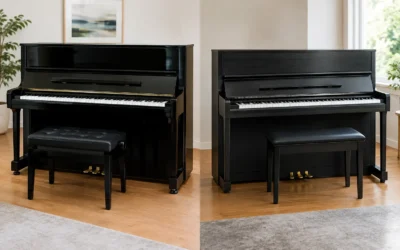
One piano looks flawless under showroom lights. The other has age, character, and a deeper musical story in its soundboard and action. When buyers compare new piano versus used, they are rarely choosing between good and bad. They are choosing between two very different kinds of value.
For some households, a brand-new instrument offers peace of mind, consistency, and a clean starting point. For others, a well-selected used piano delivers more performance, more craftsmanship, and more prestige for the same investment. The right answer depends on how you play, what you expect from the instrument, and whether you are buying for short-term convenience or long-term musical satisfaction.
New piano versus used: what really changes
The biggest difference is not simply age. It is how your budget translates into musical quality.
With a new piano, a meaningful portion of the price goes toward new production, dealer presentation, warranty structure, and the fact that no one else has owned it. That has real value. A new piano can be an excellent choice for families who want predictability, modern styling, and the comfort of starting fresh.
With a used piano, especially in premium brands, more of your investment can go directly into the instrument itself. In many cases, the same budget that buys an entry-level or mid-tier new piano may place you in a substantially better class of piano on the used market. That can mean stronger cabinetry, a more sophisticated action, richer tone, and a level of craftsmanship that would cost much more if purchased new.
This is why the comparison should never be reduced to simple age. A lightly used Yamaha or Kawai, or a properly prepared vintage Steinway or Baldwin, may outperform a less refined new instrument at a similar price point. On the other hand, a poorly maintained used piano can become expensive quickly. Condition matters more than calendar age.
The case for buying new
A new piano appeals to buyers who want a straightforward ownership experience. Everything begins at zero, from cosmetic wear to action use. There is no uncertainty about prior climate exposure, moving history, or maintenance habits.
That matters in family settings where the piano may serve a beginner for years, or in institutions that want a predictable instrument with manufacturer backing. New pianos also tend to offer a more uniform touch across the keyboard right out of the gate, and some buyers simply enjoy being the first owner of a premium instrument.
There is also a styling advantage. If the piano is going into a newly designed home, church, or studio, a new finish and current cabinet design may align better with the space. For buyers focused on presentation as well as performance, that can be a legitimate factor.
Still, new does not automatically mean better musically. At lower and middle price tiers, a new piano may be built to hit a target price, not to rival the tonal depth or material quality of a stronger used instrument. If your budget has limits, the prestige of newness can come at the expense of performance.
Why many serious buyers choose used
Used pianos occupy a wide range, from worn household uprights to exceptional grand pianos with decades of life ahead of them. The premium end of that market is where the real opportunity lies.
A high-quality used piano can give you access to brands, sizes, and tonal complexity that might otherwise sit outside your budget. That is especially true with grand pianos and premium uprights. Buyers who care about nuance in touch and tone often find that an expertly maintained used instrument feels more substantial and musically rewarding than a newer model built to a lower standard.
There is also the question of depreciation. Like many large-ticket items, new pianos typically absorb their sharpest value drop early in ownership. A carefully chosen used piano has often already passed through that stage. For a buyer thinking in terms of long-term value, that can make used a very smart purchase.
Vintage pianos introduce another dimension: character. Not every player wants a piano that sounds polished and identical to the next one. Some want warmth, color, and personality. A fine vintage instrument, when properly restored or maintained, can offer exactly that. For collectors, advanced pianists, and buyers furnishing a distinctive space, used can be the more compelling category.
Condition is everything
This is where many buyers make the wrong comparison. They compare a new piano with an unknown used piano found in a private listing and assume used is risky. In reality, the real comparison should be new piano versus used piano from a qualified specialist.
A used piano should be evaluated for action wear, pinblock stability, soundboard condition, bridge integrity, tuning history, cabinet condition, and signs of environmental stress. Even an attractive instrument can hide expensive problems if it has been exposed to neglect, humidity swings, or improper moving.
By contrast, a professionally prepared used piano offers a different level of confidence. Regulation, voicing, tuning, cleaning, cabinet touch-up, and mechanical inspection all affect the ownership experience. This is why service infrastructure matters as much as inventory. A premium piano purchase should come with technical knowledge behind it, not just a sales tag.
Which buyer should choose new
If you want minimal uncertainty, current styling, and a fresh warranty-backed start, new may be the better fit. That is often true for first-time piano owners who prefer a simple decision path, as well as design-conscious buyers furnishing a formal room where appearance carries significant weight.
New can also make sense when the piano will receive moderate rather than demanding musical use. If the goal is steady family enjoyment, beginner study, or reliable use in a teaching studio, a quality new piano may check every box without requiring the buyer to weigh different histories and preparation levels.
The key is making sure the new piano is genuinely meeting your musical expectations, not just your comfort with newness.
Which buyer should choose used
Used is often the stronger choice for serious students, advancing pianists, churches, collectors, and buyers who want more instrument for the money. It is particularly attractive when tonal richness, premium brand access, or larger piano size matter.
A family upgrading from a starter instrument may discover that a premium used upright outclasses many new alternatives in both touch and sound. A pianist shopping for a grand may find that the used market opens the door to a level of craftsmanship that would be financially unrealistic if bought new. And a buyer with an eye for heritage may prefer the visual and musical presence of a restored or carefully maintained vintage piano over something factory-fresh.
For many high-intent shoppers, used is not a compromise. It is the better category.
Cost beyond the purchase price
A piano is never just the sticker price. Delivery, placement, tuning, future regulation, humidity control, and occasional repairs all shape the real ownership cost.
A new piano may reduce short-term service surprises, but it still needs tuning and proper care after delivery. A used piano may offer greater value upfront, but only if it has been well prepared and honestly represented. An underpriced used piano from a general marketplace can become costly fast if it needs extensive work.
This is why premium buyers often prefer a full-service piano partner. When sales, technical support, delivery coordination, and after-sale service are handled by one experienced source, the decision becomes far more secure. For buyers in Atlanta and beyond, that level of support is often what separates a confident purchase from an expensive gamble.
How to decide with confidence
Start with your musical standards, not your assumptions. If your priority is a fresh ownership timeline and clean cosmetics, new may be right. If your priority is performance, brand level, tonal maturity, or value retention, used deserves very serious attention.
Play multiple instruments if you can. Compare touch, dynamic range, sustain, and cabinet quality. Ask about preparation, not just age. Ask who serviced the piano, how it was stored, and what support is available after delivery. A premium buying experience should answer those questions clearly.
At A440 Pianos, this is where buyers tend to find clarity. Once you compare actual instruments instead of broad categories, the question becomes less abstract. You are not choosing between new and used in theory. You are choosing the piano that best fits your ear, your space, and your standards.
The best piano is the one that invites you back to the bench tomorrow, and still feels like the right decision years from now.

0 Comments