

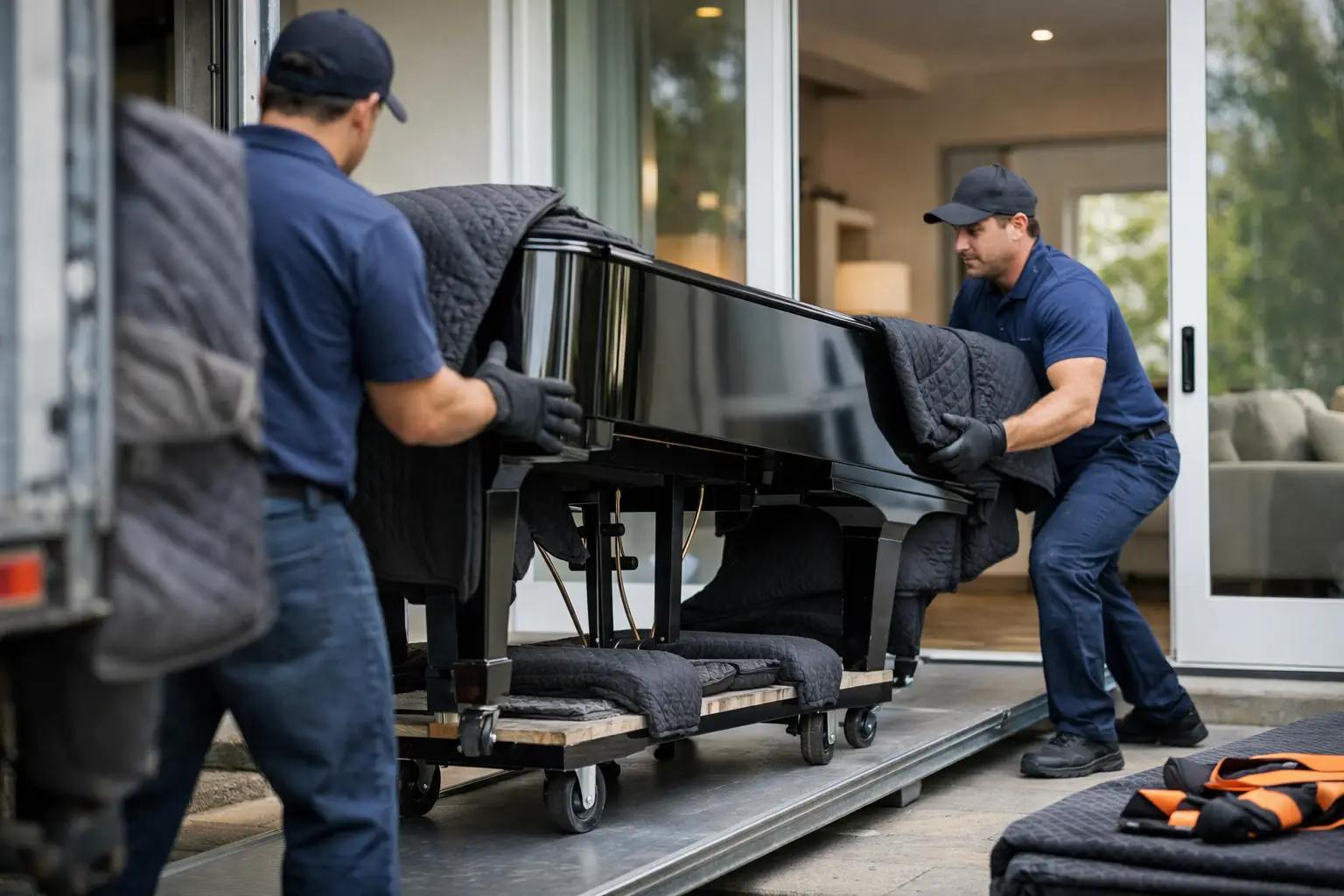
A piano is not simply heavy furniture. It is a precisely regulated instrument built from cast iron, hardwood, felt, strings, and thousands of moving parts. A proper piano moving guide begins with that distinction: the goal is not just getting the instrument through a doorway. It is protecting its structure, finish, action, and future musical performance from the first measurement to the final tuning.
Whether you are moving a family upright across Atlanta, relocating a Yamaha grand to a studio, or bringing a restored Steinway into a new home, careful planning makes a meaningful difference. The safest choice is usually a professional piano mover with the training, equipment, and insurance to handle the instrument as an instrument.
Why Piano Moving Requires Specialized Care
Pianos carry most of their weight in places that are not obvious at first glance. An upright may weigh 300 to 600 pounds, while a grand can range from roughly 500 pounds to well over 1,000. Beneath the cabinet, a cast-iron plate bears tremendous string tension. The legs, pedals, music desk, lid, and outer case are not designed to serve as lifting points.
A move can damage more than the visible finish. An improper lift can stress an upright’s cabinet joints, bend pedal hardware, damage a grand’s lyre, or leave a leg vulnerable during transport. A bump against a door frame may seem minor, but a chipped edge or cracked veneer can be difficult and expensive to repair, particularly on a vintage or high-gloss instrument.
Professional movers use piano boards, heavy-duty straps, padded covers, dollies, ramps, and secure vehicle tie-downs. More importantly, they know where the instrument can safely be supported. Experience matters when a move involves tight corners, uneven walks, elevators, staircases, or a delicate collector piano.
Piano Moving Guide: Start With the Route
The route determines the moving plan before anyone lifts a piano. Measure every doorway, hallway, landing, and turn between the piano’s current location and the moving vehicle. Then repeat the process at the destination. Include trim, handrails, ceiling height, porch columns, and any furniture that may narrow the path.
For a grand piano, movers will generally remove components such as the legs and lyre, protect the body, and secure it on a piano board. The exact procedure depends on the piano’s size, design, condition, and route. A 5-foot baby grand on a level first floor presents a very different job from a 7-foot grand requiring a turn on a narrow staircase.
Uprights remain more compact, but they still need professional handling. The keyboard lid should be locked or secured, the pedals and lower panel protected, and the body kept upright as much as possible. Do not attempt to roll an upright over thresholds or down steps on small household dollies. Their wheels are not made for concentrated piano weight, and a sudden shift can injure people or damage the instrument.
Share Accurate Details Before Scheduling
A mover can prepare properly only with a clear picture of the job. Provide the piano type, approximate make and model, dimensions if available, and photographs of the route. Mention every step, whether stairs are indoors or outdoors, and whether the move involves gravel, grass, a steep driveway, a gate, or an elevator.
Also disclose unusual conditions. A climate-controlled storage facility, condominium service elevator, historic home, or construction site may have scheduling rules or access limitations. If a building requires a certificate of insurance or designated delivery hours, address that before moving day. Good planning prevents rushed decisions with a valuable instrument at the door.
Prepare the Piano and Your Home
Homeowners can make moving day smoother without trying to disassemble or wrap the piano themselves. Remove framed art, lamps, rugs that may slide, and breakable objects from the route. Clear a generous path through halls and rooms, and secure pets in a separate area. If weather is expected, ask the moving team how they plan to protect floors and manage rain safely.
Avoid packing items inside the piano. Sheet music, small accessories, and decorative objects can shift during transport and scratch the interior or create unwanted pressure. Close and lock the keyboard cover if it has a lock. If it does not, let the movers secure it with appropriate materials rather than tape directly on the finish.
At the new location, choose the piano’s placement before it arrives. Keep it away from direct sun, heat vents, radiators, fireplaces, exterior doors, and drafty windows. Sudden changes in temperature and humidity can affect tuning stability, action regulation, wood components, and the soundboard. A grand piano also needs enough room for its lid to open and for the player and bench to sit comfortably.
Stairs, Elevators, and Difficult Access
Stairs are not automatically a reason a piano cannot be moved, but they change the equipment, crew size, and level of risk. Professional movers assess stair width, tread depth, turns, railings, and the strength of the route. They may determine that an exterior route is safer than an interior staircase, or that specialized hoisting is needed for a large grand piano.
Do not underestimate a few front steps. Uneven stone, wet decking, loose handrails, or a sharp turn at the top can make a seemingly simple delivery complex. The right solution depends on the piano and the property. In some cases, a different placement room or an alternative entry point is the most practical choice.
Elevators also require advance verification. Confirm the interior dimensions, door opening, weight capacity, reservation process, and whether the elevator can be held during delivery. A service elevator is often preferable, but the piano must still fit safely with its protective equipment.
What Happens During Professional Transport
A quality piano move is deliberate rather than hurried. The team protects the cabinet with thick moving pads and secures the instrument using specialized straps. In the truck, the piano is stabilized so it cannot roll, tip, or strike other cargo as the vehicle brakes and turns.
For long-distance moves, ask how the piano will travel and whether it will be transferred between vehicles or stored en route. Climate exposure, handling frequency, delivery windows, and insurance coverage all deserve a clear conversation. A premium grand, antique upright, or self-playing piano may call for additional planning because of its finish, age, electronics, or unique mechanism.
At A440 Pianos, moving is approached as part of complete piano ownership support, not as an ordinary furniture delivery. That perspective protects both the investment and the player’s connection to the instrument.
Expect the Piano to Need Time to Settle
Moving does not usually damage a well-handled piano’s tuning by itself. Changes in temperature and humidity, however, can cause the soundboard and wooden action parts to expand or contract. A piano that arrives sounding slightly different may simply be responding to a new environment.
Give the instrument time to acclimate before scheduling tuning. For many local moves, two to four weeks is a sensible window, though the best timing depends on seasonal conditions and how different the new environment is from the old one. If the piano has traveled a long distance or entered a home with very different humidity, a technician may recommend a longer settling period.
This is also a good opportunity for a technician to inspect the piano. They can check tuning, pedal operation, action response, cabinet condition, and any issues that may have existed before the move. If the instrument has not been serviced recently, a post-move appointment can restore a more consistent touch and tone.
Questions to Ask Before Choosing a Piano Mover
Price matters, but the lowest quote is not always the best value when an instrument can cost thousands of dollars or carry family history. Ask whether the company moves pianos regularly, what equipment it uses, and whether its crew is trained specifically for piano handling. Confirm that it carries appropriate insurance and ask what coverage applies while the piano is in its care.
It is also wise to ask how the company handles stairs, whether it performs an access assessment, and whether its quote includes all anticipated labor and equipment. A clear estimate should account for the piano type, distance, floor levels, stairs, and challenging access conditions. Vague pricing can lead to surprises on moving day.
A piano deserves a route, crew, and delivery plan matched to its particular needs. With careful preparation and skilled handling, the first notes played in its new room can feel less like the end of a move and more like the beginning of the instrument’s next chapter.



0 Comments