


A 5’7″ grand piano has to do more than fit a room. It has to provide enough tonal depth, control, and presence that an advancing pianist will not outgrow it quickly. This Steinway Model M review examines why the instrument has earned such a devoted following, where its limits are, and what separates a compelling example from an expensive restoration project.
For many homes, teaching studios, churches, and private music rooms, the Model M occupies a particularly attractive middle ground. It carries the Steinway name and musical heritage in a footprint that remains practical outside a concert hall. Yet buying one well requires more than recognizing the logo on the fallboard. Year of manufacture, condition, rebuilding quality, and individual musical character all matter.
What Makes the Steinway Model M Special?
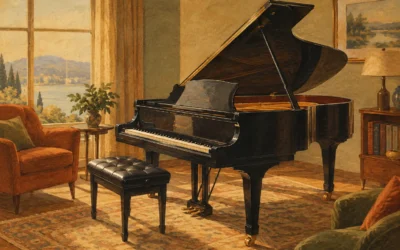
The Steinway Model M measures 5’7″ long, placing it between the smaller Model S baby grand and the 5’10 1/2″ Model O. Its size is a major reason for its appeal. It can sit comfortably in many substantial living rooms while offering more bass scale, soundboard area, and tonal authority than a typical baby grand.
At its best, a Model M has a voice that feels polished rather than merely loud. The bass can be warm and focused, the middle register clear enough for inner voices, and the treble singing without turning brittle. Players often value the piano’s ability to shift from delicate accompaniment to a confident, room-filling sound with changes in touch.
The action is equally central to the experience. A properly regulated Model M should respond quickly and predictably, allowing pianissimo playing without hesitation and repeated notes without a sense of resistance. That responsiveness benefits the serious student working on control, the experienced amateur returning to demanding repertoire, and the professional who needs a reliable studio instrument.
Still, no Steinway model is automatically superior simply because it is a Steinway. These pianos were built over many decades, have lived in dramatically different environments, and may have received anything from careful maintenance to cosmetic shortcuts. The individual instrument always deserves a close evaluation.
Steinway Model M Review: Tone, Touch, and Projection
The Model M’s greatest strength is balance. Compared with a Model S, it generally offers more satisfying bass support and a broader dynamic range. Compared with a larger Model B, it will not create the same orchestral foundation or concert-level projection, especially in a large venue. That is not a flaw. It is the trade-off that makes the M such an intelligent choice for a home, smaller recital space, or teaching environment.
Its tonal personality varies considerably by era and condition. Some vintage American-built examples lean toward a dark, vocal sound with a powerful middle register. Others are brighter and more direct. A recent factory-built piano may offer greater consistency and a more modern clarity. Neither character is universally better. A player who performs Romantic repertoire may prefer depth and color, while someone focused on chamber music or contemporary styles may favor definition and immediacy.
Touch should feel connected from key to hammer. On an excellent instrument, the pianist can shape a phrase with small differences in finger weight and key speed. On a neglected one, heavy friction, worn key bushings, tired hammers, or poor regulation can make the action feel sluggish and uneven. These conditions are often correctable, but the needed work should be reflected in the purchase decision.
Projection is impressive for the piano’s size, but room acoustics matter. A Model M in a hard, minimally furnished room can sound overly bright or forceful. The same piano in a carpeted room with upholstered furniture may seem more restrained. Before deciding that a piano is too brilliant or too mellow, consider whether placement, lid position, voicing, or the room itself is shaping that impression.
The Right Size for a Premium Home Piano
For buyers with the space and budget for a larger grand, the Model B remains a natural benchmark. Its 6’10 1/2″ length gives it more tonal scale, particularly in the bass, and it is often the preferred choice for serious performance spaces. But a Model B asks more of the room, the budget, and the floor plan.
The Model M is often the more proportionate choice. It has enough presence to anchor a formal living room or dedicated music room without visually dominating the space. It is also a strong option for educators and institutions that want a prestigious instrument with meaningful musical capability but do not need a semi-concert grand.
Do not choose by length alone. A carefully restored Model M with excellent tone and action can be more rewarding than a larger piano that has been poorly maintained. The right question is not, “What is the largest Steinway I can fit?” It is, “Which instrument will perform beautifully in this room and serve the player for years?”
Vintage, Restored, and Newer Examples
A vintage Model M can offer exceptional value and character. Many older instruments have mature soundboards, distinctive cabinetry, and a tone that players find deeply expressive. However, age is not a credential by itself. Wood, felt, leather, glue joints, strings, and action parts all have service lives. A piano can look elegant while carrying substantial mechanical needs.
A high-quality restoration may include restringing, pinblock work, soundboard repair or replacement when appropriate, action rebuilding, hammer replacement, damper work, refinishing, and full regulation and voicing. That level of work can transform a tired piano into an instrument capable of long-term service. It also requires skilled judgment. An overly aggressive rebuild can alter a piano’s character, while superficial work may leave major structural concerns unresolved.
Ask what was done, when it was done, and by whom. “Restored” is not a standardized promise. One seller may mean polished cabinet and tuned strings; another may mean extensive structural and action work. Documentation, a clear condition report, and a professional inspection are more valuable than a broad label.
Newer or recently manufactured Model Ms may appeal to buyers who prioritize consistency, modern materials, and less uncertainty about prior care. They usually command a higher price, but they can offer a more straightforward ownership path. The best choice depends on whether you value vintage character, a particular cabinet style, budget efficiency, or the predictability of a newer instrument.
What to Inspect Before You Buy
A premium grand deserves a premium evaluation. Start with structural health: the soundboard, bridges, pinblock, plate, and rim should be examined by an independent piano technician or a trusted specialist. Hairline soundboard cracks are not always catastrophic, but loose ribs, bridge separation, severe cracking, or unstable tuning pins warrant deeper investigation.
Then assess the musical and mechanical condition. Play every key softly and firmly. Listen for uneven tone, buzzing, clicking, or notes that fail to repeat properly. Test the pedals, including sostenuto where applicable. Look at hammer wear, string condition, damper response, key level, and the consistency of the action across registers.
Cabinet condition matters, particularly for collectors and design-conscious buyers, but it should not outrank the instrument’s core health. A beautiful high-gloss finish does not make up for structural instability or an action near the end of its useful life. Conversely, minor finish wear may be acceptable on a musically exceptional piano, especially if restoration is planned later.
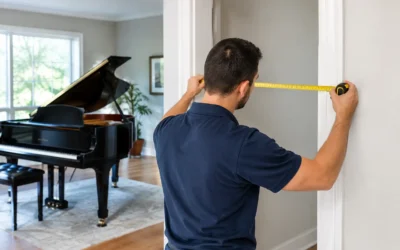
Climate history is another practical concern. Pianos exposed to extreme seasonal swings, prolonged humidity, water damage, or poor storage can develop problems that are not obvious in a short showroom visit. Ask about prior locations, service history, and how the piano has been maintained. After purchase, professional delivery, appropriate placement away from direct sun and HVAC vents, and regular tuning protect the investment.
Is the Model M Worth the Investment?
A Steinway Model M is worth serious consideration when the buyer wants a premium grand that combines heritage, musical flexibility, and a manageable footprint. It is especially compelling for advanced students, committed adult players, music families, private teachers, and collectors who want a recognizable American luxury piano with genuine artistic capability.
Its value depends less on a single asking price than on condition and total ownership readiness. A lower-priced vintage piano that immediately needs major rebuilding can cost more over time than a higher-priced example that has already received thoughtful, documented restoration. Delivery, climate planning, tuning, regulation, and future maintenance should be part of the budget from the start.
At A440 Pianos, buyers can compare premium used and vintage instruments with the benefit of specialized guidance, professional moving, tuning, repair, restoration, and delivery support. That full-service approach matters because a grand piano purchase does not end when it leaves the showroom.
The finest Model M for you may not be the shiniest, newest, or most expensive one in the room. It will be the piano whose voice draws you back to the bench, whose action invites better playing, and whose condition gives you confidence to make music for years.

0 Comments