

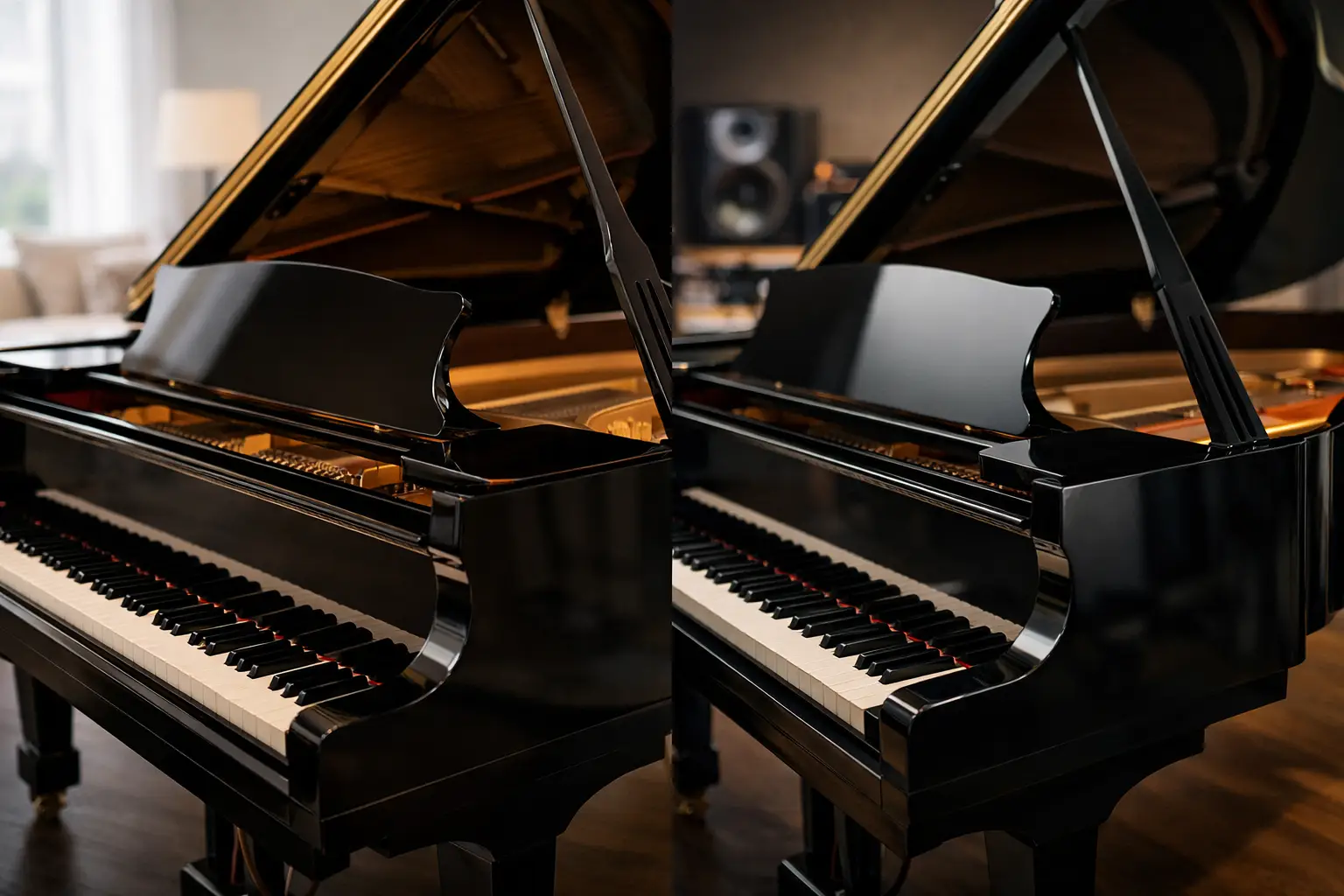
A pianist who sits down at a Steinway and then a Yamaha may recognize both as excellent instruments, yet feel two very different invitations to play. The Steinway versus Yamaha decision is not about choosing a winner. It is about matching a piano’s voice, response, condition, and long-term value to the musician and room it will serve.
Both names carry extraordinary respect. Steinway & Sons is closely associated with concert stages, historic craftsmanship, and a deeply individual musical character. Yamaha is known for consistency, durability, broad model selection, and performance that works beautifully in homes, teaching studios, schools, and professional settings. The right choice often becomes clearer once you move beyond the logo on the fallboard.
Steinway versus Yamaha: The Character of the Sound
Many players describe a Steinway as complex, warm, and layered. A well-prepared Steinway grand can produce a singing treble, a resonant bass, and a wide range of tonal color under the hands. Its sound tends to reward players who shape phrases carefully and use subtle changes in touch. That expressive flexibility is a major reason Steinways have remained fixtures in concert halls and serious private collections.
Yamaha pianos generally offer a clear, direct, balanced sound. The tone can be bright without being harsh, with a focused projection that works well for many musical styles. This clarity is especially useful in teaching environments, ensemble work, churches, recording spaces, and homes where the piano needs to speak cleanly without overwhelming the room.
These descriptions are starting points, not fixed rules. Every acoustic piano develops its own voice through design, age, use, climate, regulation, voicing, and maintenance. A carefully restored vintage Steinway may have a wonderfully rich personality, while another instrument of the same size and era may need significant technical work. A Yamaha grand that has been properly maintained can deliver impressive nuance and warmth, while a neglected one may feel far less inspiring than its reputation suggests.
Touch and Playing Response Matter Just as Much
Tone is only half of the experience. The action – the mechanism that transfers each keystroke to the hammer – determines how connected a pianist feels to the instrument.
Steinway actions are often admired for their depth of expression. A responsive example can allow a player to control soft dynamics, repeated notes, and broad climaxes with remarkable detail. Some pianists prefer this sense of resistance and the feeling that the piano has a distinct personality. Others may find that a particular Steinway requires more adjustment time, especially if they are accustomed to a lighter or more uniform action.
Yamaha actions are widely valued for precision and consistency. Many players appreciate the predictable response from one key to the next, particularly when practicing technical repertoire, teaching several students, or playing for extended periods. Yamaha’s dependable feel is one reason its uprights and grands are common in institutions where an instrument receives regular use from many different hands.
The best way to evaluate touch is to play music you know. Use quiet passages, scales, repeated notes, chords across the keyboard, and a piece that demands both control and power. Do not judge an instrument after a single loud flourish. Notice whether you can produce the softest sound you want, whether the keys return evenly, and whether the piano helps you phrase naturally.
Price, Value, and the Role of Condition
A new Steinway grand typically represents a significant luxury investment. For buyers who want the Steinway name, a particular scale of sound, and an heirloom-caliber instrument, that investment may be exactly right. Pre-owned and restored Steinways can also create access to a higher tier of instrument than a new purchase budget might otherwise allow, provided the piano has been evaluated thoroughly.
Yamaha offers a very broad price range. A quality Yamaha upright can be a practical first serious acoustic piano for a family or advancing student, while Yamaha grand pianos can meet the demands of experienced musicians and studios. Because Yamaha instruments are widely used and recognized, they also tend to be straightforward to service, insure, and resell when properly maintained.
For pre-owned pianos, condition matters more than age alone. A 40-year-old piano that has received professional rebuilding, climate-conscious care, and proper regulation may be more satisfying than a younger piano with worn action parts, deteriorated hammers, loose tuning pins, or structural concerns. The soundboard, pinblock, strings, bridges, action components, cabinet, and service history all deserve careful attention.
This is where an expert inspection protects the buyer. A piano can look beautiful in a living room while concealing costly needs beneath the cabinet. Conversely, a piano with modest cosmetic wear may have excellent musical potential and represent outstanding value after appropriate service.
Which Brand Fits Your Musical Goals?
A Steinway may be the natural choice for the pianist who is pursuing a highly personal tonal palette, furnishing a performance-focused music room, or adding a collectible instrument to a home. It can also be a compelling option for an advanced player who has spent years developing their touch and wants an instrument that responds to every shade of that work.
A Yamaha may be ideal for a family seeking a reliable acoustic piano, a teacher needing an instrument that holds up to daily lessons, or a musician who values clarity and consistent action. It is also a strong choice for buyers who want an excellent piano while reserving budget for professional delivery, tuning, bench selection, humidity control, or future maintenance.
Room size should influence the decision. A grand piano needs space not only for its footprint but for its sound to bloom. In a smaller room, a compact grand or high-quality upright can be more musically satisfying than a larger piano that dominates the space. Flooring, ceiling height, nearby glass, rugs, and furnishings all affect how bright or resonant a piano will sound after delivery.
Do Not Compare Brands Without Comparing Models
The most useful question is rarely simply, “Is Steinway better than Yamaha?” A better question is, “Which specific piano plays and sounds best for my needs?” A Steinway Model O, Model M, or Model B will have different proportions, projection, and room requirements. Yamaha’s upright and grand lines likewise offer distinct sizes, levels of refinement, and musical personalities.
Within either brand, preparation makes a meaningful difference. Regulation aligns the action so keys and hammers respond consistently. Voicing shapes the tone of the hammers. Tuning brings the piano to proper pitch and musical balance. These services can transform the experience of a piano that has strong underlying potential but has not received recent professional care.
When visiting a showroom, allow enough time to play several instruments without rushing. Bring a teacher, pianist, or trusted musical friend if you would value a second set of ears. Ask about the piano’s age, restoration history, warranty or service support, and what has been done to prepare it for sale. A quality retailer should welcome those questions and help you compare instruments honestly across price points.
Ownership Support Is Part of the Purchase
An acoustic piano is not a one-time transaction. It needs professional moving, careful placement, tuning after it settles into a new environment, and periodic maintenance to preserve its performance. Grand pianos in particular should be moved by specialists who understand how to protect the finish, plate, legs, action, and home itself.
At A440 Pianos, the goal is to help each buyer find an instrument that feels right on the first day and remains rewarding for years to come. That may be a distinguished Steinway, a dependable Yamaha, or another carefully selected piano that better fits the player’s hands, space, and budget.
Let your ears and hands make the final decision. The piano worth bringing home is the one that makes you want to sit down tomorrow, open the lid or lift the fallboard, and play again.
0 Comments