


A used piano can be one of the best values in music, or an expensive piece of furniture with hidden problems. The difference is rarely obvious from a few photos or a quick look at a polished cabinet. This used piano buying checklist helps you evaluate the instrument beneath the finish, so you can choose a piano that will serve your home, studio, or teaching space for years to come.
A well-maintained used Yamaha upright, vintage Steinway grand, or carefully restored European piano may offer remarkable tone and craftsmanship for its price. But age alone does not determine value. Condition, maintenance history, climate exposure, and the quality of any past repairs matter far more.
Used Piano Buying Checklist: Start With Your Needs
Before assessing a particular piano, decide what the instrument needs to do for you. A beginner practicing at home, a serious pianist preparing repertoire, and a teacher with a busy studio will have different priorities.
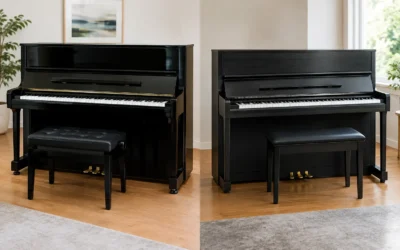
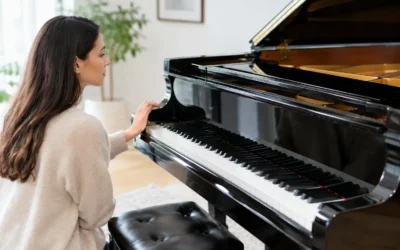
Consider the available room, your desired sound, who will play the piano, and your realistic budget for purchase, delivery, tuning, and future care. An upright can be an excellent musical instrument for a family room or apartment where space is limited. A grand piano offers greater tonal range and touch control, but it also needs more floor space and a suitable environment.
It also helps to set expectations around age. A 40-year-old piano that has received regular service may be a better purchase than a 15-year-old instrument that has lived in a damp garage or endured years without tuning. The goal is not to find the newest used piano. It is to find the healthiest one for your needs.
1. Identify the Brand, Model, and Serial Number
Start with the piano’s make, model, and serial number. The serial number is usually found inside a grand piano near the plate or tuning pins, and on an upright near the top of the plate after the upper front panel is removed. This number helps establish the year of manufacture and can clarify whether the piano is a respected model with a known reputation.
Recognizable brands such as Steinway & Sons, Yamaha, Kawai, Blüthner, and certain American and European makers can hold value well when properly maintained. Still, a respected name is not a guarantee of condition. A neglected premium piano can require more work than a well-cared-for instrument from a more modest line.
Ask whether the seller can provide original documentation, service records, prior appraisals, or restoration invoices. A clear history builds confidence. Vague answers about where the piano came from or when it was last serviced should prompt a closer inspection.
2. Look Beyond the Cabinet Finish
A beautiful cabinet can be appealing, but cosmetic condition tells only part of the story. Small scratches, faded finish, or minor veneer wear are often manageable and may not affect the music at all. Structural issues are more serious.
On a grand piano, inspect the rim, legs, lyre, lid hinges, and pedal assembly for instability or damage. On an upright, make sure the case feels solid and doors, panels, and hinges function correctly. Look for signs of water exposure, including stains, swelling, warped wood, mold, or a persistent musty odor.
Pianos are made primarily of wood, felt, steel, and cast iron. They respond to humidity changes, direct sunlight, heating vents, and poor storage conditions. A piano that has spent years in a controlled home environment is generally a safer prospect than one moved repeatedly through storage units, basements, or garages.
3. Inspect the Soundboard and Structural Components
The soundboard is the wooden diaphragm that helps a piano project its voice. Hairline cracks can be common, especially in older instruments, and do not automatically mean the piano sounds poor. What matters is whether cracks are stable, whether the soundboard has separated from its ribs, and whether the instrument still produces a clear, even tone.
Look closely at the bridges, where strings pass over the wooden components that transfer vibration to the soundboard. Bridge cracks, loose bridge pins, or visible separation deserve professional evaluation. Also inspect the cast-iron plate for cracks. A cracked plate is a major concern because it carries the enormous tension of the strings and can be very costly, if not impractical, to address.
Do not rely on visual inspection alone. A qualified piano technician can determine whether the piano’s structure supports stable tuning and dependable performance.
4. Play Every Key and Test Every Pedal
Play each of the 88 keys slowly, then play passages across the full range. Listen for notes that are unusually dull, bright, weak, buzzy, or slow to respond. Check that each key returns properly after being pressed and that there are no sticking, clicking, or heavily uneven keys.
Pay attention to touch. Does the action feel controlled and consistent from bass to treble? Some older pianos feel heavy because of normal design differences, while others feel heavy because the action needs regulation or parts have deteriorated. A piano does not need to feel identical to every other instrument, but it should feel predictable and musical under the fingers.
Test the pedals as well. The sustain pedal should hold notes clearly, the soft pedal should produce its intended effect, and the middle pedal should operate appropriately for that particular model. Pedal repairs can range from simple adjustments to more involved work, depending on the piano.
5. Check Tuning Stability, Not Just Current Pitch
A piano that is out of tune is not automatically a poor purchase. Even a healthy piano will drift from standard pitch without regular tuning. The more useful question is whether it can be brought to pitch and remain stable.
Ask when it was last tuned and how often it has been serviced. If the piano has not been tuned in many years, it may need a pitch raise before normal tuning can begin. This can be reasonable for a sound instrument, but it should be reflected in the purchase decision.
During inspection, a technician can assess tuning pin tightness, string condition, and overall pinblock health. Loose tuning pins can make it difficult for a piano to hold a tune, regardless of how attractive the cabinet may be.
6. Examine the Hammers, Strings, and Action Parts
Open the piano and look at the hammers, which strike the strings. Deep grooves, moth damage, hardened felt, or uneven wear can affect tone and touch. Some hammer wear is expected on a used piano and can often be addressed through shaping, voicing, or replacement. The appropriate solution depends on the instrument’s quality and value.
Check for rust or corrosion on strings and other metal parts. Surface discoloration may be cosmetic, but extensive rust can point to a history of humidity exposure. Listen for broken strings, false beats, or a harsh metallic sound that does not match neighboring notes.
Inside the action, felt, leather, and wood parts age over time. These components can be regulated or replaced, but the cost should be considered honestly. An inexpensive piano with a long list of needed action repairs is not always the economical choice.
7. Ask About Restoration and Repair Work
Restoration can add meaningful value when it has been done properly, but the word itself is used loosely. Ask specifically what was restored. Were the strings replaced? Was the soundboard refinished? Were hammers, shanks, dampers, key bushings, or tuning pins replaced? Who performed the work, and when?
A thoughtfully rebuilt vintage piano can be an exceptional instrument. On the other hand, a cosmetic refinish without mechanical or structural attention may leave major needs untouched. Good restoration respects the piano’s original character while making it dependable for modern playing.
If a seller describes a piano as “fully restored,” request details rather than accepting the label at face value. Documentation from a reputable technician or piano specialist is worth far more than a broad claim.
8. Factor in Delivery, Placement, and First Service
A piano purchase does not end when you agree on a price. Safe professional delivery is essential, especially for stairs, tight turns, apartment buildings, or long-distance moves. Pianos are heavy, complex instruments that can be damaged by improper handling, and homes can be damaged as well.
Measure the intended location before buying. For a grand piano, account for the fully opened lid, bench clearance, and room for the player. Keep the piano away from direct sun, exterior doors, fireplaces, heating vents, and air-conditioning outlets whenever possible.
Plan for a tuning after delivery and after the piano has acclimated to its new environment. A440 Pianos helps buyers coordinate the full ownership process, including professional moving, tuning, repair, and ongoing care, so the instrument arrives ready for a successful start.
9. Compare the Total Cost, Not the Asking Price
The lowest-priced piano is not necessarily the best value. Add expected costs for delivery, tuning, repairs, bench replacement, humidity control, and possible restoration. A slightly higher-priced piano from a curated source may cost less over time if it has already been inspected, prepared, and supported with clear service guidance.
Likewise, a free piano can be expensive if it needs major work before it is playable. There are situations where restoration makes sense, especially for a family instrument with sentimental value or a high-quality vintage piano. For many first-time buyers, however, a piano in dependable playing condition is the wiser investment.
10. Arrange an Independent Professional Inspection
The most valuable step on any used piano buying checklist is a pre-purchase inspection by a qualified piano technician. This is particularly important when buying from a private seller, estate sale, or online listing. A technician can identify structural concerns, estimate repair needs, and give you a practical view of the piano’s remaining useful life.
An inspection is not about finding perfection. Used pianos have history, and even excellent instruments may need tuning, regulation, or minor cosmetic work. It is about understanding what you are buying and whether the price matches the piano’s true condition.
The right used piano should invite you to sit down and play, not leave you wondering what problem will appear next. Take your time, listen carefully, and choose an instrument with a condition story you can trust. A well-chosen piano becomes part of daily life – a place for practice, celebration, teaching, and music that grows richer with every year of ownership.

0 Comments