

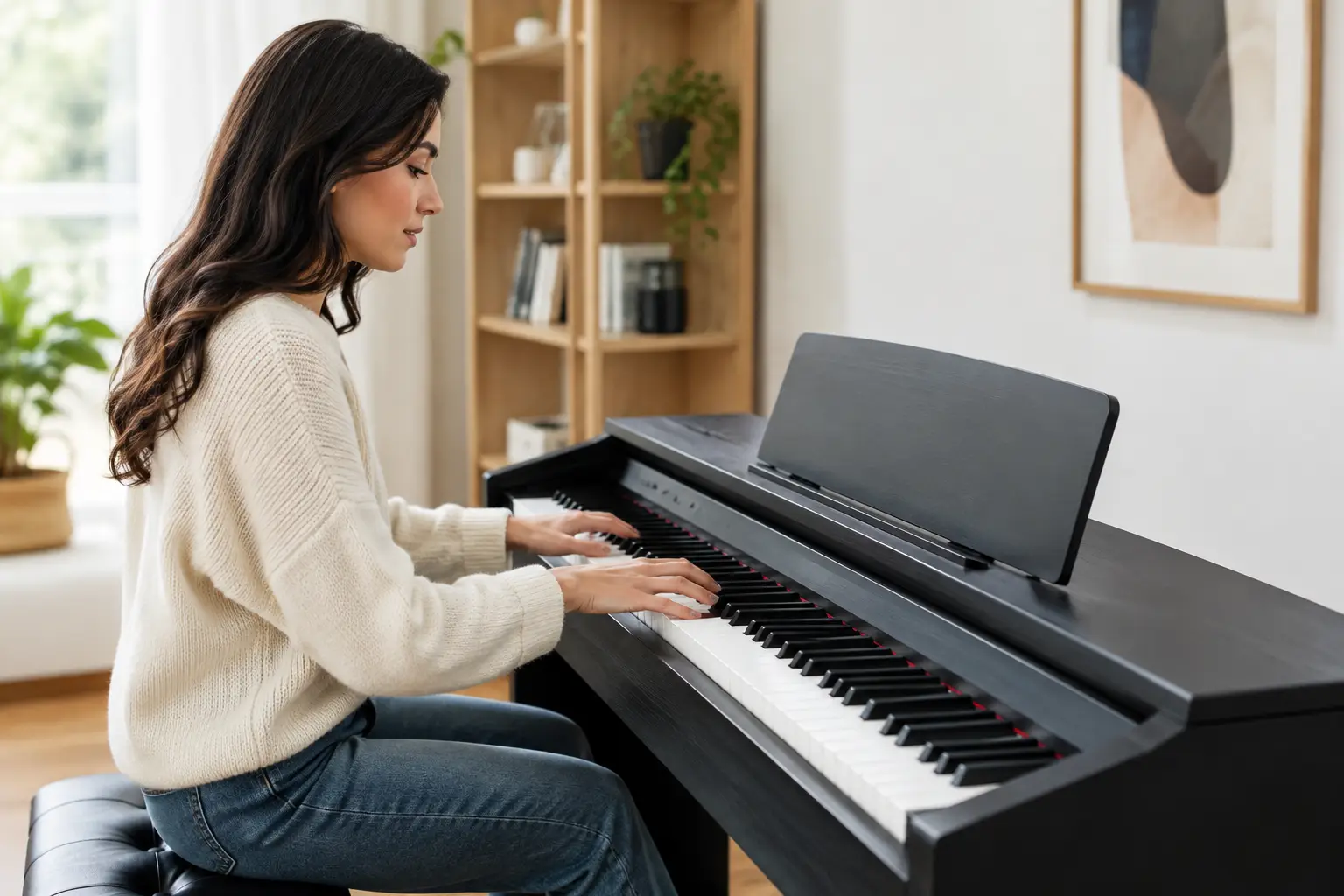
A pianist can tell within a few measures whether a digital piano invites real playing or merely imitates it. The best digital pianos for pianists do more than offer 88 keys and a familiar cabinet. They respond to changes in touch, support expressive pedaling, produce a convincing range of tone, and make practice feel musically worthwhile.
That standard matters whether you are replacing an acoustic piano in a city home, building a teaching studio, or adding a dependable instrument for late-night practice. Digital pianos have improved dramatically, but they are not all designed for the same player. The right choice depends on how you play, where the piano will live, and which acoustic-piano qualities you are unwilling to compromise.
What Makes a Digital Piano Feel Like a Piano?
For a pianist, the action is the first test. Look for an 88-key weighted action with graded resistance, meaning the lower keys have a slightly heavier feel than the upper register. Better instruments use wooden-key or hybrid actions, escapement simulation, and carefully engineered pivot lengths that feel closer to an acoustic grand.
Specifications can be helpful, but they cannot replace time at the keyboard. A key action may sound excellent on paper yet feel too springy, too shallow, or too resistant for your technique. Play quiet repeated notes, scales, fast passagework, and chords at several dynamic levels. Notice whether the piano gives you control at pianissimo, not just volume when you play firmly.
Sound is equally personal. Most quality digital pianos use samples from respected concert grands, while some also use modeled piano sound that generates tonal behavior in real time. Sampling can be richly familiar and beautiful. Modeling can provide especially fluid changes in tone and resonance. Neither approach automatically wins. The better choice is the one that makes you want to keep listening and playing.
Pedaling deserves more attention than it usually receives. A proper three-pedal unit with continuous damper-pedal detection allows half-pedaling and gradual changes in sustain. This is essential for classical repertoire, impressionistic music, advanced jazz voicings, and anyone working on refined control. A simple on-off sustain pedal is adequate for casual use, but it limits expressive playing.
Best Digital Pianos for Pianists by Playing Need
There is no single best instrument for every pianist. A conservatory-trained player, a church musician, and a working keyboardist may all need a different balance of touch, sound, portability, and features.
For the acoustic-piano player at home
A console digital piano is often the strongest choice for a player who wants a permanent home instrument. Yamaha Clavinova models, Kawai CA series instruments, Roland LX series pianos, and Casio’s higher-end Celviano models are all worth trying in person. These pianos generally offer integrated stands, three pedals, stronger speaker systems, and more substantial actions than portable models.
Kawai is particularly respected by many pianists for wooden-key actions in its upper console range. Yamaha Clavinovas appeal to players who value a polished, clear piano voice and a familiar response. Roland’s premium instruments are often favored for their detailed modeled sound and resonance controls. Each brand has a distinct musical character, so comparison is more useful than chasing a specification sheet.
The trade-off is size and weight. While a console piano is easier to place than an acoustic upright, it is still furniture-sized and should be delivered and assembled with care. Its rewards are a more satisfying playing experience and a sound system designed for the instrument rather than a pair of external headphones.
For serious practice in a smaller space
A quality portable digital piano can be an excellent solution when space is limited or the instrument needs to move occasionally. Models such as the Yamaha P-525, Roland FP-90X, and Kawai ES920 provide full-length keyboards, capable piano sounds, and enough speaker power for many homes and teaching spaces.
Portability always involves a compromise. Even the best slab-style pianos tend to have less cabinet resonance, smaller speakers, and a lighter overall presence than a premium console model. Still, paired with a stable furniture stand, an appropriate three-pedal unit, and good headphones, they can be serious practice instruments rather than temporary substitutes.
This category is especially practical for apartment dwellers, college students, traveling teachers, and families that expect the piano to serve several rooms over time. Make sure the stand does not wobble and that the bench height can be adjusted correctly. Good posture matters as much on a digital piano as it does on a grand.
For players seeking the closest grand-piano experience
Hybrid digital pianos sit at the premium end of the category. Yamaha AvantGrand instruments and Kawai Novus models are designed for pianists who want the mechanical feel of an acoustic action while keeping digital sound control, headphone practice, and a smaller footprint than a grand piano.
These instruments can be remarkable, particularly for advanced repertoire and players accustomed to acoustic grands. They also command a significantly higher investment and are not necessarily the right answer for every home. A well-chosen console digital piano may provide greater value if your priority is enjoyable daily practice rather than reproducing every aspect of a grand action.
For a pianist considering a hybrid, an in-person appointment is especially valuable. The goal is not simply to find the most expensive instrument. It is to find the action and tonal response that support your playing without asking you to adapt your technique to the piano.
For stage, studio, and varied sound needs
Some pianists need more than an acoustic piano voice. Stage pianos such as the Nord Piano series, Yamaha CP line, and Roland RD series are built for musicians who need dependable piano sounds alongside electric pianos, organs, pads, splits, and flexible audio connections.
Their key actions can be very good, but their priorities differ from those of furniture-style home pianos. A stage instrument may offer faster access to sound changes, balanced outputs, and greater control for live performance, while giving up built-in speakers, an integrated cabinet, or the heavier action a classical player prefers.
For studio work, pay close attention to audio outputs, USB audio capability, MIDI control, and how the piano responds through your preferred monitors or headphones. A sound that seems impressive through small onboard speakers may behave very differently in a recording environment.
Features That Matter More Than the Extras
When comparing digital pianos, start with action, tone, pedals, and speakers before considering hundreds of sounds or elaborate lesson apps. Those extras can be useful, but they should not distract from the fundamentals.
Polyphony matters when you use sustain pedal heavily, layer sounds, or play dense arrangements. Higher polyphony helps ensure notes are not cut off unexpectedly. Speaker placement also matters more than raw wattage. Speakers aimed toward the player, along with a cabinet designed to distribute sound naturally, often create a more convincing result than a louder but less focused system.
Headphone quality is another practical concern. Digital pianos are often chosen specifically because they allow quiet practice, but the experience depends on both the instrument’s headphone processing and the headphones themselves. Use comfortable over-ear headphones with enough detail to hear dynamics and pedal resonance without turning the volume too high.
Bluetooth audio, recording functions, apps, and accompaniment rhythms can add value for families and casual players. For the committed pianist, think of them as supporting features. A compelling action and musical piano tone will remain valuable long after novelty features fade.
How to Choose With Confidence
Begin with a realistic description of your playing. If you are returning to piano after years away, prioritize a pleasant action and easy daily access. If you are preparing advanced classical literature, demand better key control and continuous pedaling. If you perform outside the home, portability and connections may outweigh furniture styling.
Measure the intended location before shopping. Include room for the bench, the lid or music rest, and a comfortable path around the instrument. Consider how the piano will enter the home as well. A digital piano is lighter than an acoustic, but premium consoles and hybrids still require careful handling, especially on stairs or through tight spaces.
Set a budget that includes the essentials: a stable stand or cabinet, bench, pedal unit, delivery, and headphones where needed. Buying a lower-priced keyboard and trying to improve it later with accessories rarely creates the same experience as choosing a better instrument from the beginning.
Most importantly, play several options without rushing. Bring music you know well. Test the same short passages on each piano, including soft lyrical playing and stronger chordal work. Your ears and hands will usually identify the right direction quickly.
A digital piano should fit your home, but it should also respect your musicianship. At A440 Pianos, thoughtful guidance can help you compare actions, tones, and formats so the instrument you choose continues to reward every hour you spend at the keys.

0 Comments