

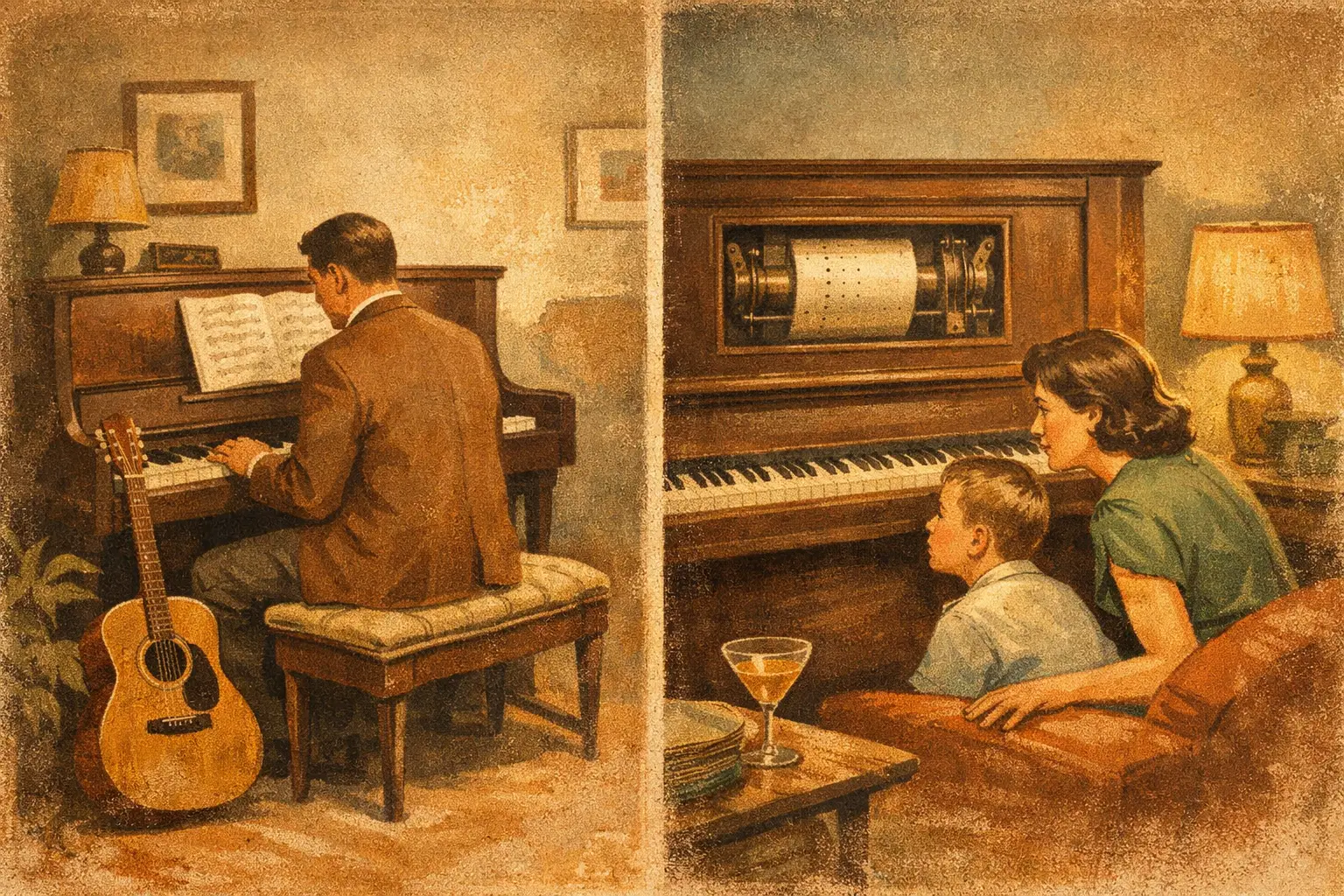
A piano can be the centerpiece of a room, a serious practice instrument, and a source of live music for years to come. The decision between an acoustic versus player piano comes down to more than whether the instrument can play by itself. It affects how you experience the piano, how your family uses it, the level of craftsmanship you bring into your home, and the type of long-term investment you make.
For some buyers, nothing replaces the direct connection of hands on keys, hammers on strings, and a pianist shaping every phrase. For others, a premium player system adds a remarkable second life to an acoustic piano, filling the home with expertly performed music even when no one is seated at the bench. Both can be exceptional choices. The right one depends on what you want your piano to do.
Acoustic Versus Player Piano: The Essential Difference
A traditional acoustic piano creates sound mechanically. When a player presses a key, the action sends a hammer toward the strings, producing the tone in real time. The player controls dynamics, articulation, pedal work, timing, and musical expression through touch. Whether it is a grand piano or upright, this is the classic piano experience.
A player piano is usually a genuine acoustic piano fitted with an advanced automated performance system. It still has strings, a soundboard, hammers, and an acoustic action. But it can also reproduce a performance through precisely controlled keys and pedals. On many modern systems, music can be selected from a library and played at the touch of a button, while the piano’s keys move as it performs.
That distinction matters. A quality player piano is not simply a speaker playing recorded music. The instrument itself produces the sound. You hear the character of its scale design, soundboard, cabinet, and action – the same qualities that make a fine Steinway, Yamaha, Kawai, Baldwin, or other respected acoustic piano desirable.
Why a Traditional Acoustic Piano Still Has a Strong Case
A conventional acoustic piano is the clear choice for buyers whose priority is personal musicianship. There is no intermediary between player and instrument. Every adjustment in finger weight, release, voicing, and pedal technique produces an immediate result.
For serious students, teachers, conservatory-bound pianists, and working musicians, that focus can be valuable. A well-prepared acoustic piano encourages careful listening and develops the touch control that digital keyboards cannot fully duplicate. The instrument asks the player to create the music, not merely select it.
An acoustic piano also keeps ownership straightforward. There are no player-system controls to learn, no software functions to manage, and no additional electronic components involved in playback. Maintenance centers on the essentials: regular tuning, regulation as needed, humidity awareness, and timely repair by a qualified technician.
There is also an aesthetic appeal to a piano with a singular purpose. A restored vintage grand or a premium upright can feel deeply personal. Its finish, tone, history, and craftsmanship become part of the home. For collectors and players drawn to heritage instruments, a traditional acoustic piano often offers the purest expression of that connection.
Still, simplicity does not automatically mean a better fit. A piano that is played only occasionally may offer less day-to-day enjoyment than one that can provide beautiful live acoustic music whenever the room calls for it.
What a Player Piano Adds to the Experience
A modern player piano serves two audiences at once: the person who wants to play and the person who wants to listen. It remains available for lessons, practice, and performance, while adding the ability to reproduce polished music for dinner parties, holidays, quiet evenings, and special occasions.
The appeal is especially strong in households where more than one person loves music but not everyone plays. A parent may want a reliable instrument for a child taking lessons, while also wanting the house to feel alive with jazz, classical, Broadway, or popular music. A player system can meet both needs without giving up the presence and resonance of an acoustic piano.
For entertainers and hospitality settings, the benefit is practical. A player grand makes a memorable statement in a living room, club room, restaurant, event space, or luxury residence. It creates an atmosphere that a background playlist rarely matches because the audience can see the instrument performing. The moving keys and genuine acoustic sound are part of the experience.
Player systems can also introduce guests and family members to music they may not otherwise hear. A beautifully performed Chopin nocturne or Gershwin standard has a different effect when it is heard through the strings and soundboard of a grand piano. For many owners, the piano becomes used more often, not less.
Tone and Touch: What Does Not Change
A common concern is whether a player piano compromises the acoustic playing experience. With a professionally installed or factory-integrated system on a quality instrument, the piano should remain fully playable by hand. You can sit down, play a lesson, rehearse a recital program, or enjoy an informal session exactly as you would on another acoustic piano.
The underlying piano remains the foundation of the purchase. A superb player system cannot turn an inferior acoustic instrument into a fine piano. Conversely, a respected grand or upright with a well-maintained action, strong pinblock, healthy soundboard, and desirable tonal character can be an outstanding platform for player capability.
This is why the instrument should be evaluated first as a piano. Listen to its bass clarity, singing treble, sustain, dynamic range, and overall tonal balance. Test the action for repetition, consistency, and responsiveness. Then consider the player technology as an enhancement to the ownership experience.
For performance-oriented buyers, the quality of preparation matters as much as the brand name. Tuning, voicing, regulation, and proper installation influence how refined the piano feels at the keyboard and how convincingly it performs on its own.
Cost, Maintenance, and Long-Term Value
A player piano generally costs more than a comparable traditional acoustic piano because of the performance system and installation. The premium can be worthwhile for buyers who will use the playback feature regularly. If the system will rarely be used, the additional investment may be better directed toward a larger piano, a higher tier brand, restoration work, or superior action and tonal preparation.
Both options require standard acoustic care. Pianos need tuning because string tension changes with seasonal temperature and humidity shifts. They may also need regulation, voicing, repair, or restoration over time. A player system adds electronic components, so it benefits from knowledgeable service and careful handling during a move.
Resale value is not identical from instrument to instrument. Brand, condition, size, musical quality, cosmetic appeal, age, restoration history, and local demand all matter. A player system can broaden an instrument’s appeal to some buyers, particularly those seeking luxury entertainment value. Yet collectors focused strictly on historical originality may prefer an unmodified vintage piano. This is one of the clearest it-depends decisions in the acoustic versus player piano comparison.
If you are considering a vintage or used instrument, ask about the piano’s service history and the age and condition of any player system. A premium used piano should be assessed with the same care as any significant purchase: not only for appearance, but for structural health, action condition, sound quality, and future service needs.
Which Piano Fits Your Life?
Choose a traditional acoustic piano when your primary goal is playing, study, teaching, or collecting an instrument for its original musical and historical character. It is an excellent fit for the focused pianist who wants the finest piano possible within a given budget and has little need for automated playback.
Choose a player piano when you want an acoustic instrument that works equally well as a performance piano and a source of live music at home. It is particularly compelling for families, hosts, luxury homeowners, churches, and businesses that want a piano to be heard frequently, including when a pianist is not available.
Space should influence the decision too. A player system does not eliminate the need for a properly sized piano. A grand piano requires enough room for sound to develop naturally and enough clearance for safe delivery. An upright can be a refined, space-conscious option for apartments, studios, teaching rooms, and homes where a grand is not practical.
A piano should also be matched to the room’s visual character. Ebony polish offers a formal, timeless look. Satin finishes can feel warmer and more understated. Antique, art-case, and distinctive luxury designs can become a defining design element. Whether it is a traditional acoustic or player piano, the cabinet should feel at home in the space where it will live.
Buy the Piano First, Then the Features
The strongest purchase is not the one with the longest feature list. It is the piano you will be proud to hear, play, and maintain for years. At A440 Pianos, that means beginning with carefully selected instruments and helping buyers account for the full ownership experience, from safe delivery to tuning, repair, restoration, and ongoing care.
Before making a final selection, spend time at the keyboard if possible. Play soft passages and powerful chords. Listen from the bench and across the room. If you are considering player capability, hear the system perform on the exact instrument you may purchase. The right piano will make the decision feel less like a comparison and more like a clear invitation to bring music home.

0 Comments