

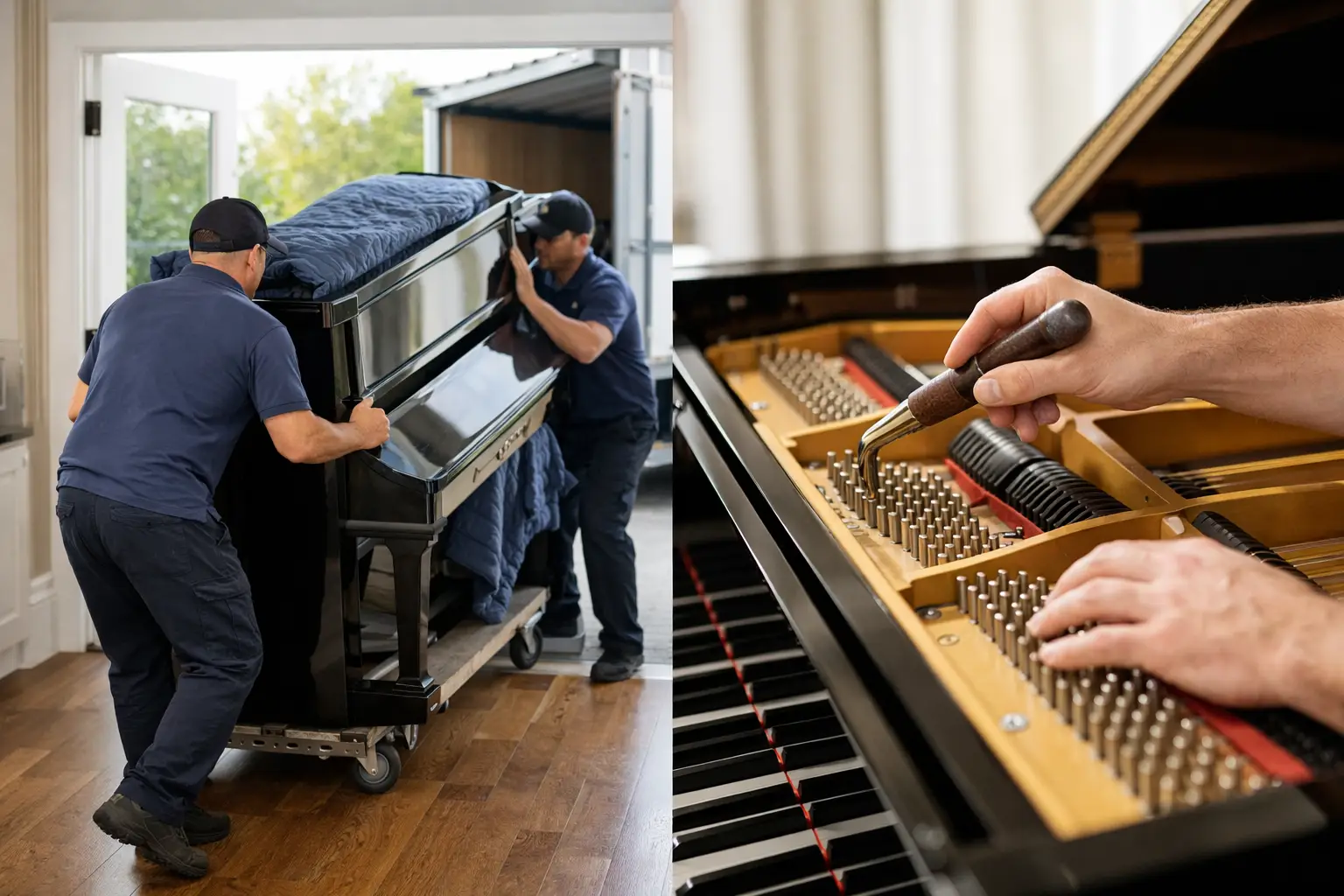
A piano arrives in your home looking ready to play, but its first notes may not sound exactly as they did in the showroom. So, does piano delivery include tuning? Sometimes, but not automatically. Delivery and tuning are separate professional services in many cases, and the best timing for tuning depends on how far the instrument traveled, the season, and how quickly it adjusts to your room.
For a new family upright, a restored vintage piano, or a concert-quality grand, clarity on this point helps you protect both your investment and your first playing experience.
Does Piano Delivery Include Tuning?
A professional piano delivery typically includes safe transport, careful placement, assembly of removable parts when needed, and basic setup so the instrument is stable and ready for its new location. It does not always include a tuning appointment in the delivery price.
Some retailers offer a complimentary first tuning as part of a purchase package. Others include it only with certain new or premium instruments, while some quote tuning as a separate service. This is not a sign of limited service. It reflects the fact that a piano often needs time to acclimate before tuning produces the best, longest-lasting result.
Ask before you buy: Is a post-delivery tuning included? If so, when is it scheduled, and is there a mileage or service-area limitation? A written estimate should make the answer clear rather than leaving you to assume that delivery day and tuning day are the same.
Why a Moved Piano May Need Tuning
A piano is built from wood, felt, steel wire, cast iron, and thousands of precision components. Its strings carry tremendous tension, but the wooden soundboard and action parts still respond to shifts in temperature and humidity. Moving the instrument from a warehouse, showroom, or previous home into a different environment can change its pitch and stability.
The motion of travel can have an effect, especially on longer moves over uneven roads, but climate is usually the larger factor. A piano delivered across Atlanta during a humid summer afternoon experiences a different transition from one moved across several states in winter. Even a carefully climate-controlled home has its own humidity pattern.
This does not mean the piano has been harmed or that the delivery was poorly done. Slight changes in pitch are normal. A quality instrument that has been professionally prepared, packed, and moved should arrive structurally sound. Tuning afterward is part of normal ownership care, not a repair for delivery damage.
When Should You Schedule a Tuning After Delivery?
For a local move into a home with a stable indoor climate, waiting about one to two weeks is often sensible. That gives the piano time to settle into the room before a technician sets the strings to pitch.
After a long-distance delivery, a move through very hot, cold, or humid conditions, or installation in a newly renovated home, a slightly longer acclimation period may be appropriate. A technician can advise based on the piano’s condition and its new environment. The goal is not simply to make the piano sound good that day. It is to give the tuning the best chance of holding.
There are exceptions. If a piano must be ready for a recital, recording session, lesson program, or special event immediately after delivery, it can be tuned sooner. Just plan for a follow-up tuning after the instrument has settled. For many musicians, that is the most practical balance between immediate performance needs and lasting stability.
Delivery Setup and Tuning Are Different Services
It helps to separate the work your delivery team performs from the work a piano technician performs. A professional moving crew protects the cabinet, pedals, legs, lid, and action while navigating doorways, stairs, and flooring. For grand pianos, this commonly includes removing and protecting the legs and pedal lyre, securing the action and lid, using specialized equipment, and reassembling the piano safely in its final position.
The team should also confirm that the piano is level and stable. Proper placement matters because a piano should not sit directly against a heating vent, exterior draft, fireplace, or sunny window that creates dramatic temperature swings.
Tuning is more technical and musical. A qualified technician evaluates pitch, unisons, string tension, and the relationship between notes across the keyboard. Depending on the instrument, the visit may also identify regulation or voicing needs. Regulation addresses how the keys and action respond. Voicing shapes tonal character. Neither is automatically included in a standard tuning, though they may be recommended when needed.
What About New, Used, and Restored Pianos?
New pianos generally require more frequent tuning during their first year because fresh strings and a new soundboard are still settling under tension. Three or four tunings in the first year is common, followed by regular maintenance. A new Yamaha upright or grand may arrive beautifully prepared, but that does not eliminate the normal settling period after installation.
A used piano can be more predictable if it has lived in a climate-controlled home and received regular service. However, an instrument that has gone untuned for years may need a pitch raise before its final tuning. Bringing a very flat piano back to standard pitch in one visit can place too much stress on old strings, so the work may be done gradually.
A restored or vintage piano deserves the same thoughtful approach. Expert restoration can renew mechanical and tonal potential, but vintage instruments still respond to their environment. Their tuning plan should be based on the piano’s specific age, condition, and previous care rather than a one-size-fits-all promise.
Questions to Ask Before Booking Piano Delivery
A reputable seller or moving company should welcome practical questions. Confirm whether delivery includes placement in the room of your choice, assembly, stairs, turns, or other access challenges. Then ask whether a tuning is included, whether it happens after acclimation, and whether the technician is available in your area.
It is also wise to discuss the path into your home before delivery day. Measure doorways, hallways, stair landings, and elevators. Share photos of tight turns or exterior steps when possible. A piano is not ordinary furniture, and professional planning protects the instrument, your property, and everyone handling it.
At A440 Pianos Inc, piano ownership is approached as a complete musical experience, from selecting an instrument suited to your space and goals to arranging professional delivery and ongoing technical care. That continuity is especially valuable when you are buying your first piano or investing in a fine grand that deserves long-term attention.
How to Help Your Piano Hold Its Tune
Once the piano is in place, consistent conditions matter more than nearly any other factor. Keep the room reasonably stable, avoid placing the piano near direct sunlight or heating and cooling outlets, and consider humidity control if your home becomes especially dry or damp with the seasons.
Most home pianos benefit from tuning at least twice each year. Families with active students, teachers, serious players, and musicians who use the instrument professionally may prefer more frequent service. Regular tuning is easier on the piano and generally more economical than allowing pitch to drift for several years.
Electric and digital pianos are different. They do not have acoustic strings, so they do not need conventional tuning after delivery. They may still need proper assembly, pedal setup, software updates, or occasional service, particularly for self-playing systems or high-end hybrid instruments.
A Better First Note in Your New Home
Delivery day is the start of your relationship with a piano, not the final step in preparing it. Choose experienced movers, give the instrument time to adjust to its new surroundings, and schedule tuning at the right moment for its journey and your playing needs. That small bit of planning helps your piano sound like itself for years to come.



0 Comments