

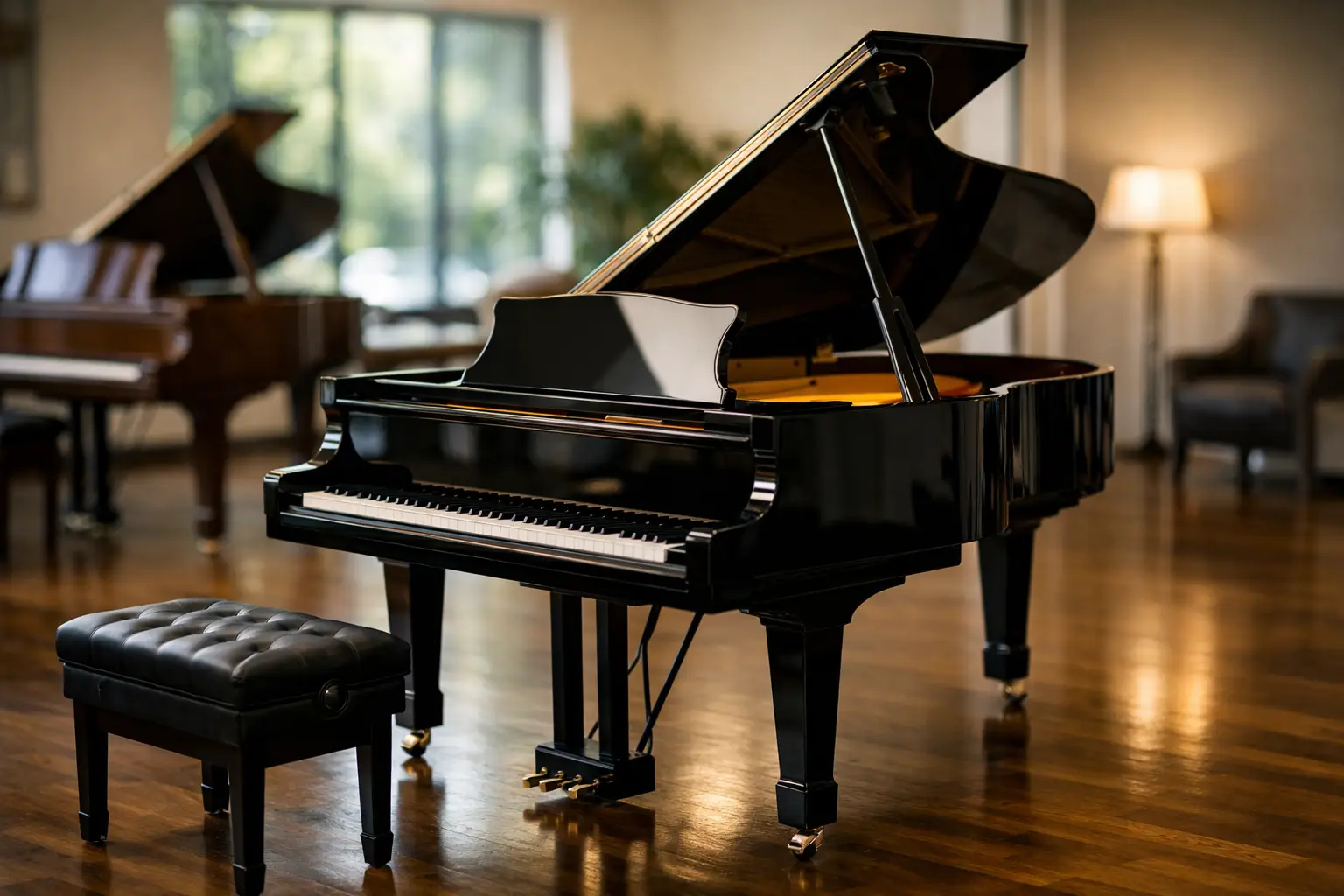
A grand piano can be beautifully made and still be the wrong piano for you. The best grand piano brands each have a recognizable character: one may offer a warm, singing sound for Romantic repertoire, while another brings a clear, responsive voice that suits teaching, recording, or an active family home. The right choice comes from matching that character to your musical goals, room, budget, and expectations for long-term care.
A name on the fallboard matters, especially for craftsmanship, consistency, and resale confidence. But brand alone does not tell the full story. A well-maintained used grand from a respected maker can be a more rewarding instrument than a newer piano that has not been properly prepared, regulated, or tuned. Playing the individual instrument remains essential.
What Sets the Best Grand Piano Brands Apart
The finest piano makers distinguish themselves through more than polished cabinetry. Their scale design, soundboard materials, action geometry, hammer voicing, and quality control all shape what the player hears and feels. These choices affect the piano’s tonal color, dynamic range, repetition speed, and ability to hold up through years of use.
For a buyer, the practical differences show up at the keyboard. Does the action allow soft playing without effort? Does the bass remain clear rather than muddy? Can the treble sing without becoming brittle when played loudly? A good grand should also have enough tonal range to grow with the player, whether it is used for early lessons, conservatory study, professional work, or evening music at home.
Size plays a role as well. A 5-foot to 5-foot-8-inch baby grand can be an excellent choice for many homes, but it will not produce the same bass foundation or soundboard area as a 6-foot-4-inch parlor grand. Larger is not automatically better if the room cannot support it. An overly powerful piano in a reflective, compact space can be difficult to enjoy.
Best Grand Piano Brands Worth Playing
Steinway & Sons
Steinway & Sons remains one of the most sought-after names in grand pianos. Its appeal is rooted in a powerful, complex sound, a highly expressive action, and a long history in concert halls, universities, recording studios, and private collections. Many advanced players appreciate the way a Steinway can shift from a delicate pianissimo to a full orchestral sound without losing color.
Steinway ownership also comes with a strong market reputation. That can support resale value, particularly for instruments that have been carefully maintained or professionally restored. Still, the name deserves a close inspection when considering a vintage or used piano. Age, climate exposure, prior rebuilding work, action condition, and soundboard health matter greatly. Two instruments of similar age may play and sound remarkably different.
Yamaha
Yamaha grand pianos are respected for consistency, clarity, durability, and a responsive feel that works across many styles. They are common in schools, churches, studios, and homes because they are dependable instruments with a focused tone and strong projection. For a family seeking a serious piano that will support lessons through advanced study, Yamaha is often a sensible place to begin.
Yamaha also offers a broad range of grand piano sizes and price points. Its sound is often described as clean and direct, though individual pianos can be voiced for more warmth or brightness. Players who want a clear attack for jazz, contemporary music, or ensemble playing may especially enjoy that character.
Kawai
Kawai has earned a loyal following for its smooth actions, musical tone, and strong value in the professional and upper-intermediate market. Many players find Kawai grands comfortable under the hands, with a rounded sound that can be warm without sacrificing definition. The company has also developed advanced action components designed for consistency through changes in humidity and frequent use.
A Kawai grand can be an excellent choice when a buyer wants refined performance but has a more defined budget than a premium European or concert-level American instrument requires. As always, compare models in person. The difference between a smaller home grand and a larger performance grand can be significant within the same brand.
Blüthner
Blüthner is a distinguished German piano maker known for an elegant, lyrical voice. Its pianos are often admired by players who value warmth, subtlety, and a singing treble rather than the most aggressive projection. The tonal character can be especially compelling in a home, salon, or recording setting where nuance matters as much as volume.
For collectors and serious musicians, a Blüthner can offer a distinctive alternative to the more familiar American and Japanese choices. It is a premium instrument, so condition and service history are particularly important when evaluating a pre-owned example. Proper tuning, regulation, and voicing help reveal the color that makes these pianos special.
Bösendorfer
Bösendorfer grand pianos are closely associated with depth, richness, and an unusually broad palette of tonal color. Handmade in Austria, they are prized by concert pianists and discerning owners who want an instrument with a substantial, orchestral quality. Their extended-bass models are especially notable, though the entire line carries a luxurious, resonant identity.
This is a piano for buyers who are drawn to a deeply individual sound and are prepared to invest in premium craftsmanship. The trade-off is cost, and the piano’s voice may not be the best match for every room or every player. Some musicians prefer more immediate brightness and attack, while others fall in love with Bösendorfer’s darker, layered resonance.
Fazioli
Fazioli is a relatively young Italian maker by piano-industry standards, yet it has become one of the most admired names in luxury grands. Fazioli pianos are known for exceptional clarity, precision, and refinement. Their actions can feel remarkably controlled, allowing advanced players to shape very small changes in dynamics and articulation.
These instruments are often chosen by performers and collectors who want a highly individualized premium piano. Availability and price make them less common than Yamaha or Kawai, but they deserve consideration when comparing the highest tier of contemporary grand piano design.
Mason & Hamlin
Mason & Hamlin holds an important place in American piano history. Well-preserved and properly restored vintage Mason & Hamlin grands can offer a powerful, rich sound with impressive sustain and a sense of old-world craftsmanship. They are particularly appealing to buyers who appreciate historic American instruments with personality.
With vintage pianos, restoration quality is central. A rebuilt instrument may include new strings, pinblock, hammers, dampers, action parts, or refinished cabinetry, but the quality of that work varies. Ask what was done, when it was completed, and who performed it. A thoughtful technical evaluation is far more useful than a cosmetic impression alone.
How to Choose Among Grand Piano Brands
Start with the music you play most often. A pianist focused on Chopin, Debussy, and vocal accompaniment may favor warmth and sustain. A player working in jazz, pop, or collaborative settings may prefer clarity and a defined attack. Teachers may prioritize durability, evenness, and a touch that gives students reliable feedback. There is no universal winner because the best piano is the one that invites you to sit down and play.
Next, consider the piano’s condition and preparation. On any acoustic grand, inspect the tuning stability, pinblock, strings, soundboard, bridges, action, pedals, dampers, and cabinet. Listen for uneven notes, sluggish repetition, buzzing, or a thin tone in particular registers. A professional technician can help identify whether a piano needs routine service, significant restoration, or should be avoided.
Finally, plan for ownership beyond delivery day. Grand pianos need a stable environment, regular tuning, and periodic regulation and voicing. Professional moving is not optional. A grand must be disassembled, protected, transported, and reassembled by trained piano movers using the right equipment and techniques. That care protects both the instrument and your home.
The most satisfying purchase is rarely the one with the most famous name alone. It is the grand that feels right under your hands, fits your space, and has been evaluated and prepared for many years of music. At A440 Pianos, that conversation begins with the player, then follows through with selection, delivery, tuning, and the care that lets a fine piano keep giving its best.

0 Comments