

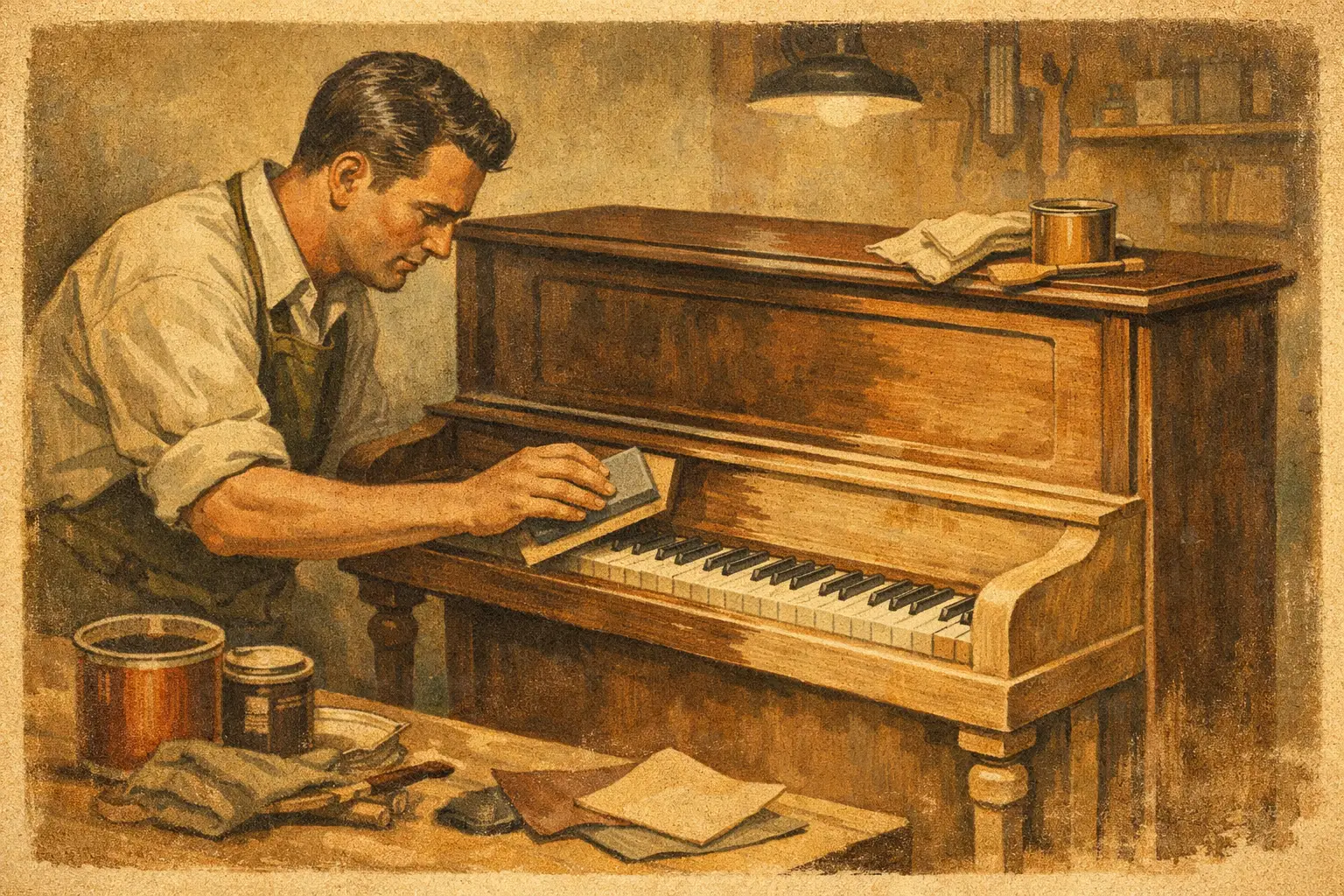
A tired piano finish can make a fine instrument look forgotten. Sun fading, water rings, scratches from moves, and decades of household polish can leave even a respected piano looking far below its potential. The question, “can you refinish piano cabinet,” has a qualified answer: yes, often you can – but the right approach depends on the piano’s construction, age, finish, and market value.
A piano cabinet is not simply a large piece of furniture. It is part of an instrument that may carry family history, collector appeal, and significant musical value. Refinishing it carelessly can erase original details, damage delicate veneers, reduce resale value, or create complications around moving parts. A considered restoration, however, can transform a worn cabinet into a handsome centerpiece while preserving the character that makes the piano worth owning.
Can You Refinish a Piano Cabinet Without Hurting Value?
The first question is not whether the cabinet can be refinished. It is whether it should be refinished.
For many late-20th-century upright and grand pianos with heavy cosmetic wear, a professional refinish can be a smart investment. A well-executed satin ebony, high-gloss black, mahogany, walnut, or custom finish can dramatically improve the piano’s appearance and help it suit a renovated home, church, studio, or performance space.
The calculation changes with older and more collectible instruments. An original finish on a vintage Steinway, Blüthner, Baldwin, Mason & Hamlin, or other prestigious piano may contribute to its authenticity. Light crazing in lacquer, small finish checks, and an aged patina are not always defects to be erased. Collectors often prefer thoughtful conservation over a cabinet that looks brand new but no longer reflects the instrument’s period.
There is also a middle ground. A cabinet may need cleaning, color correction, touch-up work, or careful finish revival rather than complete stripping. This can preserve more of the original material while improving its presentation. The best choice depends on whether the piano is primarily a family instrument, a working professional piano, a decorative statement piece, or a collectible asset.
Start With the Finish and the Cabinet Construction
Before any work begins, identify what is actually on the piano. Older instruments may have shellac or lacquer finishes. Many modern pianos use durable polyester finishes, particularly glossy black cabinets. Each material responds differently to solvents, abrasives, heat, and repair methods.
A high-gloss polyester piano, for example, is not typically stripped and refinished like an old wood cabinet. Minor scratches may be wet-sanded and polished by an experienced technician, but deep damage can require specialized repair. Attempting to use household furniture polish, aggressive rubbing compound, or an unfamiliar solvent can create cloudy patches and uneven gloss that are difficult to correct.
Wood species and veneer matter just as much. Most piano cabinets are veneered rather than made from solid slabs of expensive hardwood. Veneer can be extremely thin, especially on older pianos. A power sander can cut through it quickly, exposing a less attractive substrate underneath. Once that happens, the repair becomes more involved than the original scratch or stain.
Look closely at edges, curved legs, music desks, lid moldings, and the broad flat areas around an upright’s front panels. These are common places for veneer lifting, chips, and prior repairs. Decorative inlay, carved details, and brass hardware also deserve protection. A proper cabinet restoration is largely preparation: stabilizing loose veneer, repairing dents, matching grain, and creating an even surface before any color or topcoat is applied.
When Refinishing Makes Excellent Sense
Refinishing is often worthwhile when the piano is structurally sound, musically valuable to the owner, and cosmetically out of place in its current setting. A quality Yamaha or Kawai upright with reliable action and tone may deserve a fresh exterior after years in a busy family home. A grand piano with sun-bleached veneer may be a strong candidate for restoration before it becomes the focal point of a formal living room or event venue.
It can also make sense when restoring the cabinet is part of broader work. If a piano is already receiving action regulation, tuning, repairs, new keytops, pedal work, or internal restoration, cabinet work can complete the project. The result should feel intentional: an instrument that looks as refined as it plays.
For clients buying a premium used piano, cabinet condition should be evaluated alongside soundboard health, pinblock condition, string life, action response, and tonal quality. A polished exterior is attractive, but it cannot compensate for neglected mechanical or structural needs. Conversely, a musically excellent piano with a worn cabinet may be an exceptional restoration opportunity.
The Risks of a DIY Piano Cabinet Refinish
DIY refinishing is tempting because the visible problem appears straightforward. Sand, stain, seal, and polish. On a piano, that process can become expensive quickly.
The largest risk is irreversible material loss. Over-sanding veneer, dissolving a finish unevenly, staining around glue repairs, or rounding sharp cabinet edges can permanently change the instrument. Stripper can seep into joints and damage adjacent surfaces. Dust and finish residue can also find their way into keybeds, action cavities, hinges, and hardware if the piano is not properly protected.
Color matching presents another challenge. Mahogany and walnut cabinets often have layered tones, shading, and grain patterns that do not emerge from a single off-the-shelf stain. Even black finishes vary significantly, from open-pore satin to mirror-like polyester. A piano can look patchy or overly orange if the color system does not match its original style.
Finally, moving components should not be treated as ordinary furniture parts. The fallboard, music desk, lid, cheek blocks, pedals, and hardware need careful removal and reinstallation. On a grand piano, the lid and its hardware are substantial, awkward pieces that should be handled safely to prevent injury or damage.
What Professional Piano Cabinet Restoration Involves
A professional evaluation begins with the whole instrument, not just the visible finish. The technician assesses whether damage is cosmetic, whether veneer is stable, and whether the cabinet has signs of moisture exposure or structural weakness. The piano’s brand, age, serial information, finish type, and intended use all help determine the right scope of work.
A complete refinish may involve disassembly of removable cabinet parts, careful cleaning, finish removal or surface leveling, veneer and edge repair, grain filling, color application, sealing, and multiple topcoats. Each stage requires cure time and controlled conditions. Rushing the process can leave witness lines, dust nibs, soft finish, or inconsistent sheen.
For an antique or collectible piano, the recommendation may be more conservative. Rather than stripping the cabinet, a specialist may clean and revive the original finish, repair isolated damage, and stabilize areas of veneer loss. This approach retains more history while making the piano presentable and protected.
At A440 Pianos, the cabinet conversation is best handled alongside an honest assessment of the piano’s musical condition and long-term potential. The goal is not simply to make an instrument look newer. It is to help owners make a sound decision about a piano they plan to play, display, keep, or sell.
Refinishing vs. Replacing the Piano
A complete cabinet restoration is a meaningful investment, so it is fair to compare it with upgrading to another piano. If an older upright has major tuning instability, worn action parts, cracked structural components, and a severely damaged cabinet, putting all available funds into refinishing may not be the strongest path. A better-quality restored or premium used instrument could offer more dependable performance and greater long-term satisfaction.
But replacement is not always the answer. A family piano may have musical value that cannot be measured on a price sheet. A well-built vintage grand may have exceptional tone and craftsmanship beneath a neglected exterior. In those cases, cabinet restoration can preserve an instrument that deserves another generation of use.
Photograph the damage in good light, avoid using furniture polish or scratch-cover products as a quick fix, and have a piano specialist inspect the cabinet before committing to sanding or stripping. The right restoration should leave you with more than a prettier piano. It should leave you with an instrument that feels worthy of the music played on it.

0 Comments