


A neighbor does not need to hear every scale, beginner exercise, or late-night return to a favorite Chopin passage. That is the central advantage of an electric piano for apartment living: it lets a musician practice on a convincing piano action while controlling when and how the sound enters the room. The best choice is not simply the smallest keyboard or the one with the most sounds. It is an instrument that feels satisfying under your hands, fits the room comfortably, and makes regular playing easy.
For many apartment residents, a quality electric piano is the practical path to serious study. It can be played through headphones, moved more easily than an acoustic instrument, and often offers useful features for lessons and recording. Still, the difference between a basic keyboard and a well-chosen digital piano becomes obvious quickly, especially for a developing player.
What Makes an Electric Piano for an Apartment Work?
An apartment-friendly electric piano should begin with 88 full-size keys and weighted action. A piano has a broad musical range, and learning on fewer keys can limit repertoire and make the transition to an acoustic piano less comfortable. Weighted keys matter just as much. They create resistance similar to an acoustic piano, helping players develop finger strength, control, and proper technique.
Look for graded hammer action, meaning lower notes feel somewhat heavier than upper notes. No digital action duplicates every detail of a concert grand, but a well-designed mechanism responds naturally enough for expressive playing at home. If a child is starting lessons, or an adult hopes to return to piano after years away, this is a feature worth prioritizing over a large catalog of novelty sounds.
Sound quality also deserves a careful listen. Better instruments use detailed samples from respected acoustic pianos, often with more convincing sustain, dynamic range, and tonal color. Play very softly, then firmly. Hold the sustain pedal and listen to whether notes decay naturally. The piano sound should invite you to stay at the bench, not merely fill a quiet room.
The most useful apartment feature is headphone capability. With a good pair of wired headphones, a player can practice early in the morning or after the household has gone to sleep. Many instruments include two headphone jacks, which is particularly helpful for a teacher and student, or a parent guiding a young beginner. Bluetooth audio can be pleasant for playing along with music, but it should be considered an extra rather than a deciding feature.
Start With the Space, Not the Product Listing
Before comparing models, measure the place where the piano will live. Include the width of the instrument, the depth of the cabinet or stand, the room needed for a bench, and enough clearance to sit and move comfortably. A slim console-style digital piano may fit naturally along a living-room wall, while a portable slab piano on a stand can be the better choice in a bedroom, office, or flexible shared space.
A common mistake is choosing the narrowest available instrument and overlooking the player’s comfort. An 88-key piano is usually about 52 to 58 inches wide. The footprint can remain modest, but the bench position matters. If the keyboard sits too close to a wall or crowded furniture, practice can begin to feel like a chore.
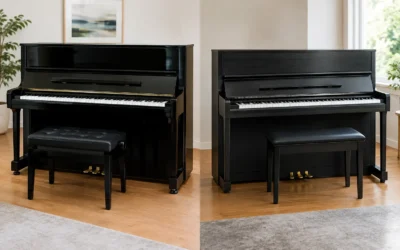
Consider the visual character of the instrument as well. A furniture-style cabinet in black, white, or wood finish can feel like a purposeful part of the home. A portable digital piano is lighter and easier to relocate, although it may require a separately purchased stand, pedal unit, and bench. Neither format is automatically better. It depends on whether the piano needs to disappear between uses or serve as a permanent musical center in the room.
Think About Sound Beyond Headphones
Headphones solve many concerns, but not every practice session happens privately. Built-in speakers vary greatly in power and clarity. In a small apartment, you do not need concert-hall volume, yet you do want a full, balanced sound at a modest level. Thin speakers can make even a good piano sample feel disappointing.
Positioning matters. Keep the instrument away from a shared wall when possible, and avoid placing it directly on a hollow floor if vibration is a concern. A rug beneath the bench and piano can reduce reflected sound and make the space feel more comfortable. If you use external speakers, place them thoughtfully and keep volume controlled. The goal is musical enjoyment, not testing the patience of the neighbors downstairs.
The Features Worth Paying For
Once action, tone, and dimensions are right, a few features can make an electric piano much more rewarding to own. A proper three-pedal unit is especially valuable for classical players and advancing students. The sustain pedal is essential, but soft and sostenuto pedals add expressive options that a single portable pedal cannot fully provide.
Polyphony is another useful specification. It describes how many notes the instrument can produce at once. Higher polyphony supports sustained passages, layered sounds, and pedal use without notes cutting off unexpectedly. Most quality contemporary digital pianos provide enough for regular home playing, but it is worth comparing if you play dense classical repertoire or use accompaniment features.
Recording and USB connectivity can support practice without making the experience complicated. A simple built-in recorder lets students listen back to rhythm, balance, and missed notes. USB MIDI allows the piano to work with educational apps or music software. For families, these options can help maintain engagement. For experienced musicians, they provide a convenient bridge to composition and home recording.
Do not let feature lists distract from the essentials. Hundreds of instrument voices, drum patterns, and flashing controls may be entertaining, but they do not improve piano technique. A clear piano sound, responsive action, stable stand, reliable pedals, and comfortable bench will serve a player far longer.
Portable, Console, or Hybrid: Which Style Fits?
Portable digital pianos are often the most flexible apartment option. They are comparatively light, can be placed on a folding or furniture-style stand, and can move with you when a lease changes. They work well for renters, students, and musicians who need to use one room for several purposes. The trade-off is that the setup may feel less substantial, and an inexpensive stand can wobble during energetic playing.
Console digital pianos are designed as home instruments. Their cabinets typically include integrated pedals, a matching music rest, and speakers positioned for a more piano-like experience. They are heavier than portable models, but still far easier to place than an acoustic upright. For a family committed to lessons or an adult building a consistent practice routine, a console model often feels more settled and inviting.
Hybrid pianos occupy a more premium category. Some combine digital sound technology with sophisticated actions that closely resemble acoustic mechanisms. Others offer acoustic elements with advanced control over volume. These instruments can be remarkable for serious pianists, but they cost more and may be more than an apartment beginner needs. The right decision depends on playing goals, budget, and how much acoustic-piano realism matters to you.
Do Not Overlook the Bench and Setup
A fine electric piano can still feel wrong on an unstable stand or an improperly sized bench. Choose an adjustable bench whenever possible. Proper height allows forearms to remain roughly level with the keys and shoulders to stay relaxed. This is particularly important in a household where children and adults share the same instrument.
Use the manufacturer’s stand or a sturdy furniture-grade alternative designed for the piano’s dimensions. A basic X-style stand may be acceptable for temporary use, but it is not always ideal for long practice sessions. Make sure cables are secured, the pedal does not slide, and the instrument is placed near a dependable power source without creating a walkway hazard.
Although electric pianos do not require tuning like acoustic pianos, they still benefit from thoughtful care. Keep liquids away from the keys, dust the surface with a soft dry cloth, and avoid placing the instrument in direct sun or near strong heat and air-conditioning vents. If keys begin to stick, speakers rattle, or pedals respond inconsistently, a qualified technician can often diagnose the issue before it becomes more disruptive.
Choose for the Player You Hope to Become
The best apartment piano is not always the least expensive model, nor is it automatically the most elaborate. A beginner needs an instrument that encourages correct fundamentals. A returning adult may value headphones and an authentic piano tone. A serious player may prioritize action, pedals, and detailed sound over portability. Each is a valid starting point.
Whenever possible, sit down and play before deciding. Notice whether quiet notes respond easily, whether repeated notes feel controlled, and whether the sound changes with your touch. A piano is a long-term companion, not just another piece of home equipment. At A440 Pianos, we help players weigh these details alongside room size, budget, delivery needs, and the musical experience they want to create.
Choose an instrument that makes you want to sit down for ten minutes even on a busy day. Those small, private sessions are where confident playing begins.

0 Comments