


A grand piano can remain a remarkable musical instrument for generations, but it is never a set-it-and-forget-it purchase. Its soundboard responds to moisture, its action responds to wear, and its finish reflects every choice made around placement and daily care. This grand piano maintenance guide focuses on the practical habits that protect a premium instrument’s tone, touch, appearance, and long-term value.
Begin With the Room, Not the Piano
The environment has more influence on a grand piano than most owners expect. A piano contains wood, felt, leather, steel strings, glue joints, and a large spruce soundboard. These materials expand and contract differently as temperature and humidity change. When conditions shift sharply, tuning becomes unstable and the action can feel less consistent.
Keep the piano in a room with steady temperature and relative humidity, ideally near 42 to 50 percent humidity. The exact number matters less than avoiding dramatic swings. In Atlanta and throughout Georgia, air conditioning can reduce indoor humidity during summer, while winter heating can dry a home significantly. A room humidifier, dehumidifier, or dedicated piano climate-control system may be worthwhile for a valuable grand, especially if the home is vacant for periods of time.
Avoid placing a grand piano beside an exterior door, under a direct HVAC vent, close to a fireplace, or against a window that receives intense afternoon sun. Sunlight can fade a case finish and heat the instrument unevenly. A beautiful room may still be the wrong room if its conditions change hour by hour.
Tune on a Schedule That Fits Your Use
A grand piano should generally be tuned at least twice each year. For active households, teaching studios, churches, schools, and performance spaces, three or four tunings annually may be the better standard. A new-to-you instrument may also require more frequent tuning during its first year in a new location as it acclimates.
Tuning is not merely about making individual notes sound correct. A qualified piano technician evaluates the overall tension relationship across more than 200 strings. This is especially significant after a piano move, a major seasonal shift, or a period of neglect. If a piano has fallen substantially flat, it may need a pitch correction before a precise tuning can hold.
Do not wait until a piano sounds obviously out of tune. By that stage, string tension has often drifted enough to make a single appointment less effective. Regular service is more predictable, protects the instrument from extreme corrections, and keeps playing satisfying for developing students and advanced pianists alike.
When tuning needs more than tuning
If notes repeat poorly, keys feel uneven, pedals squeak, or one section sounds noticeably brighter or duller than the rest, ask for an action inspection along with the tuning. The solution may involve regulation, voicing, minor repairs, or all three. These are distinct services, and each addresses a different part of piano performance.
Regulation adjusts the mechanical relationship of thousands of action parts so keys respond evenly. Voicing shapes the tonal character by working with hammer felt. Neither service should be treated as a cosmetic extra. On a fine Steinway, Yamaha, Kawai, Baldwin, Blüthner, or comparable instrument, they can restore the control and color that made the piano desirable in the first place.
Clean the Finish With Restraint
The safest approach to cleaning a grand piano is also the simplest: use a clean, soft microfiber cloth and a light touch. Dust the lid, rim, music desk, legs, and pedal lyre regularly. For fingerprints on a polished finish, use a second slightly damp cloth followed immediately by a dry cloth. The cloth should be barely damp, never wet.
Avoid household furniture polish, glass cleaner, abrasive cloths, silicone products, and spray cleaners applied directly to the piano. These can leave residue, create streaking, damage certain finishes, or make future refinishing more difficult. Antique, satin, polyester, and high-polish finishes do not all respond the same way, so a technician should advise on any cleaner beyond gentle dusting.
Close the lid when the piano is not in use, particularly in homes with pets, young children, active entertaining, or nearby construction. Closing the lid limits dust and protects the action from accidental spills. If the piano is played daily, placing the lid on its short stick can balance protection with a more open sound, provided the room is secure and stable.
Care for keys and pedals carefully
Wipe keys with a soft cloth that is very lightly dampened with water, then dry them immediately. Never allow liquid to run between keys. Ivory keys, often found on vintage instruments, deserve additional caution because they can stain, crack, or loosen when exposed to excessive moisture.
Pedals can be polished gently with a dry cloth. Do not use metal polish near the pedal assembly unless a piano professional specifically recommends it. Residue can migrate into moving parts, and aggressive polishing can affect protective coatings.
Protect the Action From Everyday Damage
The action is the precision mechanism beneath the keys. It is sensitive to dust, humidity, impact, and well-intended but unsuitable home repairs. Never lubricate squeaks with oil, household sprays, or automotive products. Piano actions use highly specific materials and tolerances; the wrong lubricant can attract dust, swell wood, or create a larger repair later.
Keep drinks, candles, plants, and decorative objects away from the piano. A small water spill between keys can cause sticking, corrosion, and felt damage. A heavy object on the lid can scratch the finish or stress the lid hardware. If flowers are part of the room design, place them on a separate table rather than on the instrument.
For families with young players, establish a simple rule: clean hands before playing. Lotions, food oils, and residue transfer to keys and can accumulate quickly. This small habit preserves the keyboard and gives the instrument the respect a premium grand deserves.
Plan for Moving Before You Need It
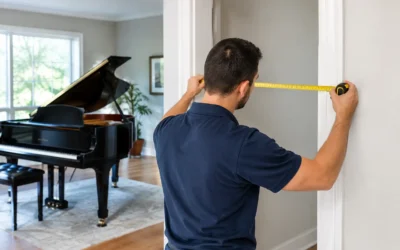
Moving a grand piano is a specialized service, not a general furniture task. The instrument must be secured properly, the legs and pedal lyre handled correctly, and the case protected from pressure points during transport. Improper moving can damage the finish, compromise structural parts, or disturb action alignment.
Even a short move across a room deserves planning. For a move between homes, schedule professional piano movers and arrange a tuning after the instrument has settled into its new environment. It is usually best to wait two to four weeks after delivery before tuning, unless the piano is needed immediately for a performance. This gives the soundboard and strings time to adjust to the new room.
At A440 Pianos, professional moving, delivery, tuning, repair, and restoration support are part of the ownership experience. That continuity matters when a high-value instrument needs service from specialists who understand both its musical and physical requirements.
Watch for Early Service Signals
Most piano problems are easier and less costly to address when caught early. Make a service appointment if you notice several keys sticking, a key that does not return promptly, buzzing or rattling, a sudden change in pedal response, loose tuning pins, cracked ivory, or a persistent musty odor. The latter can indicate moisture concerns that deserve quick attention.
A faint mechanical sound is not always an emergency. Grand pianos are complex and naturally produce some action noise. The deciding factor is change. If the piano once felt quiet and controlled but now produces new clicks, rubs, or uneven resistance, it is worth having a technician evaluate it.
Build a Maintenance Calendar
A practical maintenance plan keeps ownership simple. Dust the exterior weekly or as needed, wipe keys after frequent use, and inspect the room’s humidity throughout the year. Schedule tuning every six months at a minimum, with an annual action evaluation for pianos that receive regular playing. Performance instruments, teaching pianos, and heavily used family grands often benefit from a more frequent service schedule.
For older or restored instruments, the plan depends on condition, use, and the quality of prior work. A vintage grand may have extraordinary tone and character, but it may also need closer attention to action centers, strings, hammers, pinblock stability, or soundboard condition. Regular professional assessment lets owners enjoy that character without allowing small issues to become major restoration projects.
A grand piano rewards consistent care with something more meaningful than a clean appearance. When its environment is stable, its action is regulated, and its tuning is maintained, every practice session, lesson, rehearsal, and performance begins with an instrument ready to respond.


0 Comments