


A used piano can look exceptional across the room and still hide expensive problems under the lid. That is why knowing how to evaluate used pianos matters before you fall in love with the cabinet finish, the brand name, or the price tag. A quality used piano can be one of the smartest ways to buy a premium instrument, but only if its musical performance, structural health, and service history match the promise.
For many buyers, the challenge is not finding a piano. It is separating genuine value from cosmetic appeal. A polished ebony grand with a famous name may still need major regulation or rebuilding. A modest upright from a respected maker may deliver far more reliability and musical satisfaction than a flashier alternative. The goal is to judge the whole instrument, not just the label.
How to Evaluate Used Pianos Before You Buy
The best evaluation starts with the simple question buyers often skip: what kind of piano do you actually need? A family buying a first acoustic piano for lessons should judge differently than a conservatory-level pianist, a church, or a collector seeking a specific vintage voice. Tone, touch, size, and long-term maintenance all depend on the role the instrument will play.
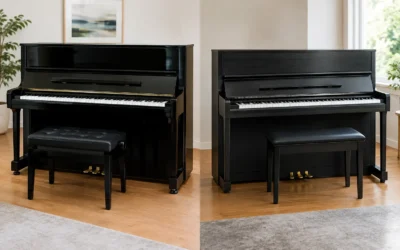
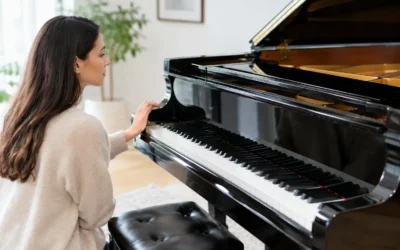
A baby grand in a formal living room may be visually impressive, but if the room is small and the player needs precise practice consistency, a high-quality upright may be the better choice. In the same way, an older handcrafted instrument may offer warmth and character, but a newer Yamaha or Kawai may provide the stability a busy teaching studio prefers. Premium buying is not only about prestige. It is about fit.
Start with the brand, age, and model
Brand matters, but not in a simplistic way. Steinway, Yamaha, Baldwin, Kawai, Bluthner, and other established makers generally hold value because they were built to a higher standard and have stronger service support in the market. Still, age changes the conversation. A 15-year-old piano and a 75-year-old piano should never be evaluated by the same expectations.
Ask for the serial number and verify the age. A well-maintained older piano can be excellent, especially if it has been restored properly. But an instrument from a respected maker is not automatically a good purchase just because the name is engraved on the fallboard. Condition always comes before reputation.
Model also affects value. Some lines were built as institutional workhorses, some as premium home instruments, and some as entry-level consumer pianos. Knowing where a piano sat in the maker’s lineup helps you judge whether the asking price is realistic.
Look beyond the finish
Cabinet condition tells you something about ownership habits, but it tells you very little about musical condition on its own. Scratches, fading, and minor wear are often manageable on a used piano. Structural neglect is not.
Open the piano and inspect the soundboard, bridges, strings, tuning pins, and action components. Hairline soundboard cracks are not always a deal breaker, especially in older instruments, but separated ribs, loose bridges, or obvious structural instability deserve close attention. Rust on strings and hardware can point to poor climate control. Excessive corrosion often means broader neglect.
Pay attention to the keys and pedals as well. Uneven key height, sluggish return, noisy action, or pedals that feel loose can suggest deferred maintenance. Some of these issues are routine service items. Others may indicate significant wear across the action.
Evaluating Tone and Touch on a Used Piano
A piano is not furniture with strings. It is a mechanical musical system, and it should be judged by what it does under the hands and in the room. If you are learning how to evaluate used pianos, this is where many good decisions are made.
Start by playing slowly and listening carefully. Then play with more force. A healthy piano should produce an even tone across the keyboard, without abrupt changes in color from one section to another. The bass should have clarity, not just noise. The middle register should sing. The treble should project without sounding brittle.
Touch matters just as much. The action should feel responsive and consistent from note to note. If some keys feel heavy, shallow, loose, or delayed, the instrument may need regulation or more extensive action work. Repetition should be dependable, especially for advancing students and experienced pianists. Fast passages, soft playing, and repeated notes reveal far more than a few chords in the middle of the keyboard.
It also helps to test the sustain pedal and soft pedal under real playing conditions. A pedal system that squeaks, sticks, or responds unevenly may need adjustment. Again, that does not always make the piano a poor choice. It does mean the final value should reflect the service required.
Ask about tuning and service history
One of the clearest indicators of a piano’s long-term health is how it has been cared for. Ask how often it was tuned, whether it was kept in a climate-controlled space, and what repairs or restoration have been done. A seller who can clearly describe maintenance history is usually in a stronger position than one who only says the piano is “in great shape.”
Regular tuning does not guarantee excellence, but it usually signals responsible ownership. Infrequent tuning, basement storage, garage storage, or years of inactivity should raise caution. Pianos are sensitive to humidity swings, and environmental neglect can shorten the life of critical components.
Restoration history also needs scrutiny. Rebuilt hammers, new strings, bridge repair, refinishing, action regulation, and soundboard work can add major value when completed by qualified professionals. Cosmetic refinishing without mechanical or structural care is a different story. A piano can be beautiful and still be overdue for expensive work.
Check tuning stability, not just current pitch
A piano can be tuned for a showing and still have weak tuning stability. That is a costly trap for buyers. Ask whether the piano holds tune well over time. If possible, have a technician test tuning pin torque and inspect pinblock condition. Loose tuning pins can make long-term ownership frustrating and expensive.
This is especially important with older pianos that have sat unused or have been exposed to unstable conditions. If the piano is significantly below pitch, bringing it back to standard pitch may require multiple services, and some instruments do not respond well. The issue is not whether it can be made to sound better for one day. The issue is whether it can remain dependable.
When Value and Price Are Not the Same Thing
Used piano pricing can vary dramatically, even within the same brand. That is because value is shaped by age, condition, preparation, demand, cabinet style, and the cost of future service. A low sticker price may simply mean the buyer will pay later through repairs, moving risk, and inconsistent performance.
This is where buying from a specialist often changes the outcome. A properly inspected, serviced, and represented piano usually commands more than a private-sale instrument, but the added confidence can be worth far more than the difference in price. For premium buyers, that confidence is part of the instrument’s value.
It is also smart to factor in delivery, tuning after delivery, possible climate control solutions, and any immediate regulation or voicing work. The right used piano is not necessarily the cheapest piano. It is the one that offers musical quality, structural integrity, and realistic ownership costs.
When to bring in a piano technician
If you are serious about a purchase, an independent piano technician is one of the best investments you can make. Photos and seller descriptions are not enough, especially for higher-value grands, vintage instruments, or pianos being shipped across state lines. A technician can identify wear patterns, prior repairs, hidden damage, and whether the piano’s condition supports the price.
For buyers seeking premium used and vintage instruments, that inspection is not an extra luxury. It is standard due diligence. At A440 Pianos, that level of technical attention is part of how quality should be presented in the first place.
A used piano should inspire confidence the moment you sit down to play it. If the tone is compelling, the touch is consistent, the structure is sound, and the service history is clear, you are not just buying a piano. You are investing in an instrument that can reward you for years every time the lid opens.

0 Comments