

A piano does not become part of your home the moment it crosses the threshold. Proper piano installation is the careful final stage that protects a significant instrument, respects your space, and gives the piano the stable foundation it needs to sound its best. Whether you have chosen a first upright for a child, a Yamaha U3 for a teaching studio, or a grand piano built to anchor a living room, the details of delivery and placement matter.
A piano is a precision-built acoustic machine carrying substantial weight, delicate action parts, and thousands of pounds of string tension. It deserves more than a convenient corner and a quick unpacking. The right installation considers access, flooring, climate, acoustics, and the musician who will sit at the bench.
What Professional Piano Installation Includes
Professional piano installation begins well before moving day. An experienced team assesses the instrument’s dimensions and weight, then compares them with the route into the home or studio. Door openings, stairways, turns in hallways, elevators, gates, and parking access can all affect the plan. A compact console piano and a concert grand require very different handling, but neither should be treated as ordinary furniture.
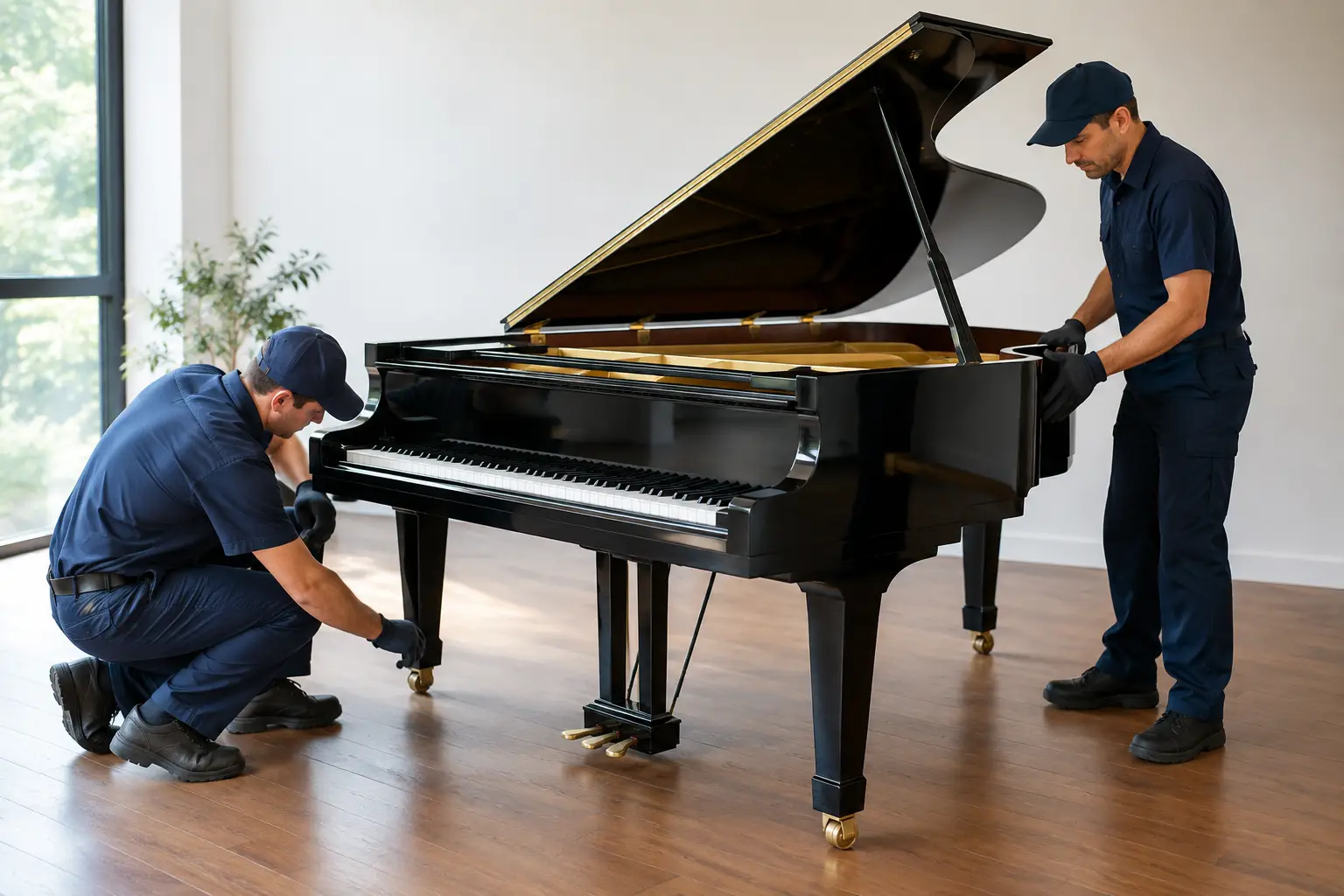
On delivery day, piano movers use specialized equipment, protective padding, boards, straps, and proven techniques to manage the instrument safely. Grand pianos are generally prepared for transport with their legs and pedal lyre removed, the body secured on a skid, and each component protected. Uprights remain intact, but their weight distribution and cabinet finish still require careful control through every doorway and transition.
Once inside, installation means more than setting the piano down. The crew places it in the selected location, installs and levels a grand piano’s legs and pedals when applicable, positions the bench, and confirms that the instrument is stable. The finish, walls, floors, and surrounding furnishings should be protected throughout the process.
For buyers, this is one reason a dedicated piano delivery service is worth choosing. General household movers may be skilled with sofas and boxes, yet piano moving demands specific equipment and an understanding of how an instrument is built. The cost of professional handling is small compared with repairing a damaged cabinet, compromised action, or injured stairway.
Choosing the Right Place for Your Piano
The best location balances musical enjoyment with environmental stability. A piano needs room for the player, bench, page turns, and regular tuning access. It also needs protection from the conditions that cause wood, felt, glue joints, and strings to react over time.
Avoid placing an acoustic piano directly beside a radiator, fireplace, heating vent, exterior door, or sunny window. Fast temperature shifts and direct heat can dry the soundboard and cabinet, while prolonged humidity can make action parts swell or stick. A position on an interior wall is often a practical choice, especially in homes where exterior walls experience larger temperature changes.
That said, every room has trade-offs. A bright room with a beautiful view may still work if direct sunlight is controlled with shades and the piano is set back from the glass. An open-concept room can be ideal for entertaining, but it may produce more volume and reverberation than a smaller practice space. In an upstairs studio, access and floor support should be evaluated before delivery, particularly for a larger grand.
For an upright, leave a small gap between the back of the piano and the wall rather than pressing it tightly against the surface. This supports air circulation and makes future service easier. For a grand, allow enough space around the curved side and lid for safe movement, cleaning, and comfortable playing. The keyboard should feel naturally accessible, not squeezed into a path people use every day.
Flooring, rugs, and caster protection
Pianos can be heavy enough to mark hardwood, dent soft flooring, or create pressure points in carpet. Caster cups distribute weight and help prevent movement, especially under grand piano legs. They are also a polished finishing detail that makes the installation look intentional.
A rug can help define a piano area, reduce reflected sound, and protect flooring, but it should lie flat and extend appropriately beneath the instrument. Thick, unstable rugs can make a bench feel uneven. If the piano will sit on carpet, the installer may recommend cups designed to provide a firm base rather than allowing casters to sink.
Floor strength is usually not a concern for a well-built main-floor room, but it becomes more relevant with large grands, older homes, upper levels, and locations above open spans. When there is uncertainty, ask for guidance before the piano arrives. Planning early is far easier than changing locations after delivery.
Sound, Comfort, and Daily Use
Placement changes what a piano sounds like in your home. Hard floors, glass, tall ceilings, and bare walls can create a lively sound with noticeable echo. Upholstered furniture, curtains, bookshelves, rugs, and wall treatments soften reflections. Neither approach is automatically better. A pianist who wants a clear, projecting voice may enjoy an open room, while a family practicing in the evening may prefer a more controlled acoustic environment.
The direction of a grand piano’s open lid also affects projection. With the lid raised, sound is directed outward from the instrument, so orienting the piano toward the room often creates a more satisfying experience for listeners. In a tighter room, a lower lid prop or closed lid can help manage volume without sacrificing the piano’s character.
Think about the player, too. The bench should have adequate clearance behind it, and the pianist should not feel exposed to a busy walkway. A first-time player is more likely to practice when the piano is welcoming and easy to approach. For teachers and studios, leave enough space for a second chair, music materials, and a comfortable teaching position.
Electric and self-playing pianos add a few practical considerations. Confirm that a grounded outlet is nearby and that cords can be routed safely without crossing traffic paths. If a player system, recording feature, or app connectivity is part of the experience, ask about setup during scheduling so the first session at the piano feels complete rather than unfinished.
Why Your Piano Should Settle Before Tuning
Even a piano that was tuned before delivery may need attention after it reaches its new environment. Transport creates vibration, and a change in temperature or humidity affects the soundboard and string tension. For that reason, tuning is usually scheduled after the instrument has had time to acclimate to its new room.
The right timing depends on the season, distance traveled, and how stable the home’s climate is. In many cases, allowing the piano to settle for a few weeks provides a better basis for tuning than servicing it immediately at the door. A technician can then address pitch, regulation concerns, and any small issues revealed as the instrument adjusts.
New pianos and pianos that have undergone restoration may need more frequent tuning during their first year in a new setting. A piano that has been neglected for years can require pitch correction over more than one appointment. This is normal care, not a sign that something is wrong. Regular service protects tonal quality and preserves the responsive touch that makes playing rewarding.
Prepare before delivery day
A little preparation helps installation go smoothly. Clear the route from entry to piano room, remove fragile items from nearby walls and tables, secure pets, and make sure someone can answer questions about final placement. Measure more than the front door – hallways, landings, and tight turns are often the true limiting points.
If you are still deciding where the instrument belongs, share photos and measurements with your piano specialist before scheduling. A440 Pianos can help customers think through delivery access and placement as part of a complete ownership experience, not as an afterthought once the piano is already in transit.
A properly installed piano invites you to sit down. Give it a stable room, thoughtful placement, and the professional care its craftsmanship deserves, then let the first notes make the space feel like yours.


0 Comments