

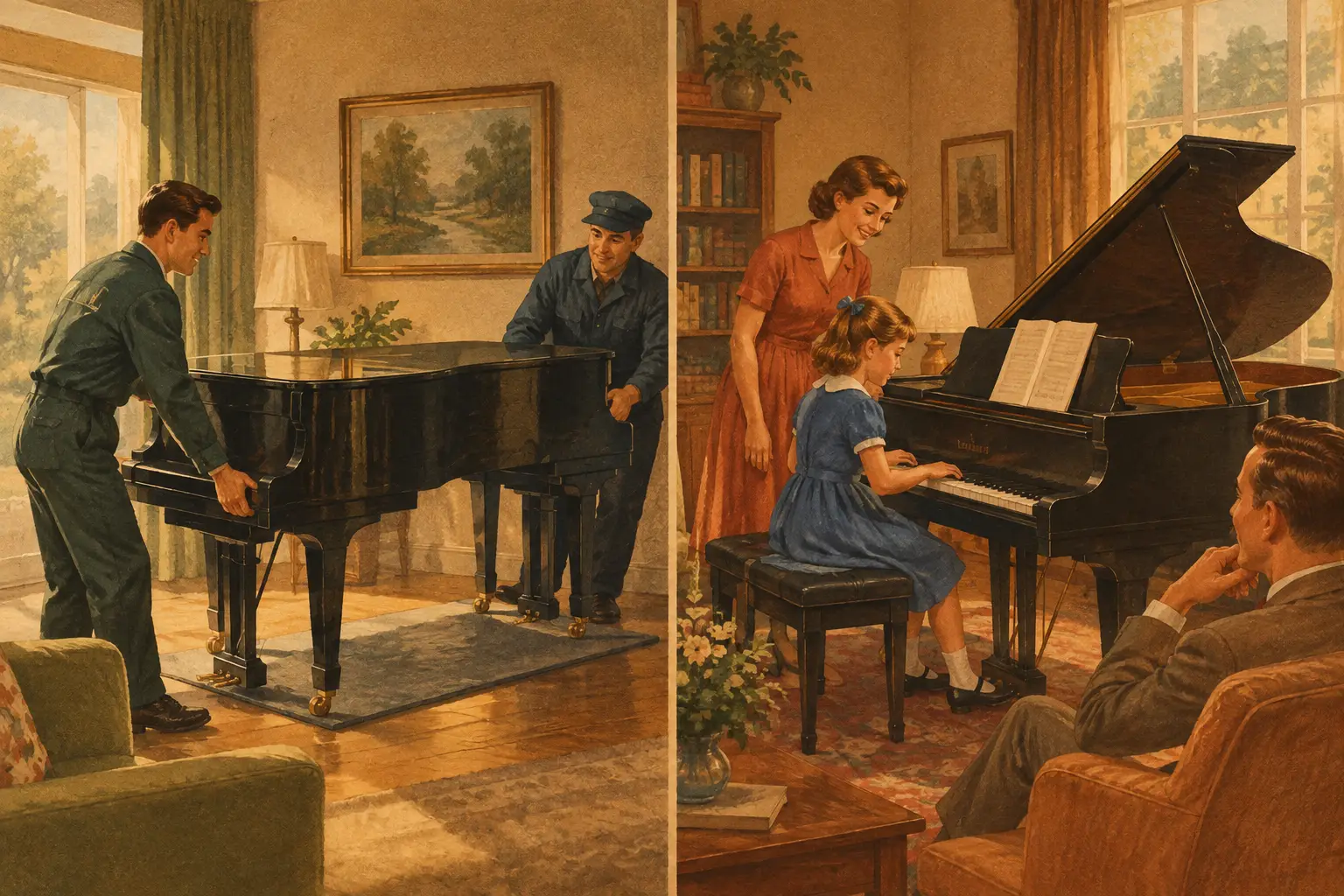
A piano that looks ideal in a showroom can feel entirely different after six months in your living room. That is why the decision around piano rental versus purchase deserves more than a quick comparison of monthly payments. The right choice depends on the player’s commitment, the instrument’s purpose, your space, and whether you want a temporary solution or a lasting musical asset.
For a child beginning lessons, a rental can remove some pressure. For a serious student preparing auditions, a church building a music program, or a family that values a beautiful instrument for decades, ownership often provides more control and better long-term value. The key is choosing with clear expectations.
Piano Rental Versus Purchase: Start With Your Timeline
Renting a piano makes the most sense when the need is uncertain or short-term. Perhaps your child has just started lessons and you want to see whether the interest lasts beyond the first semester. Maybe you are relocating, renovating, furnishing a temporary residence, or planning a limited run of events. A rental gives you access to an instrument without committing to its full cost.
That flexibility has value. If the player stops lessons, changes schools, or outgrows the instrument quickly, you are not responsible for selling a piano or arranging another move. Rental programs can also make it easier to begin with a suitable upright and reassess once a student’s skills, repertoire, and motivation become clearer.
Purchase is usually the stronger choice when the piano will be part of your life for several years. A well-selected used Yamaha, Kawai, Baldwin, Steinway, or other respected instrument can serve a home, teaching studio, congregation, or performance space for many years with proper care. Instead of paying for temporary access, you are investing in an instrument you can maintain, enjoy, and potentially resell.
A simple question often clarifies the decision: Are you testing the idea of piano ownership, or are you ready to make music a permanent part of the space? The answer matters more than the advertised monthly rate.
The Real Cost Is More Than the Monthly Payment
Rental pricing can be attractive because the upfront cost is lower. This can be especially helpful for families managing lesson fees, school expenses, and other activities at the same time. But a lower monthly payment does not automatically mean lower overall cost.
Over a longer period, rental payments can add up without building equity in the instrument. Some programs apply a portion of rental payments toward a purchase, while others do not. Before signing, ask exactly how credits work, whether there is a purchase deadline, and what happens if you exchange the piano for another model. The details can change the financial picture substantially.
A purchase requires more commitment at the beginning, but it gives you ownership from day one. Financing can make a higher-quality instrument more attainable while allowing you to select a piano based on musical needs rather than only on the smallest initial payment. For many buyers, this is preferable to repeatedly paying for a basic rental piano that may not support the student’s development for long.
Ownership also creates potential resale value. No piano is guaranteed to appreciate, and condition, brand, market demand, and maintenance all matter. Still, a carefully selected instrument from a recognized maker generally has far more enduring value than years of rental payments. Premium used pianos can be particularly compelling because much of the initial depreciation has already occurred.
Ask What Is Included
Whether you rent or buy, confirm which services are included in the quoted price. Piano delivery, stair carries, bench, warranty coverage, tuning, repairs, pickup, and relocation are not minor details. They are part of the true cost of bringing a piano into your home or facility.
Pianos should be tuned after delivery and allowed time to adjust to their new environment. If you are purchasing, factor regular tuning and occasional service into your budget. A quality piano is a mechanical instrument with thousands of moving parts, not a piece of furniture that can simply be placed in a corner and forgotten.
Musical Quality Changes the Decision
A rental piano may be adequate for early lessons, but adequacy is not always enough. Tone, touch, tuning stability, and responsive action influence how a player practices. Students who struggle against an uneven keyboard or an uninspiring sound can lose enthusiasm for reasons that have nothing to do with their potential.
This is where purchasing from a piano specialist can make a meaningful difference. A properly prepared used acoustic piano offers qualities that lower-tier rentals often cannot match: a more expressive tonal range, consistent key response, better pedals, and the confidence that comes from an instrument evaluated by technicians.
For advancing students, the difference becomes increasingly clear. Classical repertoire requires control of dynamics and articulation. Jazz players need a responsive action and tonal color. Vocalists and accompanists need an instrument capable of filling a room without sounding harsh or thin. Churches, schools, and studios need reliability under frequent use.
A digital piano can be a sensible alternative when quiet practice, portability, or limited space is the priority. Yet for players developing classical technique or preparing for acoustic performance, an acoustic piano remains the more complete experience. If a digital instrument is only a temporary substitute, renting one may be practical. If it will be your principal instrument for years, purchase quality rather than settling for the least expensive option.
When Renting Is the Better Choice
Rental is not a lesser decision. It is the right decision in several specific situations. A family with a first-time beginner may want three to six months to confirm that regular practice is becoming a habit. A college student living in temporary housing may need a piano for a defined period. Event planners may need a visually appropriate instrument without taking on the responsibility of ownership.
Renting can also work well when you need an immediate solution and have not had time to evaluate the market carefully. It gives you breathing room to learn what size, style, and sound you prefer before making a significant investment.
The caution is to avoid letting a short-term arrangement become an expensive long-term default. If you have rented for a year or more and the player is practicing consistently, compare the cumulative rental cost with the value of purchasing a properly inspected piano. That is often the moment when ownership begins to make more sense.
When Purchase Delivers More Value
Purchase is often the better path for committed households and institutions. A child who is progressing through method books, playing daily, and showing genuine interest deserves an instrument that can keep pace. A serious student should not have to prepare for auditions on a piano that feels unlike the instruments used in lessons, recitals, or competitions.
For a home, a piano can become a long-term center for music, entertaining, and family tradition. For a teacher, church, or studio, it is operational equipment that reflects the quality of the musical experience you provide. In those settings, reliability and tone are not luxuries. They are part of the mission.
Buying also allows you to choose an instrument that fits the room and your personal taste. An upright may be ideal where space is limited, while a grand piano can bring visual presence and greater musical range to a larger home or performance setting. Cabinet style, finish, era, and brand heritage may matter as much as dimensions for collectors and design-conscious buyers.
A premium used or restored piano can be a particularly smart purchase when it has been professionally evaluated, regulated, voiced, and prepared for its next owner. The condition of the soundboard, pinblock, strings, action, hammers, and cabinetry matters far more than a piano’s age alone.
Questions to Settle Before You Decide
Before renting or purchasing, decide where the piano will sit and measure the route from the entrance to that room. Consider direct sunlight, air vents, fireplaces, exterior walls, and humidity changes. These conditions affect tuning stability and long-term health.
Then consider who will play it and how often. A beginner practicing twice a week has different needs from an advanced teenager practicing two hours daily. A church accompanist, recording studio, and collector each require a different standard of instrument, presentation, and service support.
Finally, assess the company behind the piano. You want clear answers about condition, warranty, delivery, moving, repair history, and post-sale service. A piano is not a boxed purchase. Safe transport and knowledgeable maintenance protect both the instrument and your investment.
The strongest choice is the one that matches your musical future rather than only your immediate budget. If you are ready for an instrument with lasting character, professional preparation, and service support beyond delivery, a specialist such as A440 Pianos can help you select a piano you will be proud to play for years.

0 Comments