

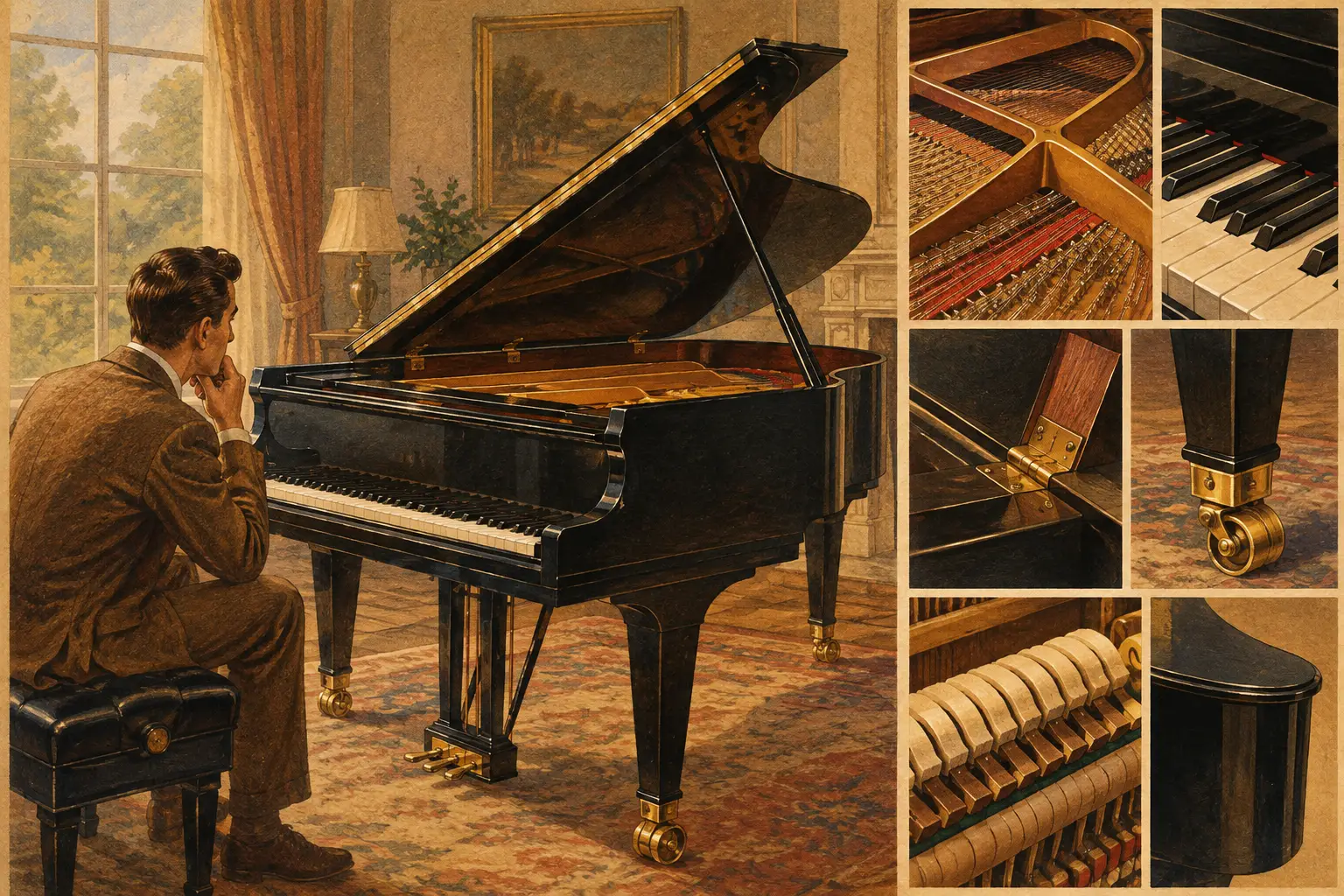
A piano can look impressive in a living room and still fall short when a player asks more of it. The real answer to what makes a piano premium is found beneath the cabinet: in the precision of its action, the quality of its soundboard, the stability of its structure, and the musical response a player feels at every touch.
A premium piano is not simply the most expensive instrument in a showroom. It is an instrument designed and prepared to deliver a more refined playing experience over many years. For a serious student, performing artist, educator, church, collector, or music-loving family, that difference becomes clear in the tone, the control, and the confidence the piano inspires.
What Makes a Piano Premium Beyond Its Price?
Price often reflects quality, but it does not tell the whole story. A respected brand name, an elegant finish, or a grand piano silhouette can add value, yet premium quality comes from how the instrument performs and how well it has been maintained.
The finest pianos are built from carefully selected materials, with skilled craftsmanship at every stage. Their components are designed to work together under tremendous string tension while producing a broad range of color and expression. A premium used piano can be an exceptional purchase when its structure, action, and musical condition have been thoroughly evaluated. Conversely, a neglected piano from a prestigious maker may require substantial work before it offers the experience its name suggests.
For buyers, the better question is not only, “What brand is it?” It is, “How does this particular piano sound, feel, and hold up?”
A Soundboard That Creates Depth and Color
The soundboard is the acoustic heart of a piano. Strings alone produce relatively little volume. Their vibration is transferred through the bridge to the soundboard, which amplifies and shapes the voice of the instrument.
Premium acoustic pianos typically use high-quality spruce that has been selected, aged, and crafted for resonance. The soundboard should be structurally sound, properly crowned, and capable of responding across the full dynamic range. On a fine grand piano, a player can whisper through a soft passage without losing clarity, then build to a full, powerful sound without harshness.
Tone is personal. Some musicians prefer the warm, singing character associated with certain European instruments, while others value the clean projection and clarity often found in high-performance Japanese pianos. Neither preference is automatically superior. The premium distinction lies in tonal complexity, sustain, evenness from bass to treble, and the ability to shape the sound intentionally.
The Action: Where the Player Meets the Piano
A piano action is a highly engineered system of keys, levers, hammers, and springs. It translates finger movement into a hammer striking the string. A premium action gives the player control rather than resistance or uncertainty.
On a well-regulated instrument, keys respond consistently across the keyboard. Repetition is quick and reliable. Soft playing remains controllable, and louder playing does not require excessive force. This matters for advanced repertoire, but it also matters for a beginner developing healthy technique. A student who practices on an uneven or overly stiff action may learn to compensate for the instrument instead of learning to play freely.
Fine action parts, accurate key weighting, quality hammers, and detailed regulation separate a piano that merely functions from one that feels alive. The difference can be immediate: notes repeat cleanly, chords speak together, and the player has more control over phrasing and dynamics.
Why Regulation Matters as Much as Brand
Even an excellent piano needs periodic regulation. Felt compresses, wood responds to humidity, and thousands of keystrokes gradually affect the action’s settings. Proper regulation aligns the action so the piano performs as its maker intended.
This is especially relevant when buying a used or vintage piano. A high-quality instrument with a well-maintained action may outperform a newer piano that has received little technical care. Premium ownership includes professional service, not just premium construction.
Structural Strength Supports Lasting Performance
Every acoustic piano carries enormous tension across its strings. The cast-iron plate, rim, pinblock, bridges, and internal framework must support that load consistently. Premium pianos are built with structural integrity in mind, helping them remain stable through years of tuning, changing seasons, and regular use.
The pinblock deserves close attention because it holds the tuning pins. When it is healthy, the piano can maintain stable tuning. When it is compromised, the instrument may struggle to stay at pitch even after service. The condition of the bridges, plate, strings, and structural components matters more than cosmetic shine.
A beautiful cabinet can be part of a luxury purchase, particularly for a distinctive art-case, crystal, or polished grand piano. Still, finish should be viewed as one part of the package. Premium value is strongest when visual distinction is matched by musical and mechanical excellence.
Materials and Craftsmanship You Can Hear
The materials inside a piano affect its sound, touch, durability, and service life. Premium instruments tend to use better woods, high-quality felt, carefully made hammers, durable strings, and more precise hardware. Craftsmanship determines how well these components are fitted and voiced together.
Handwork remains significant in piano building. Hammers may be voiced to refine brightness or warmth. Strings are scaled to create a balanced transition between registers. The action is adjusted in small increments that are difficult to appreciate from a specification sheet but easy to feel at the keyboard.
This is why two pianos of the same make and model can play differently. Manufacturing era, prior environment, usage, maintenance, and restoration quality all shape the individual instrument. A premium buyer should judge the actual piano, not the label alone.
The Role of Brand Heritage
Established makers such as Steinway, Blüthner, Yamaha, Kawai, and Baldwin have earned their reputations through distinct approaches to tone, design, and craftsmanship. Their best instruments are sought after because they have a recognizable musical identity and a long record of performance use.
Heritage can support long-term value, particularly for desirable grand pianos and properly restored vintage models. It can also make future service and parts support more straightforward. But brand prestige does not eliminate the need for inspection. A premium piano should have both a strong pedigree and a condition worthy of that pedigree.
For many buyers, the ideal choice is a carefully selected pre-owned piano from a respected maker. It may offer a higher level of materials, scale, and musical character than a comparably priced new instrument. The trade-off is that condition assessment becomes essential.
Restoration Can Preserve Premium Character
A thoughtful restoration can extend the life of an exceptional piano while preserving the qualities that made it special. Depending on the instrument, work may include restringing, pinblock replacement, soundboard repair, action rebuilding, new hammers, key restoration, cabinet refinishing, and complete regulation and voicing.
Not every older piano needs a full rebuild, and not every restoration improves value. The quality of the work matters. Appropriate materials, experienced technicians, and respect for the original design are critical. An over-restored piano can lose some of its original character, while an under-restored one may remain unreliable.
At A440 Pianos, the strongest premium opportunities are approached as complete instruments: musical, mechanical, structural, and visual. That perspective gives buyers greater confidence whether they are choosing a polished grand for a home, an upright for serious practice, or a distinctive vintage piano for a collection.
Size, Scale, and the Room Matter
A larger grand piano generally offers longer strings and a larger soundboard, which can create greater bass depth, sustain, and tonal range. That does not mean a concert grand is the right answer for every home. A premium piano should suit the room, the player, and the intended use.
A refined 5-foot-8-inch grand may be a better choice than a larger instrument if the space is intimate or the player prefers a focused voice. A high-quality upright can be an outstanding option where a grand is impractical. The goal is not to buy the biggest piano available. It is to choose an instrument whose scale and sound feel proportionate to its setting.
Room acoustics also affect perception. Hardwood floors, high ceilings, rugs, curtains, and furniture all influence brightness and volume. Professional delivery, placement, tuning, and follow-up service help ensure a premium piano performs properly after it arrives.
How to Recognize a Premium Piano in Person
Listen for a tone that is clear but not thin, powerful but not brittle, and balanced from one register to the next. Play repeated notes, quiet passages, wide dynamic changes, and chords across the keyboard. Notice whether the keys feel even and whether the piano responds to subtle differences in touch.
Then look beyond the performance. Ask about the piano’s age, service history, restoration work, tuning stability, and current condition. A qualified evaluation should address the soundboard, bridges, pinblock, action, hammers, strings, pedals, cabinet, and overall structural health.
A premium piano should feel like an instrument you can grow into. It should reward a beginner’s progress, support an advanced player’s expression, and remain a source of pride long after the first day it enters your home or studio.
The right piano is not defined by a single feature or a price tag. It is the one whose craftsmanship, condition, voice, and touch invite you to sit down and play again tomorrow.

0 Comments