

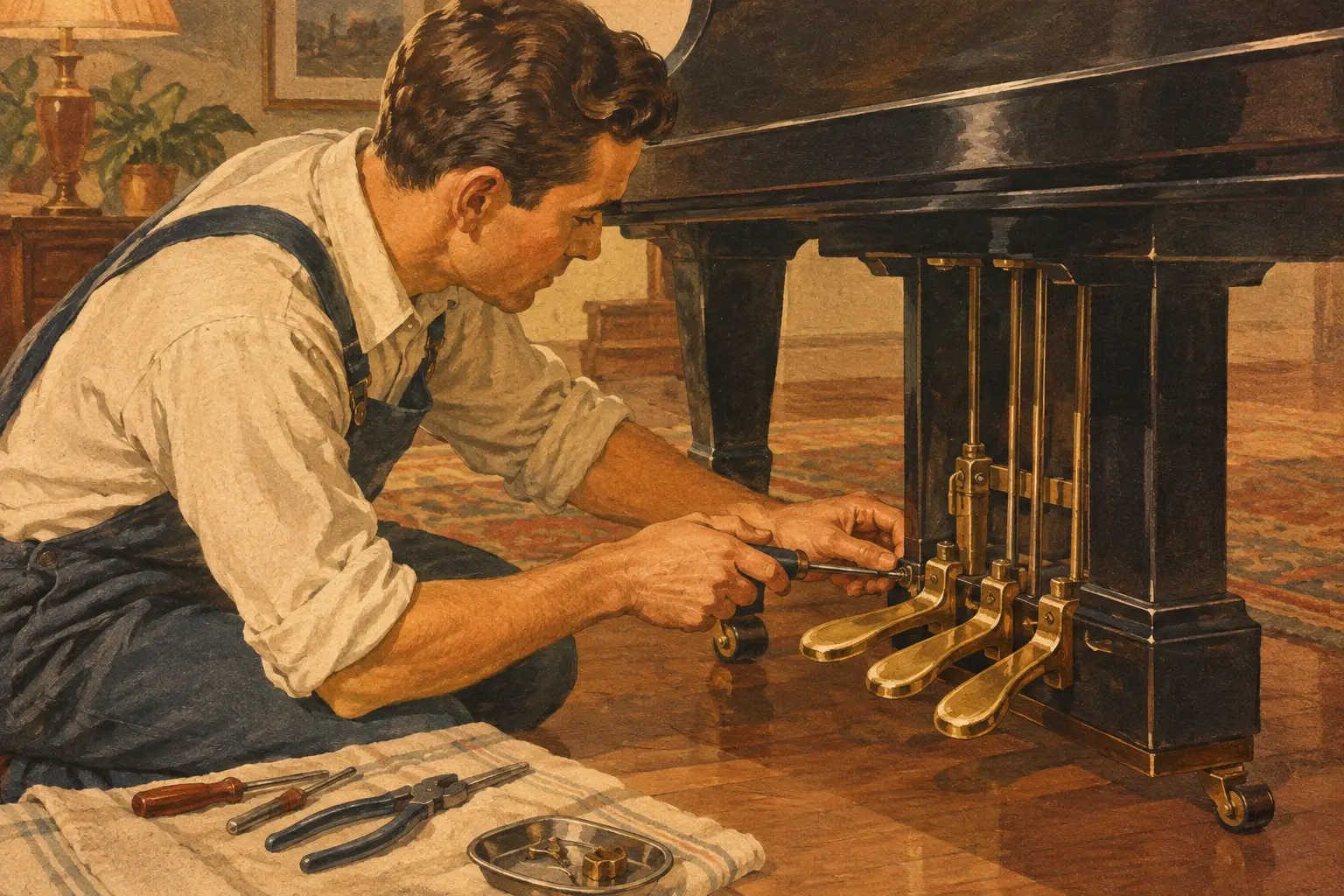
A piano pedal that squeaks, sticks, feels loose, or simply does nothing can change the way an instrument feels under the hands. Before attempting to repair piano pedals, it helps to identify which pedal is involved and whether the problem is in the pedal assembly, the connecting hardware, or the action itself. A small adjustment may restore normal operation. A misplaced rod, worn felt, or damaged mechanism may require a trained piano technician.
For owners of premium uprights, grands, vintage instruments, and family pianos, pedal service is more than a cosmetic fix. The pedals control essential musical effects, and improper repair can create regulation issues, damage internal parts, or reduce the refined playing experience a quality piano should provide.
Know What Each Piano Pedal Does
Most acoustic pianos have two or three pedals, but their functions vary between grand and upright designs. Knowing the intended function is the fastest way to narrow down a fault.
On a grand piano, the right pedal is the sustain pedal. It lifts the dampers from the strings so notes continue to ring after keys are released. The left pedal, often called the soft pedal or una corda pedal, shifts the action slightly so hammers strike fewer strings or a different portion of the strings. The middle pedal may be a true sostenuto pedal, holding only notes already played, or it may serve another purpose depending on the instrument.
On an upright piano, the right pedal also operates the sustain system. The left pedal usually moves the hammers closer to the strings, reducing volume. The middle pedal is commonly a practice pedal that drops a felt rail between the hammers and strings for quiet playing. Because upright pedals rely on rods and levers rather than the long trapwork found beneath a grand, their common failures are different.
A pedal that does not behave as expected is not necessarily broken. Some middle pedals are designed only for practice use, while some older pianos have configurations that differ from modern instruments. When in doubt, verify the piano’s intended pedal functions before adjusting anything.
Diagnose the Pedal Problem Before Making Repairs
The symptom usually points toward the likely cause. A pedal that squeaks but otherwise works often has dry pivot points, compressed felts, or worn bushings. A pedal with too much side-to-side movement may have loose hardware or a worn bushing. A sustain pedal that feels normal but fails to hold notes may be disconnected from the damper mechanism.
Begin with a visual inspection. On an upright piano, carefully remove the lower front panel or toe block according to the piano’s design, then look for a pedal rod that has slipped out of position. On a grand, inspect the lyre, the pedal assembly beneath it, and the trapwork under the keybed. Do not force a rod into place if its alignment is unclear. The part may be bent, the retaining hardware may be missing, or the mechanism above it may be obstructed.
Listen closely as the pedal moves. A metallic click can indicate a loose screw, damaged spring, or metal-to-wood contact. A dull thud may point to worn or missing felt. A scraping sound can come from an improperly aligned pedal rod or a pedal rubbing against the lyre. These details give a technician useful information and help distinguish a minor service need from a more involved repair.
Simple Piano Pedal Repairs That Are Usually Safe
A few maintenance tasks are reasonable for a careful owner, provided there is no need to alter the piano’s action or damper regulation. The goal is to correct obvious, accessible issues, not to experiment with internal adjustments.
If a pedal rod on an upright has simply become unseated, it can sometimes be returned to its proper cup or lever position. Support the rod gently, confirm that it sits vertically, and test the pedal with light pressure before replacing the panel. If it slips out again, do not continue using it. The retaining component or alignment needs professional attention.
Loose exterior screws on a pedal plate, lyre, or pedal bracket can also be tightened carefully. Use the correct screwdriver and stop when the hardware is snug. Overtightening screws in older wood can strip the surrounding material, particularly on vintage instruments that have experienced years of seasonal movement.
Surface cleaning is another safe step. Dust around the pedals, lyre, and lower cabinet with a soft cloth. For brass pedals, use a product specifically appropriate for the finish and avoid allowing polish to reach wood, felt, or moving joints. Many pedal sets are plated rather than solid brass, so aggressive polishing can permanently thin or remove the finish.
When Not to Repair Piano Pedals Yourself
The line between a simple correction and a technical repair is important. The sustain pedal connects directly to the damper system, and small changes in travel, timing, or lift can affect every note on the piano. If dampers lift unevenly, notes continue ringing after the pedal is released, or the pedal engages only at the very bottom of its travel, professional regulation is the appropriate answer.
Avoid lubricating internal piano mechanisms with household oil, spray lubricant, or silicone products. These materials attract dust, migrate into felt and wood, and can create more serious service problems later. A piano technician uses specific materials in limited locations based on the instrument’s construction and the actual cause of friction.
Call for service when you encounter any of the following:
- A pedal is bent, cracked, detached, or visibly unstable.
- The sustain pedal causes notes to ring unevenly or remain sustained.
- A grand piano’s lyre is loose or the pedal assembly shifts underfoot.
- The middle pedal mechanism will not engage or release correctly.
- The issue began after a move, impact, water exposure, or cabinet damage.
These symptoms can involve action regulation, trapwork adjustment, replacement felts, springs, bushings, or structural repair. On a fine Steinway, Yamaha, Kawai, Baldwin, Blüthner, or restored vintage piano, protecting original parts and proper geometry is worth far more than a quick improvised fix.
Grand vs. Upright Pedal Repairs
Grand piano pedals are more exposed and typically receive more direct foot pressure through the lyre. The lyre itself must remain firmly secured to the piano, with pedal rods aligned precisely to the trapwork. If a grand piano has been moved recently, a rod may have shifted during setup. This is common enough to check, but the correction must be made with the piano properly positioned and the pedal system aligned.
Upright piano pedal concerns are often related to rods, elbows, springs, and the lower action mechanism. A dropped or warped upright can develop alignment problems that are not immediately visible from the front. In some cases, a pedal that seems defective is actually revealing a damper system that was already out of regulation.
Older pianos add another layer of judgment. Original pedal hardware may be worth preserving, especially on a collectible instrument. Replacement parts can improve function, but they should match the scale, finish, and design of the piano. A generic replacement may be acceptable on a modest practice piano, while a period-appropriate restoration is the better choice for a premium vintage instrument.
Protect Pedal Performance After Service
Pedal mechanisms benefit from regular professional attention as part of routine piano maintenance. Tuning visits are an ideal opportunity to mention a squeak, excessive pedal play, or a change in sustain response. Addressing minor wear early often prevents a failed felt, loose rod, or misaligned lever from becoming a larger repair.
Keep the piano in a stable environment, away from direct HVAC airflow, excessive humidity, and abrupt temperature changes. Wood, felt, leather, and metal components respond differently to climate changes, which is why pedal feel can shift with the seasons. A stable room helps the entire instrument, from the soundboard to the smallest pedal bushing.
Safe moving also matters. Pedals and lyres are vulnerable during transport, especially on grands. They should be protected and handled as part of a professional piano move, not used as lifting points or left exposed to impact. A440 Pianos provides service support designed to protect both the performance and long-term value of fine instruments through every stage of ownership.
A piano should respond confidently when a player asks for sustain, softness, or controlled quiet practice. If the pedals feel uncertain, resist the urge to force the mechanism. A careful inspection, an informed diagnosis, and qualified service when needed will preserve the expressive control that makes a quality piano worth playing for years.
0 Comments