

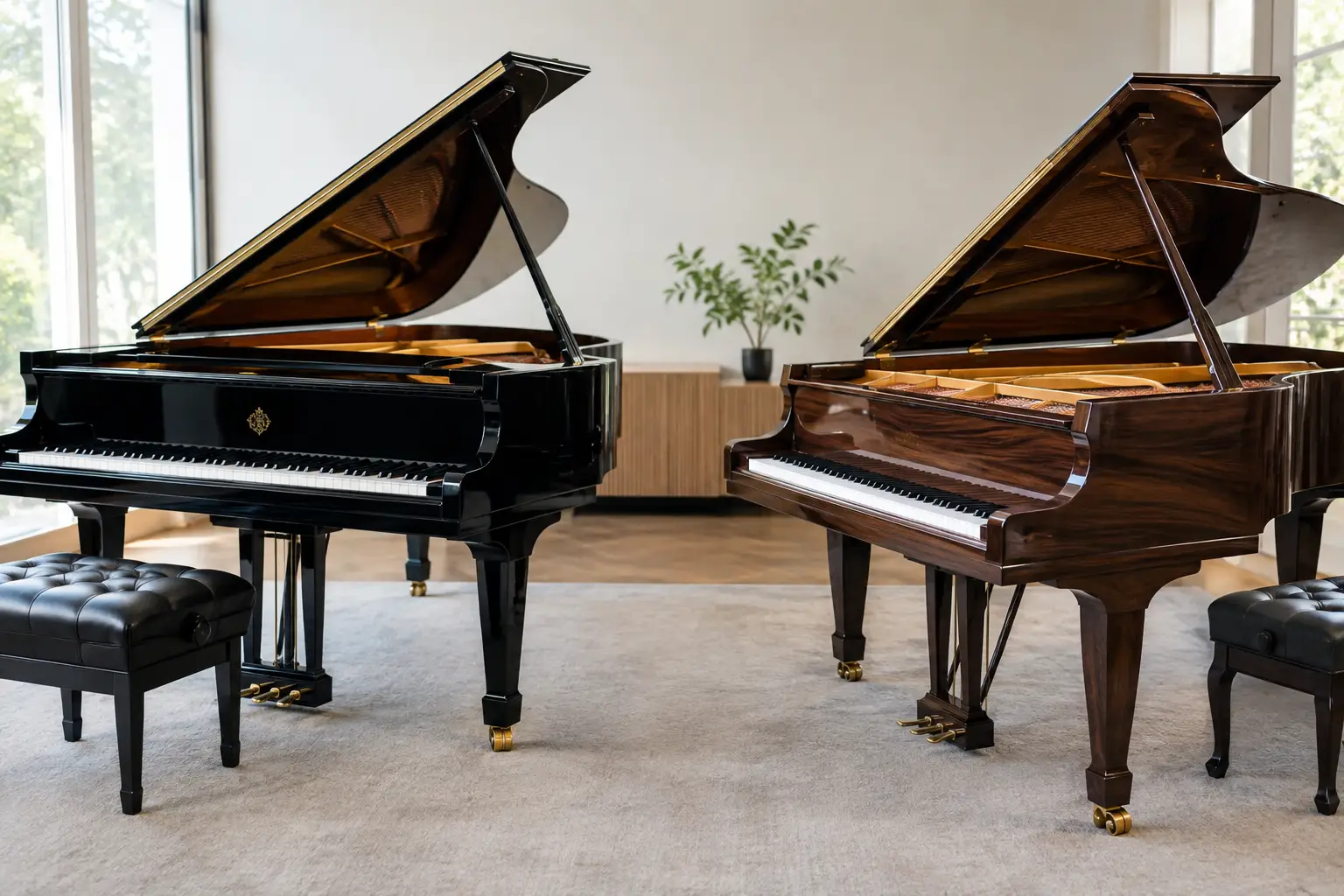
A Steinway and a Blüthner can both command a room before a single note is played, but they ask different things of the player. The choice in Steinway versus Bluthner pianos is not simply a question of prestige. It is a question of tonal character, touch, repertoire, room acoustics, condition, and the kind of musical relationship you want to build over many years.
For some buyers, a Steinway offers the familiar concert-hall voice and broad musical versatility they have heard all their lives. For others, a Blüthner offers a more individual, singing sound that feels especially rewarding in an intimate home or studio. Both are exceptional piano makers. The better instrument is the one that responds naturally to your hands and serves your space, goals, and budget.
Steinway versus Bluthner pianos: two distinct traditions
Steinway & Sons has been a defining name in American and international piano making since the 19th century. Its grand pianos are fixtures in conservatories, performance venues, teaching studios, and private homes. Steinway’s design emphasizes power, clarity, projection, and a wide dynamic range. A well-prepared Steinway can move from the most delicate pianissimo to a full, orchestral fortissimo without losing focus.
Blüthner, founded in Leipzig, Germany, belongs to a different but equally serious European tradition. Many players recognize Blüthner pianos for a warm, lyrical, colorful voice. The company is particularly associated with its Aliquot stringing system in many grand models, where additional sympathetic strings add shimmer and resonance in the upper register. The result is not simply more volume. It is often a more enveloping, nuanced halo around the sound.
Neither approach is inherently better. Steinway tends to offer a direct, commanding presentation that can fill a large room and adapt to many musical settings. Blüthner often appeals to players who want tonal subtlety, a romantic singing quality, and a less uniform sound from one register to the next.
Tone: projection or color?
Tone is usually the first meaningful difference buyers notice, especially when comparing well-maintained examples side by side. Steinways are often described as powerful, complex, and clear through the middle and treble registers. Their bass can have considerable depth and authority, while the treble is capable of carrying through an ensemble or a larger living space. This is one reason a Steinway can be a practical choice for serious students, teachers, and musicians who perform varied repertoire.
Blüthners are frequently admired for warmth and vocal quality. Their treble may sound golden rather than bright, and their midrange can have a particularly rich, intimate character. A player working through Schumann, Chopin, Debussy, Brahms, or song accompaniment may find that voice deeply compelling. That does not mean Blüthner is limited to romantic music. A strong player can perform any repertoire on one. It means the instrument may naturally favor color and blend over sheer brilliance.
Your room matters here. In a reflective room with hardwood floors, high ceilings, and many hard surfaces, a powerful piano can become tiring if it is not voiced and positioned thoughtfully. In a carpeted room with upholstered furniture, a larger or more projecting piano may be exactly what the space needs. A smaller Blüthner can still produce a substantial sound, but its tonal warmth may be especially satisfying in a more intimate setting.
Touch and musical control
A piano’s action is its connection to the player. Steinway actions are known for responsiveness and the ability to support a wide range of articulation. Many advanced pianists appreciate the sense of control available at low dynamic levels as well as the reserve of power available when playing more forcefully. However, no brand name guarantees a particular feel. Regulation, hammer condition, humidity, use history, and prior repair work all influence touch.
Blüthner actions can feel refined, supple, and precise, often encouraging a more cantabile style of playing. Some players experience this as immediately comfortable; others prefer the more familiar resistance they encounter on a particular Steinway. The right touch is personal. A pianist who plays daily for several hours may prioritize a different action feel than a family purchasing a piano for lessons and occasional enjoyment.
When trying either brand, do more than play a favorite piece once. Test repeated notes, quiet scales, fast passagework, chords at several dynamic levels, and sustained melodic lines. Listen for whether the tone remains even from bass to treble. Pay attention to whether the piano gives you control without requiring you to fight it.
The model and condition matter as much as the name
Comparing brands in the abstract is useful, but a specific instrument deserves the final say. A carefully restored vintage Steinway may be more musically satisfying than a neglected newer piano, while an excellent pre-owned Blüthner can offer extraordinary value compared with a comparable new luxury grand. Conversely, a piano with structural concerns or poor restoration work can become expensive quickly, regardless of the name on the fallboard.
For used and vintage pianos, inspect the soundboard, bridges, pinblock, strings, action components, hammers, dampers, and cabinet. Ask about the piano’s restoration history and whether work was cosmetic, partial, or comprehensive. Quality restoration requires more than a polished finish. The musical and mechanical systems must be evaluated together.
A grand’s size also changes the conversation. A 5-foot 7-inch piano and a 7-foot piano from the same maker will not offer the same bass response, projection, or tonal palette. For many homes, a medium grand provides the best balance of musical capability and footprint. For a serious studio or larger room, a longer grand may offer more tonal depth and control. Upright pianos from both traditions can also be excellent choices where space, access, or budget makes a grand impractical.
Value, availability, and long-term ownership
Steinway has exceptionally strong name recognition in the United States. That can support resale demand, particularly for desirable models in excellent original or professionally restored condition. It also means buyers have access to a broad ecosystem of technicians, parts knowledge, and market information. A Steinway is often an appealing choice for a household that wants a recognized performance instrument with enduring market presence.
Blüthner may be less common in the U.S., which can be part of its appeal. Buyers looking for a distinctive European instrument may find that a Blüthner delivers exceptional musical personality at a price that compares favorably with more widely marketed luxury brands. Availability varies, so finding the right model and condition may take patience.
Ownership costs deserve an honest place in the decision. Both brands benefit from regular tuning, climate stability, skilled regulation, and periodic voicing. A premium piano is not maintenance-free, and a piano that has been moved, stored improperly, or left untuned for years should be assessed before purchase. Professional delivery is equally important. Grand pianos require specialized equipment, planning, and trained handling to protect the instrument, the home, and everyone involved.
Which piano is right for you?
A Steinway may be the stronger fit if you want broad versatility, substantial projection, a familiar concert-piano character, or an instrument likely to serve a busy teaching or performance environment. It can also be a natural choice for buyers who value its established U.S. market and extensive history.
A Blüthner may be the better fit if you are drawn to warmth, tonal color, and an especially lyrical treble. It deserves serious consideration from pianists who want an instrument with a distinct voice rather than the sound they expect to encounter in every recital hall.
The most productive comparison is made in person, with enough time to listen and play without rushing. At A440 Pianos, we encourage buyers to consider the complete ownership experience: the piano’s condition, the room it will live in, safe delivery, maintenance needs, and how the instrument will support the music they want to make. Sit at both instruments, bring the music you know best, and let your ears and hands make the final decision.


0 Comments