

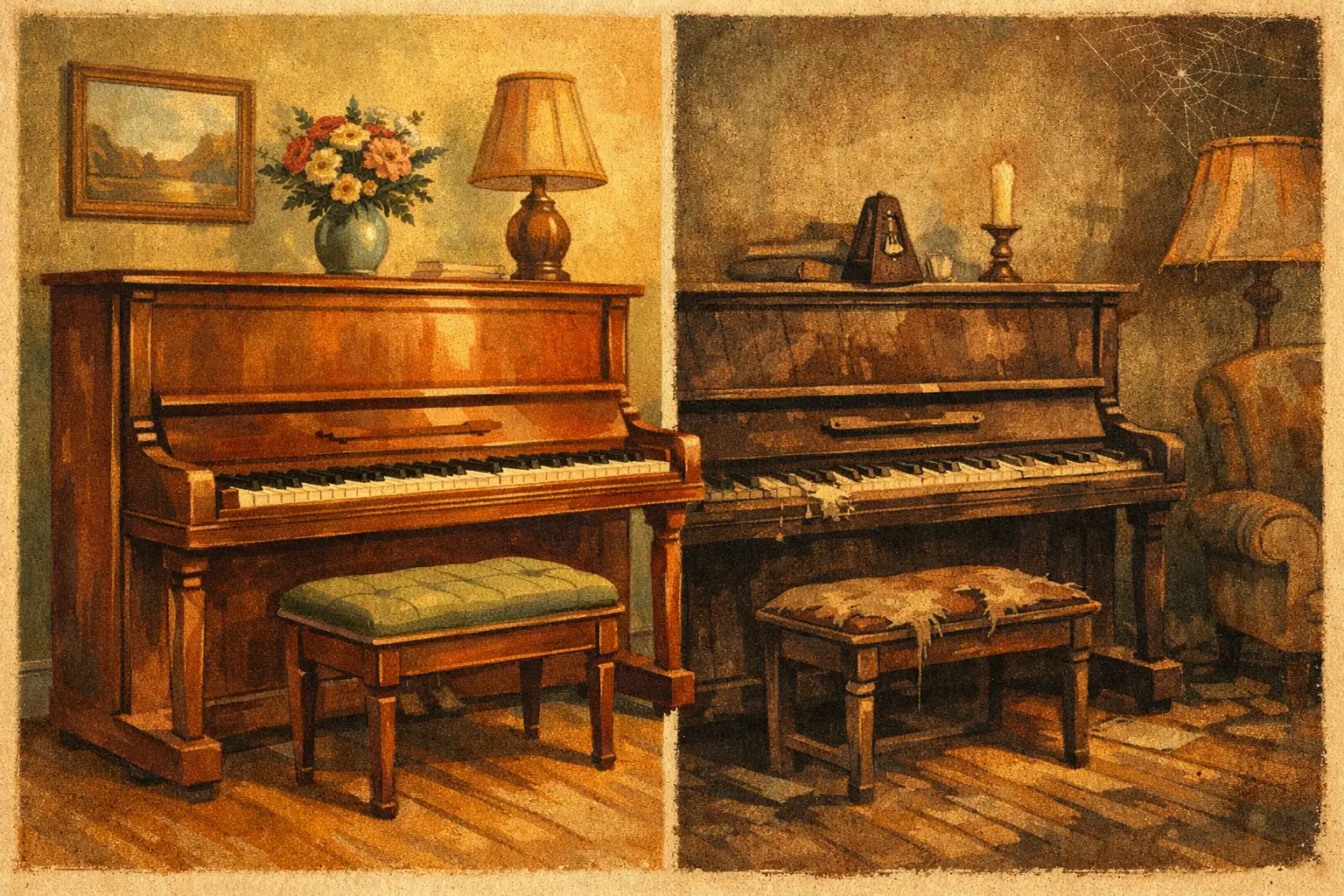
A vintage grand can look magnificent across a room, yet the real decision begins when its lid is raised and the first notes are played. The question of a restored piano versus unrestored piano is not simply about age, appearance, or price. It is about how the instrument performs today, what it may require tomorrow, and whether its condition matches the role you expect it to play in your home, studio, school, church, or performance space.
An original piano with history can be compelling. A properly restored piano can offer decades of dependable musical life. Neither choice is automatically better, but they serve different buyers and deserve a careful comparison.
What “Restored” Really Means
The word restoration is used broadly in the piano market, so buyers should ask exactly what work has been completed. A piano may have received cabinet polishing, new strings, action regulation, a rebuilt soundboard, refinished furniture, or a complete rebuild of its internal systems. Those are very different levels of work.
A comprehensive restoration generally addresses the piano’s musical and mechanical foundation. Depending on the instrument, this can include restringing, pinblock work, new hammers and dampers, action rebuilding, key restoration, pedal repairs, regulation, voicing, and cabinet refinishing. The purpose is not to make an old piano merely look newer. It is to return its touch, tone, tuning stability, and reliability to a high standard.
A restored instrument should still retain its identity. A fine vintage Steinway, Baldwin, Blüthner, or other respected make has a particular scale design, tonal personality, and craftsmanship that restoration is meant to preserve. The quality of the restoration matters as much as the name on the fallboard. Skilled work respects the instrument’s original design rather than applying a generic set of parts and cosmetic improvements.
Restored Piano Versus Unrestored: The Musical Difference
The clearest advantage of a well-restored piano is consistency. A piano has thousands of moving parts, and even an instrument that has been played gently will show the effects of time. Felt compresses, leather hardens, strings lose their brilliance, action centers wear, and tuning pins may no longer hold as firmly as they should.
When these components are renewed and properly regulated, the player can expect a more even response from key to key. Repetition becomes more controlled, soft playing is easier to shape, and the piano is more likely to stay in tune between service appointments. For a serious student preparing repertoire, a teacher working every day, or a pianist who values tonal control, this reliability is not a minor detail. It changes the playing experience.
An unrestored piano may offer a more original voice, and in some cases that is exactly what a collector wants. Its aged hammers, strings, and soundboard may produce warmth or character that cannot be replicated. But originality does not automatically equal superior performance. A beautiful old instrument can have uneven touch, tired bass strings, noisy pedals, weak tuning stability, or structural needs hidden beneath a polished exterior.
The best unrestored examples are usually pianos that have been carefully maintained, kept in a climate-stable environment, and serviced consistently throughout their lives. An unrestored piano with excellent care may be a wonderful choice. One that has spent decades neglected in a damp basement, hot garage, or uncontrolled storage area is a very different proposition, regardless of its brand or cabinet style.
Cost Is More Than the Purchase Price
An unrestored piano often carries a lower initial price, which can be attractive when the instrument has a desirable brand name or an elegant period cabinet. However, the purchase price may only be the beginning. Tuning, repairs, action work, replacement strings, moving, refinishing, and eventual rebuilding can turn a seemingly economical purchase into a substantial long-term project.
A restored piano generally costs more upfront because the labor, materials, and expertise have already been invested. For many buyers, that price delivers clarity. You are purchasing an instrument ready for regular use rather than assuming the responsibility and uncertainty of a restoration plan.
There is also a middle ground. Some pianos receive selective restoration: perhaps new hammers and strings, action servicing, and cabinet work, while major structural components remain original and sound. This can be an excellent value when the work is appropriate to the piano’s condition and the asking price reflects its scope. The key is transparency. A buyer should know what is new, what is original, and what future maintenance may be expected.
Originality, Collectibility, and Long-Term Value
Collectors often place value on original finishes, original components, and documented provenance. In rare or historically significant instruments, extensive restoration can affect collector interest, particularly if it removes distinctive period details or uses inappropriate materials. If your goal is to preserve a piece of musical history, an unrestored or conservatively restored piano may have special appeal.
For most residential and professional buyers, though, musical value is more practical than museum value. A piano is meant to be played. A respected vintage instrument that has been restored correctly can deliver exceptional tone, visual presence, and dependable ownership. It can also be more appealing to future buyers who want a premium piano they can enjoy immediately.
Cabinet condition deserves the same honest assessment. Original patina can be elegant, especially in an antique upright or art-case grand. Yet deep veneer damage, water stains, fading, or poorly executed touch-ups may diminish the piano’s overall presence. A high-quality refinishing job can transform an instrument, but it should complement the piano’s age and style rather than erase its character.
How to Decide Which Piano Fits Your Needs
Start with the piano’s purpose. A beginner needs a stable instrument with a responsive action and reliable tuning, not a bargain that becomes difficult to play within a year. A serious student benefits from a piano capable of nuance and repetition. A church, school, or studio requires durability and serviceability. A collector may prioritize rarity, provenance, cabinet design, or an original tonal signature.
Then consider your appetite for future work. Some buyers enjoy overseeing a restoration and making every cosmetic and musical decision. Others want the confidence of selecting a finished instrument that has been evaluated, prepared, and made ready for delivery. Neither approach is wrong, but they lead to different ownership experiences.
Before purchasing either type, ask for a clear condition assessment. You should understand the state of the soundboard, bridges, pinblock, strings, hammers, action parts, pedals, cabinet, and previous repair history. Ask whether the piano holds pitch, how recently it was tuned and regulated, and whether any immediate work is recommended. If the instrument was restored, request a detailed description of the restoration rather than relying on the label alone.
The piano should also be played. Listen for an even scale from bass to treble, a clear singing tone, and notes that speak without excessive noise or delay. Test repeated notes, soft playing, and pedal response. A premium piano should feel composed under the hands, whether you are playing a beginner’s exercise or a demanding Romantic work.
The Value of Specialist Evaluation
A piano is a major investment with both mechanical and artistic dimensions. General furniture or estate sellers may recognize a famous name, but they may not be equipped to judge action wear, structural integrity, or the quality of prior rebuilding work. Buying through a specialist gives you a stronger foundation for comparing condition, restoration level, tone, and overall value.
At A440 Pianos, the goal is not simply to place a piano in a room. It is to help buyers select an instrument suited to their musical expectations, visual preferences, budget, and long-term care needs. Safe delivery, tuning, repair capability, and restoration expertise all matter after the sale, especially with vintage and premium instruments.
A restored piano is often the stronger choice when you want dependable performance and the confidence to play immediately. An unrestored piano can be the right choice when original character, collectibility, or a personalized restoration project matters more. Let the instrument’s actual condition, not its age alone, guide the decision. The right piano should invite you to sit down, open the music, and keep playing.

0 Comments