


A Steinway is rarely an impulse purchase. It is usually the piano someone has imagined for years, whether for a serious student, a performance space, a church, or a home where music is meant to stay for decades. If you are figuring out how to buy a Steinway, the real question is not just which model you like. It is how to choose one that fits your ear, your room, your budget, and your expectations for the long term.
That distinction matters because Steinway is not one single buying experience. A new showroom grand, a fully restored vintage instrument, and a well-maintained pre-owned Steinway can all carry the same name while offering very different value. The best purchase is the one that matches your musical goals and gives you confidence after delivery, not just on the day you fall in love with the sound.
How to buy a Steinway starts with the right use case
Before you compare finishes, model letters, or serial numbers, be honest about who the piano is for and how it will be used. A family with a progressing student has different needs than a conservatory-trained pianist. A church may prioritize projection and reliability. A collector may care as much about period character and cabinetry as action performance.
This is where many buyers go wrong. They start with prestige, then try to make the piano fit the situation. A better approach is to define the role first. Will the instrument be used for daily practice, teaching, entertaining, recording, or performance? Do you want a warm, mellow voice or a more powerful, brilliant sound? Are you buying for legacy, immediate performance, or both?
Once those answers are clear, the field narrows quickly.
New, used, or restored?
For most buyers, this is the first major decision. A new Steinway offers the appeal of current factory production, pristine cosmetics, and the experience of being the first owner. That matters to some buyers, especially if they want a very specific finish, a current model, or a straightforward ownership path.
A used Steinway can be a smarter value if condition and preparation are strong. You may be able to step into a higher model or a more mature tonal profile for less than the cost of new. But used does not automatically mean better value. The gap between a carefully serviced Steinway and a neglected one can be enormous, even if both look attractive in photos.
Restored Steinways sit in another category. A quality restoration can deliver exceptional musical and aesthetic results, especially in respected vintage instruments with strong design heritage and beautiful cabinetry. At the same time, restoration quality varies widely. Buyers need to know what was rebuilt, who performed the work, what parts were used, and whether the piano was voiced and regulated for real musical performance rather than surface appeal.
In practice, the right answer depends on budget, sensitivity to originality, and how much risk you are willing to accept.
Choose the model with your room in mind
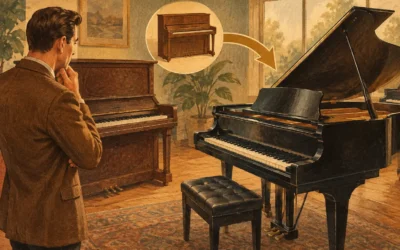
Steinway model selection is not only about status or size. It is about proportion. A grand that sounds magnificent in a large salon can overpower a modest living room. A smaller model may fit physically but leave an advanced player wanting more tonal depth and dynamic range.
Many buyers are drawn to iconic larger grands, and understandably so. But room size, ceiling height, flooring, and furnishings all affect the result. The piano has to live in the space, not just clear the tape measure.
If you are considering an upright Steinway, the same logic applies. A premium upright can be an excellent choice when space is limited or when you want serious quality without the footprint of a grand. For some households and teaching studios, it is the more practical luxury purchase.
A strong dealer will help you think beyond dimensions. Tone bloom, bass presence, touch response, and visual scale all matter once the piano is actually in place.
How to evaluate a Steinway before you buy
This is the point where emotion and discipline need to work together. You should absolutely respond to the piano emotionally. That is part of the value of owning a Steinway. But the evaluation also needs structure.
Start with touch. Does the action feel even from bass to treble? Is repetition clean? Can you control soft playing easily, or do you have to work for it? Then listen for consistency of tone. Some variation is normal, especially in older instruments, but obvious weak sections, harsh transitions, or lack of sustain deserve attention.
Cosmetics matter, especially in a premium instrument, but they should not distract from the mechanical condition. Ask about the soundboard, bridges, pinblock, strings, hammers, action parts, and pedal system. On a rebuilt or restored Steinway, ask exactly what has been replaced and what remains original. Broad phrases like fully restored can mean very different things from one seller to another.
If you are not a trained technician, that is normal. You do not need to become one overnight. You do need a specialist seller who can explain the piano clearly and document its condition with confidence.
The serial number tells a story, not the whole story
Buyers often focus heavily on age, and age does matter. It can place the piano within a production era and help frame expectations. But a Steinway’s value is not decided by year alone.
A younger piano that has been poorly maintained may be a weaker purchase than an older one that has been expertly rebuilt and musically prepared. Likewise, a vintage Steinway with all-original parts may sound appealing on paper but need significant work to perform at a high level.
The serial number should open a conversation about history, service records, rebuild quality, and present condition. It should not end the conversation.
Price is only one part of the cost
A Steinway buyer should think like a long-term owner, not just a shopper comparing tags. Purchase price matters, but so do delivery, climate stability, tuning, regulation, and any needed service after installation.
That is one reason specialist dealers offer real value. Safe piano moving is not optional with an instrument of this caliber. Neither is professional setup in the home, studio, or venue. If the piano needs voicing adjustments after delivery because the room changes the sound, that should be part of the buying discussion.
Financing may also make sense, especially if it allows you to secure a significantly better instrument rather than settling for a lesser one. For some buyers, the smarter move is not the cheapest Steinway available. It is the best-prepared Steinway they can comfortably own and maintain.
Buying online versus buying in person
Many premium piano purchases now begin online, and for out-of-state buyers that can be completely practical. Detailed photos, videos, serial information, service history, and technical guidance can make remote buying a strong option when the seller is experienced and transparent.
Still, there is no substitute for playing a piano in person if that is possible. Steinways differ from instrument to instrument. Two examples of the same model can feel and sound meaningfully different. If your schedule and location allow, playing several pianos can sharpen your ear quickly.
If you are buying remotely, ask better questions. Request clear demonstration videos across dynamic levels. Ask how the action feels, not just how the piano sounds. Ask what service has been completed, what the piano may still need over time, and how delivery is handled. A premium transaction should come with premium communication.
Where buyers make expensive mistakes
The most common mistake is buying the name instead of the instrument. Steinway has extraordinary brand heritage, but every piano still has to be judged on its own merits. A famous decal on the fallboard does not guarantee ideal condition, ideal value, or ideal fit.
Another mistake is overbuying size for the room or underbuying quality for the player. A piano that looks impressive but feels disappointing will not age well in your mind. Neither will a bargain instrument that quickly needs major work.
The third mistake is treating service as an afterthought. Premium piano ownership is smoother when buying, delivery, setup, tuning, and future maintenance are part of one coherent process. That is especially true for buyers investing in used or restored instruments.
A440 Pianos works with buyers in exactly that way, helping them compare premium options with the technical and logistical support that makes ownership feel secure from the start.
The best Steinway is the one you keep loving
If you are serious about how to buy a Steinway, do not rush to the most famous model or the fastest available deal. Take the time to match the instrument to the player, the space, and the level of care you expect after the sale. A Steinway should feel like a permanent answer, not a compromise with polished wood.
When the touch invites you back, the tone keeps opening up, and the piano suits your room as naturally as your repertoire, you will know you bought more than a name. You bought the right instrument for the life you want to build around it.

0 Comments