


A piano can look stunning in a showroom, a home, or a church stage and still hide a structural issue that affects tone, stability, and long-term value. One of the most misunderstood signs of piano soundboard cracks is that many buyers expect dramatic symptoms every time. In reality, some cracks are mostly cosmetic, while others point to deeper problems with crown, rib support, and overall performance.
That distinction matters whether you are buying a premium used grand, evaluating a vintage upright, or deciding how much restoration makes sense on a family instrument. A cracked soundboard is not automatically a deal breaker. But it is never something to ignore.
What the soundboard actually does
The soundboard is the large wooden diaphragm inside the piano that amplifies string vibration. Without it, the strings would produce very little volume. In a healthy piano, the soundboard has a slight curve called crown, and that shape helps project tone efficiently and evenly.
Because soundboards are made of spruce and live under constant tension, they naturally respond to humidity swings, age, and environmental stress. Over time, wood can shrink, separate, or lose structural integrity. That is why cracks are common in older pianos, especially instruments that have lived through years of dry heat, poor climate control, or inconsistent maintenance.
Common signs of piano soundboard cracks
The most obvious sign is visible separation in the wood grain. On a grand piano, this may appear as narrow lines running with the grain across sections of the soundboard. On an upright, inspection is more limited, but a technician can often identify the same pattern with the right access and lighting.
Visible cracking alone does not tell the whole story. A hairline crack that remains stable may have little practical effect. A wider crack, or several cracks near rib lines or bridges, deserves closer attention.
Another symptom is buzzing or rattling, especially on specific notes. When a crack opens enough to allow movement between wood sections, vibration can create a distinct buzz that players notice during sustained tones or louder passages. Not every buzz comes from the soundboard, though. Loose hardware, case parts, and bridge issues can sound similar, which is why proper diagnosis matters.
You may also hear a loss of tonal richness. A piano with significant soundboard problems can sound thinner, less resonant, or uneven from one register to another. Players sometimes describe it as a lack of bloom after the initial attack. In premium instruments, that change is easier to detect because the baseline tonal complexity is higher.
Tuning instability can be part of the picture too, although it is usually not caused by the soundboard alone. If the soundboard has lost crown or the structure around the bridges is compromised, the speaking relationship between strings and board can change enough to affect consistency. Still, tuning problems more often involve the pinblock, strings, or general structural wear, so this is a clue rather than proof.
When a crack is cosmetic and when it is serious
This is where many buyers either panic too quickly or become too casual. A cosmetic crack is typically narrow, stable, and not causing audible issues. The ribs remain firmly attached, the soundboard retains crown, and the piano still performs with a strong, pleasing tone. In older vintage pianos, especially well-built grands, this can be surprisingly common.
A serious crack is different. If the crack is wide, if ribs are separating, if crown is visibly reduced, or if the piano has obvious buzzing and tonal weakness, the issue moves from appearance to function. Cracks near or under the bridge area deserve particular scrutiny because that zone carries critical string energy.
The age and class of the piano also matter. A hundred-year-old hand-built grand with minor stable cracks may still be an excellent musical instrument and a worthwhile restoration candidate. A lower-grade piano with widespread board failure may not justify extensive work. Condition always has to be weighed against brand, scale design, tonal potential, and market value.
How climate and history affect soundboard condition
Dry environments are especially hard on soundboards. Wood shrinks as moisture leaves it, and repeated seasonal swings can open cracks over time. Homes with forced-air heating, older churches, school practice rooms, and storage situations are common problem environments.
Moving history matters too. A piano that has been relocated multiple times without climate planning may show more seasonal stress than one that stayed in a controlled setting. Even high-end brands are not immune. Premium construction improves durability, but wood still responds to the environment.
That is one reason serious buyers should ask about service records, storage conditions, and where the piano has lived. A beautiful cabinet and a famous name are not enough. Proven care adds real value.
What to look and listen for during an inspection
Start with a visual evaluation, but do not stop there. Use good lighting and inspect the soundboard for lines that follow the grain, areas of separation, and any signs that repairs were attempted. Shims are not necessarily bad. In a quality restoration, soundboard shimming can be appropriate and long-lasting. The question is whether the repair was executed well and whether the piano performs properly now.
Then listen to the instrument across the full keyboard. Play softly and loudly. Sustain notes in the bass, tenor, and treble. Pay attention to buzzes, short sustain, uneven color, or a dry, flat quality that does not match the piano’s pedigree.
If you are evaluating a grand piano, inspect from underneath when possible. If you are looking at an upright, access is tighter, which makes a technician’s inspection even more valuable. In both cases, signs of loose ribs, bridge distress, or loss of crown are more meaningful than the presence of a crack by itself.
Why a technician’s opinion is worth it
Buyers often ask whether they can judge soundboard condition from photos alone. Usually, no. Photos can show visible cracks, but they rarely reveal the full structural story. A piano technician can determine whether the crack is stable, whether ribs remain tight, whether the board still has crown, and whether the instrument’s musical performance has been compromised.
That evaluation matters even more for premium used and vintage pianos, where the difference between a strong purchase and an expensive mistake can come down to details hidden inside the case. At A440 Pianos, this is exactly why curated inventory and technical oversight matter. Serious instruments deserve serious assessment.
Should you repair it, monitor it, or walk away?
It depends on the piano and your goals. If the crack is minor, the tone is excellent, and the board remains structurally healthy, monitoring may be the right move. Many older pianos continue to perform beautifully for years with small stable cracks.
If buzzing is present or a crack is opening further, targeted repair may solve the problem. Shimming, sealing, or rib repair can be effective when done by an experienced shop. The value equation improves when the piano is from a respected maker, has strong musical potential, and fits a long-term ownership plan.
Walking away makes sense when the soundboard issue is part of a larger pattern of decline. If the piano also has bridge problems, pinblock weakness, major action wear, and little market value, repair costs can outpace the instrument’s worth. That is especially true for mass-produced pianos with limited tonal upside.
Signs of piano soundboard cracks in grands vs uprights
Grand pianos make soundboard issues easier to inspect and, in many cases, easier to evaluate for performance impact. Their larger soundboards also play a bigger role in tonal depth and projection, so loss of crown or rib separation may be more noticeable to advanced players.
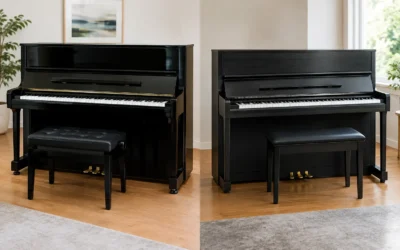
Uprights can be trickier. Cracks may be harder to see, and tonal limitations already present in smaller vertical pianos can mask the problem. That does not mean soundboard health matters less. It simply means inspection needs more care and context.
For buyers considering a higher-end used piano, especially a vintage grand from a respected brand, the goal is not to find an instrument with no age. The goal is to find one with integrity, musical value, and a condition profile that supports confident ownership.
A crack in the soundboard is a signal to look closer, not a reason to assume the worst. The right piano can still deliver remarkable tone, lasting value, and real artistic satisfaction when its condition has been judged with experience rather than guesswork.


0 Comments