

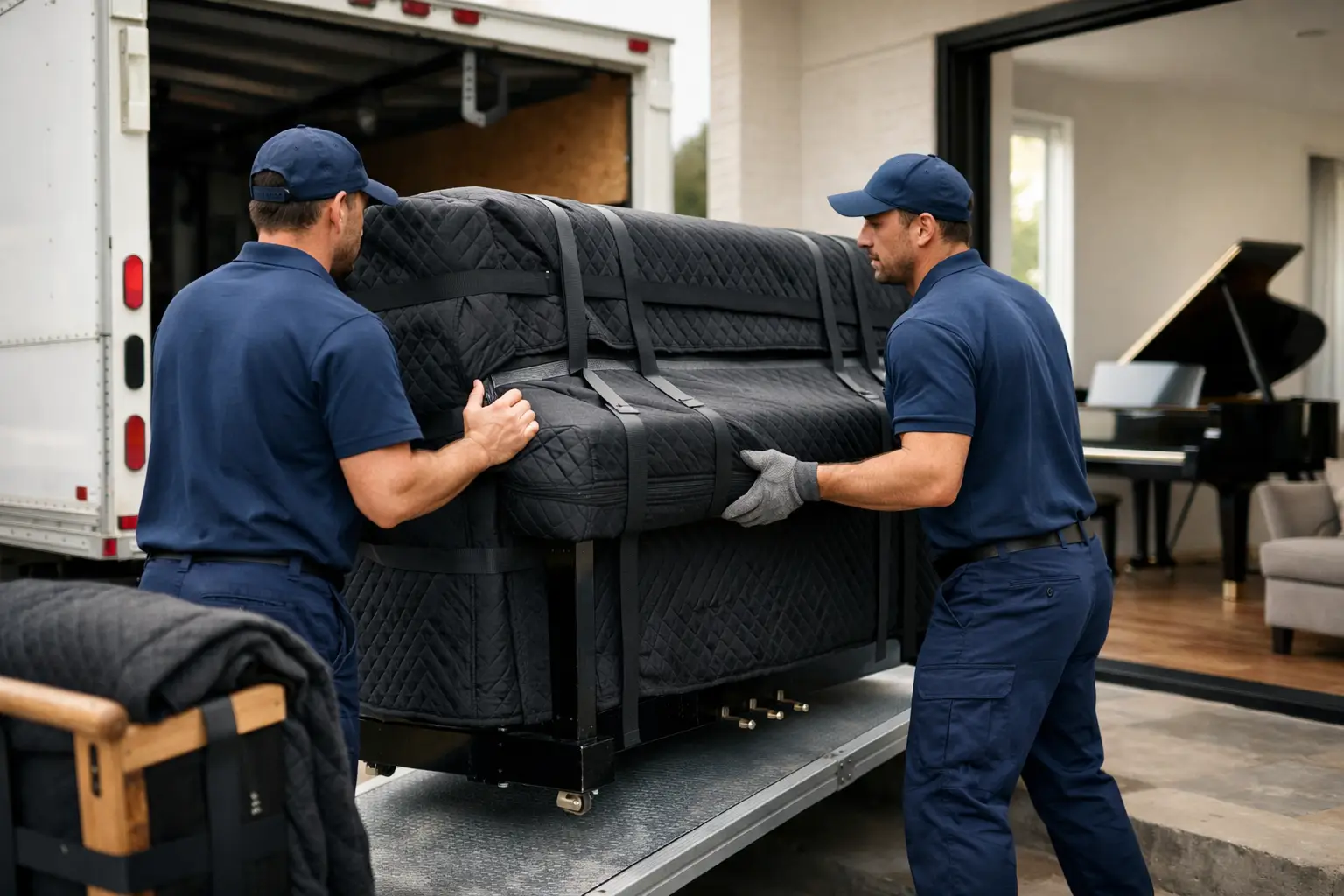
A piano is not simply another large purchase waiting at the curb. Its cast-iron plate, soundboard, action, finish, and thousands of moving parts all deserve careful handling from the showroom floor to the room where it will be played. Professional piano delivery protects the instrument and your home, while giving you a clear plan for its first days in a new environment.
For a family choosing a first upright, the delivery process can make an intimidating purchase feel manageable. For a pianist selecting a restored vintage instrument or a concert-level grand, it is a critical part of preserving condition, tone, and long-term value. The details matter, but they do not have to be complicated when an experienced team is guiding the move.
Why Piano Delivery Requires Specialists
Pianos are heavy, but weight is only part of the challenge. A typical upright may weigh 300 to 600 pounds, while grand pianos can range from roughly 500 pounds to well over 1,000 pounds. More importantly, the weight is not evenly distributed. The plate, strings, action, cabinet, legs, pedals, and lid each require a specific handling approach.
A general furniture crew may have the strength to move a piano, yet piano specialists bring the equipment and judgment needed for the job. That can include padded covers, skid boards, dollies designed for instrument weight, stair equipment, straps, and a vehicle that secures the piano against shifting. Proper preparation also prevents a common mistake: gripping delicate parts of the cabinet or using piano legs and pedals as carrying points.
The right delivery team evaluates the route before moving day rather than hoping the path works once the instrument is already in the house. That protects door frames, flooring, walls, and the piano itself.
Preparing Your Home Before a Piano Delivery
The most useful thing a buyer can do is make the final placement area accessible. Measure the doorway, hallways, turns, stairwell, and room where the piano will sit. For a grand piano, measurements should account for the instrument’s length and the space required for movers to turn it safely. A piano may fit through a doorway but still be difficult to maneuver around a tight corner.
Clear furniture, rugs that can slide, pet gates, plants, and wall decor from the route. If there is a narrow staircase, a steep driveway, a gate, or a shared building entrance, tell the delivery coordinator early. Photos and basic measurements can help the team plan for the correct number of movers and any special equipment.
Apartment and condominium buyers should also confirm loading-dock rules, elevator reservations, parking access, and required certificates of insurance. These details are routine, but overlooking them can delay delivery or create avoidable fees.
Choose the Room With Care
A piano needs more than an open space. Place it away from direct sun, heating vents, air-conditioning blasts, fireplaces, exterior doors, and damp areas. Rapid changes in temperature and humidity can affect tuning stability, the soundboard, and action regulation.
An interior wall is often a good choice for an upright, particularly in a room with relatively stable conditions. A grand piano needs room for the lid to open and for sound to develop naturally. In a smaller living room, a 5-foot baby grand may be a more satisfying fit than a larger instrument that dominates the room and leaves little space for the player, bench, or audience.
This is also the time to think about daily use. A piano placed where the family naturally gathers is more likely to be played. A beautiful instrument hidden in a basement or isolated formal room may receive less attention, even if the location looks ideal on paper.
What Happens on Delivery Day
Before the piano leaves the truck, the delivery team should confirm the planned route and final location. Grand pianos are commonly transported on their side in a padded skid board, with legs and lyre removed and protected. Once inside, the team reassembles the piano, positions it, and checks that it sits securely. Uprights are generally moved upright and carefully placed using the appropriate equipment.
There may be brief moments when the process looks dramatic, especially on stairs or through a narrow entry. That is normal when the move has been properly assessed. The goal is controlled movement, not speed.
After placement, inspect the cabinet with the team. Look over the finish, pedals, bench, and any accessories included with the purchase. Ask questions about the next step, particularly if the piano has traveled a significant distance. Keep the area around the instrument clear until the delivery is complete and the movers have confirmed that the piano is stable.
A professional team will not rush you into placing a piano in an unsafe or unsuitable location. If the room changes at the last minute, it may be wiser to pause and discuss the options than force a heavy instrument into a tight space.
Delivery Distance, Stairs, and Other Cost Factors
Piano delivery pricing depends on more than mileage. Local ground-floor delivery is usually the simplest scenario. Stairs, long carries, difficult access, rural locations, multi-stop moves, and interstate transport require additional labor, planning, or equipment.
For long-distance deliveries, the piano must be secured for travel and protected from road vibration, changing weather, and handling at transfer points. Timing may also differ from a local delivery because a regional or national route can involve scheduled delivery windows rather than a precise hour.
Buyers should ask what is included in the quoted service. A clear estimate identifies the delivery area, number of steps or flights, placement level, special access conditions, and whether setup is included for a grand piano. It should also clarify whether there are circumstances that could change the price, such as undisclosed stairs or a route that cannot accommodate the instrument.
At A440 Pianos, delivery planning is part of the complete ownership experience, whether an instrument is headed across metro Atlanta or to a customer elsewhere in the United States. A thoughtful assessment helps match the service level to the piano and the property, rather than treating every move as the same.
Why Your Piano May Need Tuning After Delivery
Even the most careful move can affect how a piano settles. More often, the real influence is the change in climate. Wood components respond to humidity and temperature, and string tension can shift as the instrument adjusts to its new surroundings.
A newly delivered piano may not need tuning the moment it enters the room. Allowing it to acclimate for a short period is often the better choice, particularly after a long-distance delivery or a significant seasonal change. The ideal timing depends on the instrument’s condition, the distance traveled, and the stability of your home’s climate.
For a recently rebuilt or restored piano, regular follow-up service may be especially valuable as the action and strings settle into use. For a family piano, scheduling routine tuning helps maintain a pleasant playing experience and encourages consistent practice. A piano that sounds noticeably out of tune can discourage a beginner long before they understand why it feels less enjoyable to play.
Delivery Is Not the Same as Setup
A piano can arrive safely and still benefit from professional attention afterward. Tuning brings pitch back into alignment. Regulation adjusts the mechanical response of the keys and action. Voicing shapes tonal color. These are separate services, and each becomes relevant at different times.
That distinction matters for buyers comparing offers. The lowest moving price is not always the best value if it does not provide the care, communication, and follow-up support your instrument needs. A quality piano deserves a delivery plan that recognizes it as a musical mechanism, not oversized furniture.
A Better Start With Your New Instrument
The first notes played after delivery should feel exciting, whether you have brought home a dependable Yamaha upright, a refined Steinway grand, a vintage European piano, or an electric piano for a growing musician. Preparing the space, sharing access details early, and choosing experienced piano movers lets that moment stay focused on music.
Once the piano has settled, arrange the bench, open the music, and give the instrument time to become part of the household. A well-delivered piano is ready for the work that matters most: lessons, rehearsals, quiet evenings, and the music that gradually makes a room feel like home.


0 Comments