

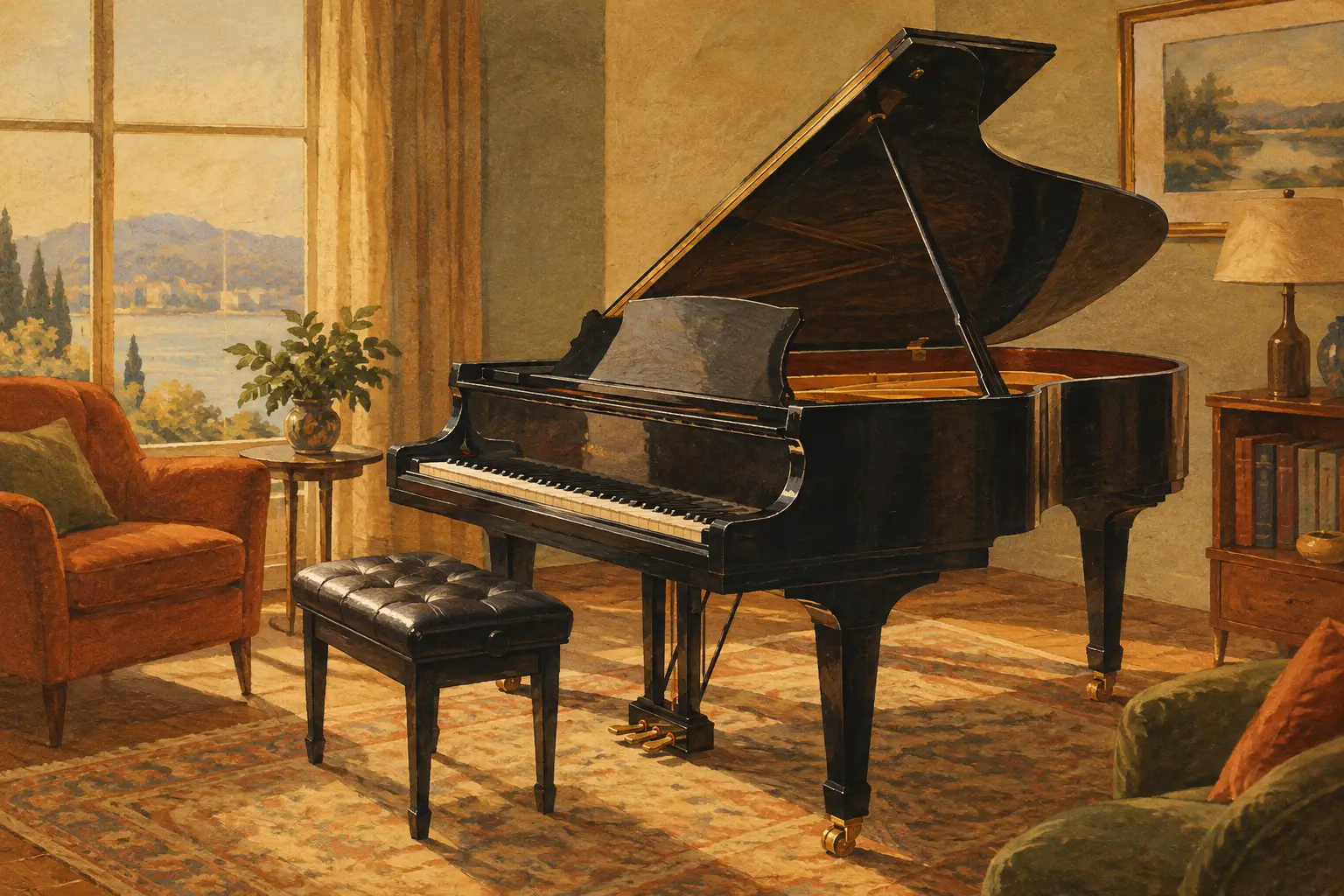
A Baldwin baby grand can be one of the most satisfying ways to bring a serious acoustic piano into a home without committing the floor space or budget of a larger grand. In this Baldwin baby grand review, the short answer is that a well-maintained American-built Baldwin is often an excellent purchase. The longer answer depends on its era, condition, scale design, restoration history, and whether its voice suits the player who will live with it every day.
Baldwin earned its reputation by building pianos with power, durability, and a clear musical identity. That identity is still present in many pre-owned baby grands, but the name on the fallboard is only the beginning of the evaluation. A neglected piano from a celebrated maker can be a costly project. A properly serviced instrument with good structure and regulation can deliver years of rewarding performance.
Baldwin Baby Grand Review: Tone and Touch
The classic Baldwin sound is frequently described as warm, full, and direct. In a good baby grand, the bass has more authority than many buyers expect from a compact instrument, while the middle register carries a strong, singing presence. The treble can be bright and projecting, particularly on pianos that have not been voiced down over time.
That tonal character makes Baldwin a compelling choice for players who want clarity and strength rather than an overly delicate or veiled sound. It can work beautifully for jazz, gospel, church accompaniment, popular music, and a broad classical repertoire. A Baldwin can also hold its own in a lively family room where a quieter piano might disappear into the space.
Still, tone is personal. Some pianists prefer the rounder, more blended sound associated with certain European instruments. Others favor the clean, even character many Yamaha owners enjoy. Baldwin is often a strong choice for buyers who appreciate a piano with presence, color, and enough reserve power to grow with an advancing student.
The action on a well-regulated Baldwin baby grand should feel substantial and responsive. It is not necessarily featherlight, nor should it be. A properly adjusted action offers control in soft passages and confidence when playing with force. Regulation matters enormously here. Worn key bushings, tired action centers, uneven let-off, or hardened hammers can make an otherwise fine piano feel disappointing. These are service concerns, not automatic reasons to walk away, but they should be reflected in the piano’s condition and price.
Why Baldwin Size and Era Matter
“Baby grand” is a broad category, generally covering grands under roughly 6 feet. Baldwin produced several sizes and lines over many decades, so two baby grands bearing the same logo can be very different instruments.
A 5-foot to 5-foot-2-inch Baldwin is a practical fit for many homes, condominiums, teaching studios, and churches with limited space. It provides the visual elegance and action advantages of a grand piano while remaining easier to place than a 6-foot instrument. The trade-off is physics: longer strings and a larger soundboard usually give a larger grand more bass depth, dynamic range, and tonal complexity.
For a buyer with enough room, a 5-foot-8-inch or 6-foot Baldwin may represent a meaningful step up in musical scale. For a buyer who needs a piano that fits gracefully into a main living area, a baby grand can be the smarter long-term choice. The best piano is not the largest one that can technically enter the room. It is the instrument that fits the space, supports the player, and can be maintained properly.
The manufacturing period also deserves close attention. Vintage American-made Baldwins are especially sought after for their musical potential and substantial construction. Many have excellent plates, soundboards, pinblocks, and scale designs. Their condition today, however, varies widely. A piano that spent decades in a climate-controlled home is a different proposition from one stored near a humid exterior wall, in an unconditioned church, or through repeated moves without professional care.
Later Baldwins should be considered individually rather than dismissed or assumed to match earlier production automatically. A hands-on inspection tells far more than a serial number alone. The goal is to evaluate the exact piano in front of you.
What to Inspect Before You Buy
A premium used piano deserves a professional assessment, especially when the asking price reflects its brand name or restoration work. Cosmetic beauty matters, but the musical and structural foundation matters more.
Start with the soundboard. Fine hairline cracks are common in older pianos and do not automatically prevent good tone or stable tuning. More concerning signs include loose ribs, obvious buzzing, distortion, or a board that has lost its crown. The bridges should also be inspected for cracks around bridge pins, which can affect string termination and tuning stability.
Next, consider the pinblock and tuning pins. A piano must hold its tuning before its musical qualities can be fully appreciated. If the pins are loose, a technician may recommend significant work, potentially including restringing and pinblock replacement. A piano that has been freshly tuned for a sale can still be unstable, so condition should be judged beyond the current pitch.
The action requires equal attention. Play every key slowly and firmly. Listen for clicking, sticking, weak repetition, double-striking, or uneven tone. Check whether the keys sit level and whether the pedals operate smoothly. Hammers with deep grooves may only need reshaping, but extremely worn hammers, deteriorated shanks, or extensive action wear can add real cost to an ownership plan.
Finally, evaluate the cabinet honestly. A polished ebony Baldwin makes a striking statement, while walnut, mahogany, and satin finishes can complement a more traditional interior. Scratches and minor finish wear may be acceptable if the piano is mechanically excellent. Deep water damage, severe veneer problems, or signs of structural neglect should prompt further investigation.
Value: When a Baldwin Is a Smart Investment
Baldwin baby grands occupy an appealing position in the premium pre-owned market. A buyer may obtain an instrument with genuine American heritage, a substantial action, and a rich voice for less than the cost of a comparable new grand piano. This is particularly attractive to music families whose students have outgrown an entry-level upright, as well as studios and institutions that need an instrument built for regular use.
Value is not determined by age alone. An older piano that has been expertly rebuilt can be more desirable than a newer piano with deferred maintenance. Conversely, a low price is not a bargain if it leaves no room for transportation, tuning, regulation, repairs, and climate care.
Ask what work has been completed and when. The most useful service records identify whether the piano has been restrung, had its hammers replaced or reshaped, received action work, undergone regulation, or been refinished. Terms such as “restored” and “rebuilt” can mean very different things. A refinished cabinet is not the same as a rebuilt piano, and a rebuilt piano should have detailed work to support that description.
For buyers shopping nationally, safe piano moving is part of the value equation. Grand piano transport requires trained crews, proper equipment, and careful planning for stairs, turns, and access. After delivery, the piano should be allowed to acclimate and then tuned. A specialist that can coordinate selection, professional delivery, and ongoing service offers meaningful confidence, not simply convenience.
Who Should Choose a Baldwin Baby Grand?
A Baldwin baby grand is especially well suited to players who want a bold, traditional American voice and a piano that feels like a real musical instrument rather than a decorative furnishing. It is a strong candidate for intermediate and advanced students, dedicated adult players, teachers, worship spaces, and homeowners who entertain around music.
It may be less ideal for someone seeking an exceptionally soft, restrained tonal palette, or for a small room with hard floors and little sound absorption. In those settings, voicing, placement, rugs, curtains, and furniture can make a substantial difference. Never judge a piano only by how it sounds in a large showroom. Ask how it will behave in your room.
At A440 Pianos, a curated used Baldwin can be an exceptional addition to a home, studio, or performance space when its condition is verified and its character fits the player. The right instrument should invite you to sit down again tomorrow. Choose the Baldwin that does that, then protect its potential with professional delivery, regular tuning, and thoughtful care.


0 Comments