


A luxury piano is not simply a piano with a famous name or a polished cabinet. It is an instrument built to deliver a more expressive musical experience, retain its character over decades, and hold its presence in a home, studio, church, or performance space. For a serious player, a growing musical family, or a collector, the right luxury piano becomes part of the room and part of the routine.
The value is found in the details a player feels immediately: the weight and control of the keys, the clarity of a soft passage, the power available at full volume, and the way the tone changes with touch. The buying decision is personal, but it should also be practical. Premium ownership calls for a careful look at condition, scale design, restoration quality, room placement, delivery, and future service.
What Defines Luxury Pianos?
Luxury pianos are distinguished by the quality of their materials, the precision of their construction, and the level of musical refinement available to the player. High-grade soundboards, carefully selected hammers, responsive action components, and sophisticated scaling all contribute to a piano that can produce a broader range of color and dynamics.
A well-built premium grand piano can whisper without losing clarity, then fill a large room without becoming harsh. On a fine upright, the player should still find a controlled action, a stable tone, and far more musical possibility than a typical entry-level instrument offers. The goal is not simply volume. It is control.
Heritage matters as well. Brands such as Steinway, Blüthner, Yamaha, Kawai, and Baldwin have earned their reputations through distinct approaches to tone, design, and craftsmanship. A Steinway may appeal to a buyer seeking a complex, traditionally American sound and collector recognition. A Blüthner can offer warmth and an individual tonal identity. Yamaha and Kawai are often prized for consistency, reliability, and refined performance across many settings. Baldwin vintage grands can be compelling for players who want a powerful, classic American voice.
No brand name removes the need for evaluation. Every piano has its own history, and condition can matter as much as the name on the fallboard.
New, Vintage, or Restored: The Right Choice Depends
A new luxury piano offers current manufacturing, a fresh warranty structure, and no prior ownership history. It may be the right fit for buyers who want a specific finish, a current model, and the assurance of starting from day one. However, a new instrument is not automatically more musical than a properly restored vintage piano.
Vintage instruments can offer exceptional value and character. Many were built during periods when certain manufacturers used especially desirable materials and production methods. A professionally restored grand can combine historic design with renewed strings, pinblock, action work, refinished cabinetry, and regulated touch. When the restoration is thorough and documented, it can be an excellent choice for a home musician, institution, or collector.
The trade-off is straightforward: vintage pianos require more careful technical review. Cosmetic beauty alone is not enough. Ask about the soundboard, bridges, pinblock, tuning stability, strings, hammers, action wear, and prior repairs. A premium seller should be able to explain what has been restored, what has been maintained, and what a buyer should expect after delivery.
Choose the Piano for the Player and the Room
A luxury piano should suit the person playing it, not just the space it occupies. A serious conservatory-bound student may benefit from a responsive grand with a broad dynamic range and precise repetition. A beginning student in a design-conscious home may be better served by a high-quality upright that inspires daily practice without overwhelming the room. A church or teaching studio may prioritize durability, projection, and dependable service access.
Room acoustics matter more than many buyers expect. Hard floors, glass, high ceilings, and minimal furnishings can make even a beautiful piano sound brighter and louder. Rugs, upholstered furniture, and curtains soften the environment. A larger grand piano generally provides greater tonal depth and bass presence, but it also requires enough physical and acoustic space to perform at its best.
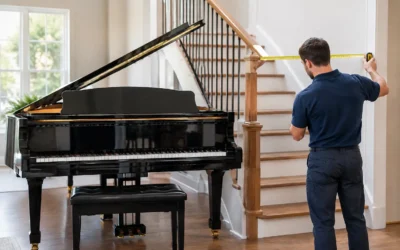
Before purchasing, measure the room and the delivery path. Consider stairs, tight turns, elevators, exterior access, and flooring. Piano moving is specialized work. A luxury grand should be transported by trained piano movers with the proper equipment, insurance, and handling procedures, not treated as ordinary furniture.
Grand Piano or Upright Piano?
Grand pianos offer horizontal stringing, longer bass strings, more soundboard area, and an action that uses gravity for faster repetition. For advanced players and performance-focused buyers, these advantages are meaningful. A baby grand can be an elegant option where space is limited, while larger grands bring greater depth, projection, and tonal complexity.
A premium upright remains a serious musical instrument. In the right home, school, or studio, a high-quality upright can deliver excellent touch, tone, and value while using far less floor space. The best choice is the one that supports regular playing and fits the environment without compromise.
Look Beyond the Cabinet Finish
A polished ebony grand is timeless, but luxury piano design extends far beyond traditional black. Fine wood veneers, satin finishes, hand-carved cabinetry, art-case styling, and crystal grand pianos can turn an instrument into a focal point. For many buyers, visual distinction is a valid part of the investment. A piano is both a musical instrument and a permanent piece of furniture.
Still, the cabinet should never distract from the musical foundation. A visually dramatic piano with weak tuning stability or an uneven action will not provide a premium ownership experience. The strongest purchase brings both together: refined design, dependable performance, and service support after installation.
The Ownership Experience Protects the Investment
Buying the piano is only the beginning. Once it arrives, a piano needs time to acclimate to its new environment before its first tuning. Changes in temperature and humidity affect wood, felt, strings, and the soundboard. Most pianos benefit from tuning at least twice each year, with additional service appropriate for heavily used instruments, performance venues, or changing climates.
Regular tuning is not cosmetic maintenance. It protects pitch relationships, reveals developing issues, and helps preserve the pleasure of playing. Action regulation and voicing also matter. Regulation ensures that each key responds consistently. Voicing shapes the tone by adjusting the hammers, helping the instrument sound more even, warm, brilliant, or powerful as appropriate.
Humidity control deserves special attention in Georgia and throughout regions with seasonal changes. A stable environment helps support tuning stability and reduces stress on the piano’s wood components. Place the instrument away from direct sunlight, heating vents, exterior doors, fireplaces, and dramatic temperature swings whenever possible.
A440 Pianos supports this complete ownership process with premium inventory alongside piano moving, delivery, tuning, repair, restoration, and financing options. That level of service gives buyers a clearer path from selecting an instrument to caring for it long after it enters the home.
Questions to Ask Before You Buy
A premium purchase should come with clear answers. Ask the seller about the piano’s serial number, age, previous use, restoration history, tuning stability, and the work completed before sale. If the instrument is used or vintage, request specifics rather than general assurances. “Restored” can describe anything from a cabinet refresh to a complete rebuilding process, so the scope matters.
Also ask how delivery is handled, whether a post-delivery tuning is recommended, and what service is available in your area. Financing can make a higher-quality instrument attainable, but the monthly payment should not be the only factor. Consider the full ownership cost, including moving, tuning, climate care, and any future restoration needs.
Play the piano whenever possible. Test quiet notes, repeated notes, wide dynamic changes, and the transition between registers. Listen for a tone that invites you to keep playing. The right luxury piano should feel impressive, but more than that, it should feel like an instrument you will return to for years.


0 Comments